Government opens independent review into access to banking services
Ministers have launched a review and call for evidence on the future of in-person banking, as bank branch closures continue to spread across the UK.
Eleanor Whitfield
Writer ·

The government has launched an independent review into access to banking services, alongside a public call for evidence, in an attempt to address mounting concern about the disappearance of in-person banking from high streets across the country.
Announced by HM Treasury, the review will examine the impact of changes in how banking services are provided and consider which face-to-face services are essential to consumers. It opened a call for evidence on 8 June, inviting contributions from individuals, community groups, businesses and organisations working in financial services and inclusion.
What the review will look at
Ministers said the review would seek to understand which in-person banking services matter most, which groups depend on them, and whether the decline of branches and counter services is causing real harm to consumers. It will also consider both the current state of provision and the likely direction of travel as banking continues to move online.
The review is being chaired by Richard Lloyd, a figure with experience across financial regulation and consumer advocacy, and is expected to report to the government with recommendations later in the year. By appointing an independent chair, ministers signalled that they wanted a credible and impartial assessment rather than a process seen as steered by the Treasury or by the banks themselves.
The exercise forms part of a broader push to ensure that financial services keep pace with the needs of all consumers, not just those comfortable banking digitally. It will sit alongside existing protections for access to cash, and its conclusions could feed into future decisions about what obligations, if any, banks should face to maintain a physical presence.
- Identifying which in-person banking services are essential or important to consumers
- Understanding which groups most need access to face-to-face banking
- Assessing whether consumers are being harmed, and how seriously
- Examining the current provision and future trajectory of in-person banking
- The call for evidence closes on 20 July, with the review reporting later in 2026
“Access to banking is a lifeline for many people, particularly older and more vulnerable customers, and this review will look hard at where the gaps are.”
— A government spokesperson
Why it matters now
Bank branch closures have accelerated over recent years as customers shift to online and mobile banking. While that suits many people, it can leave behind those who rely on cash, prefer to deal with staff in person, or live in areas where digital connectivity is patchy. Small businesses that handle cash and older customers who are less comfortable banking online are frequently cited as among the hardest hit.
The growth of shared banking hubs and Post Office counter services has gone some way to filling the gap, but campaigners argue that provision remains uneven and that more needs to be done to guarantee a baseline of access everywhere. Rural communities, in particular, can find themselves many miles from the nearest branch, and the closure of a single bank can have an outsized effect on a small town's high street.
Banks, for their part, argue that the shift reflects genuine changes in customer behaviour, with most transactions now carried out online or through automated services. Maintaining underused branches, they contend, is expensive and increasingly hard to justify, which is why the question of who should bear the cost of guaranteed access is so politically charged.
Background
Access to cash and banking has been a recurring theme in British politics, with successive governments under pressure to ensure that the move to digital does not exclude vulnerable consumers. Regulators have already introduced rules aimed at protecting access to cash, and the new review extends that focus to the broader question of in-person services.
By commissioning an independent review rather than acting immediately, the government has signalled that it wants an evidence base before deciding whether and how to intervene further in a fast-changing market.
What happens next
Interested parties have until 20 July to submit evidence, after which the review team will analyse responses and prepare recommendations for ministers. The findings could shape future decisions on whether banks should face new obligations to maintain in-person services, and how the patchwork of branches, hubs and counters is managed in the years ahead.
The outcome will be watched closely by consumer groups, by the banking industry and by MPs of all parties, many of whom have campaigned on behalf of constituents affected by branch closures. Access to banking is one of those issues that cuts across the usual political divides, uniting rural Conservatives, urban Labour MPs and others in a shared concern about communities being left behind.
For ministers, the review offers a way to demonstrate responsiveness on a bread-and-butter issue at a time when the government is under pressure on bigger questions. Whether it leads to concrete change will depend on what the evidence reveals and on the political will to act, but the very fact of commissioning it signals that the future of the high street bank remains firmly on the agenda.
Sources: reporting by GOV.UK.
The NE Times is an independent news and analysis publisher. Our articles combine factual reporting with clearly-written, impartial analysis. Content is for general information and does not constitute professional advice. Disclaimer.
You may also like to read

Two-child benefit limit scrapped as government's child poverty plan takes effect
Ministers say removing the cap, alongside an expansion of free school meals, will deliver the largest fall in child poverty in a single parliament for decades.

UK-UAE Sudan Testimony Raises Questions For Ministers
A parliamentary committee is to hear claims that ministers prioritised ties with the UAE over stronger action on mass atrocities in Sudan.
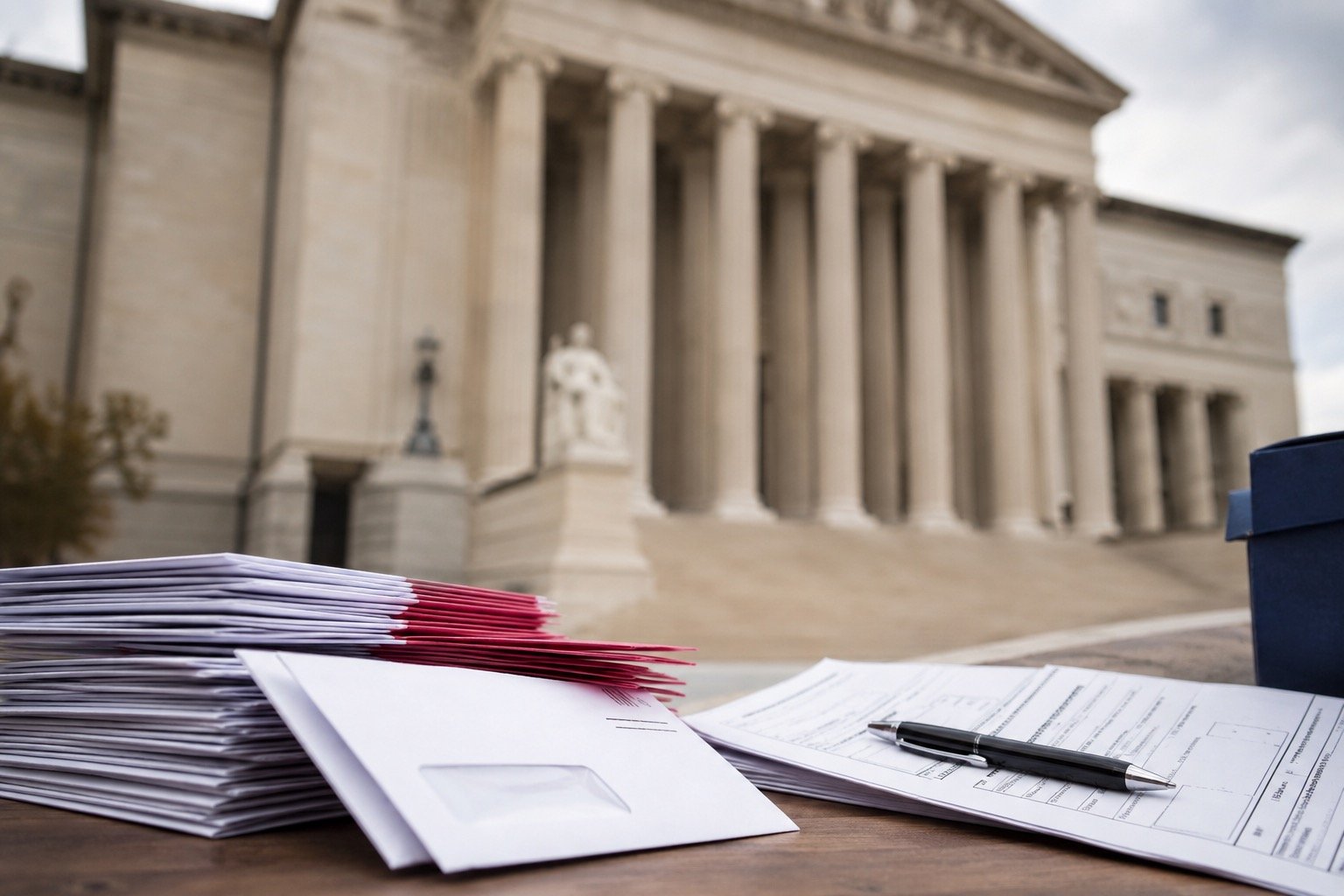
Federal judge blocks key parts of Trump's mail voting order
A Boston court sided with states arguing that running elections is a matter for states and Congress, not the White House.

Brexit anniversary revives debate over a faster UK route back to the EU
A decade on from the referendum, a former EU negotiator suggested Britain could rejoin on a short timeline if it chose to, while stressing that core EU rules would apply.