Reform UK extends polling lead as Labour and Conservatives trail
An Opinium survey put Nigel Farage's party on 29 per cent, well ahead of Labour and the Conservatives, underlining the fragmentation of British politics.
Eleanor Whitfield
Writer ·

Reform UK has consolidated its position at the top of the polls, with an Opinium survey published in early June putting Nigel Farage's party on 29 per cent of the vote, its highest share in months and a clear lead over both of the traditional governing parties.
The poll placed Labour on 20 per cent and the Conservatives on 17 per cent, a striking snapshot of a political landscape in which neither of the two parties that have dominated post-war British politics is currently in the lead. It came against the backdrop of a Labour leadership crisis and a strong Reform performance in the May local elections.
What the numbers show
The headline figure of 29 per cent represented a two-point rise on the previous month for Reform UK and its best showing since early spring. With Labour and the Conservatives clustered below, the survey pointed to a genuinely multi-party contest in which the outcome of a general election would be highly unpredictable.
- Reform UK: 29 per cent, up two points on the previous month
- Labour: 20 per cent
- Conservatives: 17 per cent
- Farage held a narrow lead on the best prime minister question despite a negative personal approval rating
On the question of who would make the best prime minister, Farage edged ahead of the incumbent, although his net personal approval rating remained firmly negative. Analysts cautioned that leading on that measure with a sub-30 figure reflects the weakness of all the main contenders as much as Reform's own strength.
The breakdown of Reform's support has been a particular focus for pollsters. The party has drawn heavily from voters who backed the Conservatives at the last general election, but it has increasingly made inroads among traditional Labour supporters in post-industrial areas, complicating the strategic calculations of both larger parties. That dual appeal is part of what makes Reform so difficult for its rivals to counter.
“A party can lead the field on under thirty per cent only when the others are struggling badly. This is a fragmented electorate, not a Reform landslide.”
— A polling analyst
From local elections to national polling
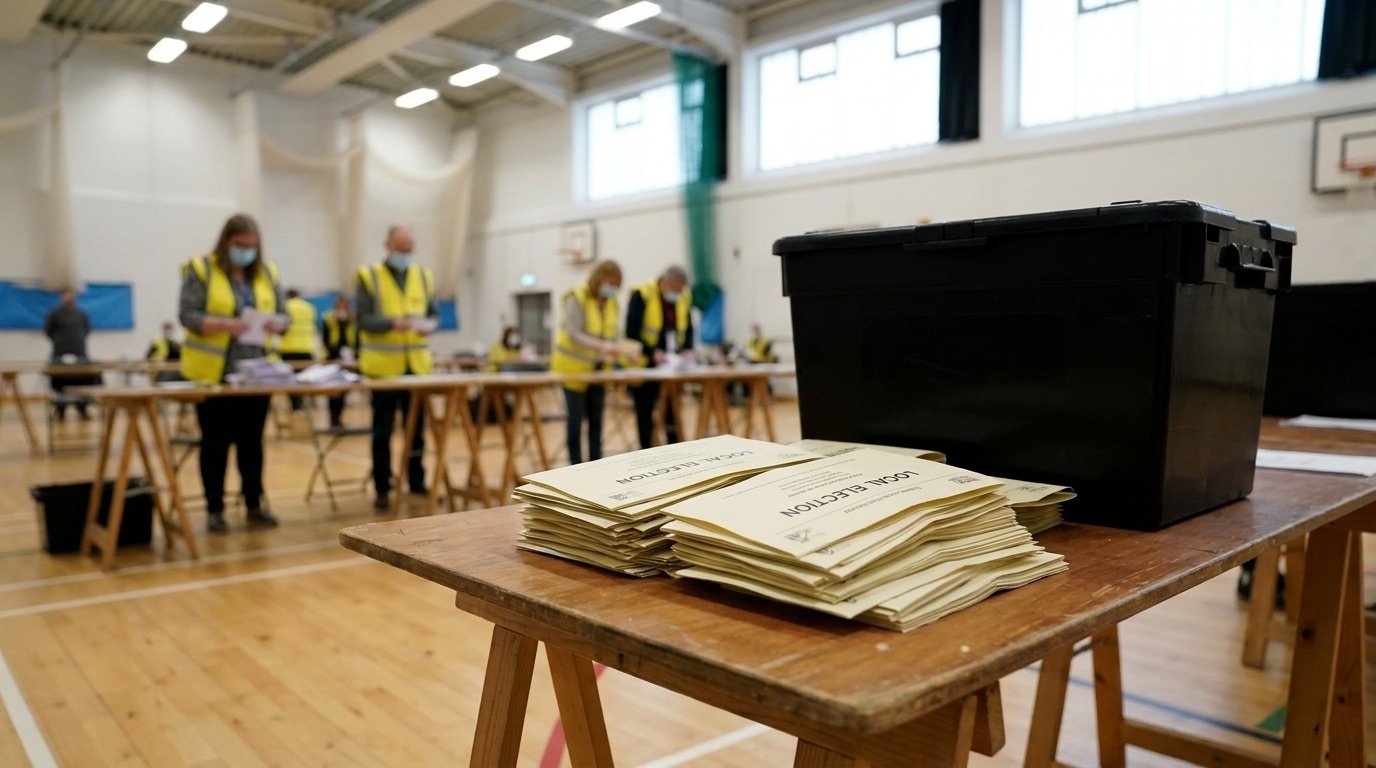
The polling builds on a strong set of results for Reform UK in the May local elections, when the party gained more than 600 council seats while Labour lost over 450. That performance unsettled the governing party and fed directly into the pressure on the Prime Minister's leadership.
For the Conservatives, the figures underline the scale of the rebuilding task facing the official opposition, which finds itself squeezed between a governing party in turmoil and an insurgent force on the right of British politics. The party has struggled to define a clear identity since losing power, and the persistent strength of Reform has fuelled an internal debate about how far it should move to recover lost voters.
Background
Reform UK's rise has been one of the defining features of this parliament. Founded out of the Brexit Party tradition and led by Farage, the party has drawn support from former Conservative voters and, increasingly, from disillusioned Labour supporters in traditional industrial areas. Single polls should always be treated with caution, but the broad trend across multiple surveys has pointed in a consistent direction.
Pollsters stress that voting intention this far from a general election is a measure of mood rather than a forecast of seats, and that the first-past-the-post system can translate national vote shares into very different parliamentary outcomes.
What it means
The numbers raise the stakes around the by-elections on 18 June and around the Labour leadership question. If Reform continues to lead, both Labour and the Conservatives will face intensifying pressure to find a message capable of winning back voters. For now, the polling describes a political system in flux, with the old certainties of two-party competition looking less secure than at any time in recent memory.
It is worth remembering, too, that British general elections are decided seat by seat under first-past-the-post, a system that can produce results out of line with national vote shares. A party polling in the high twenties does not automatically translate that support into a proportionate number of seats, particularly if its vote is evenly spread rather than concentrated. That uncertainty is part of what makes the current period so unpredictable.
For the governing party, the immediate priority is to halt the slide and reassure nervous MPs that recovery is possible. For Reform, the task is to convert poll leads into durable organisation and credible candidates capable of winning and holding seats. The coming weeks, with several real votes rather than hypothetical surveys, will offer the first hard evidence of which of those scenarios is closer to the truth.
Sources: reporting by Opinium.
The NE Times is an independent news and analysis publisher. Our articles combine factual reporting with clearly-written, impartial analysis. Content is for general information and does not constitute professional advice. Disclaimer.
You may also like to read

Reform stretches lead to nine points as Labour's polling collapse deepens
With Sir Keir Starmer gone, the latest voting-intention figures put Nigel Farage's Reform UK on 27%, almost ten points clear of a Labour Party that has shed roughly a third of its 2024 support.
From landslide to lectern: what finally forced Starmer out
A historic election win curdled into open revolt as the local election rout, the rise of Reform UK and slumping approval ratings combined to end the Prime Minister's tenure.
Westminster reacts: Farage demands election as rivals circle after Starmer quits
Reform UK called immediately for a general election and the Conservatives went on the attack, while Labour figures lined up behind the frontrunner to succeed the departing Prime Minister.

Farage seizes the moment: Reform UK demands a snap election and sets its sights on Burnham
With Reform UK leading the polls, Nigel Farage claimed to have 'deposed' Sir Keir Starmer and declared he is not frightened of Andy Burnham or any Labour successor.