Apple bets its assistant's future on Google's Gemini as a rebuilt Siri AI headlines WWDC 2026
At its annual developer conference, Apple unveiled a ground-up reinvention of Siri powered partly by Google's models, alongside iOS 27 and a sweeping Apple Intelligence overhaul.
Rajan Mehta
Writer ·
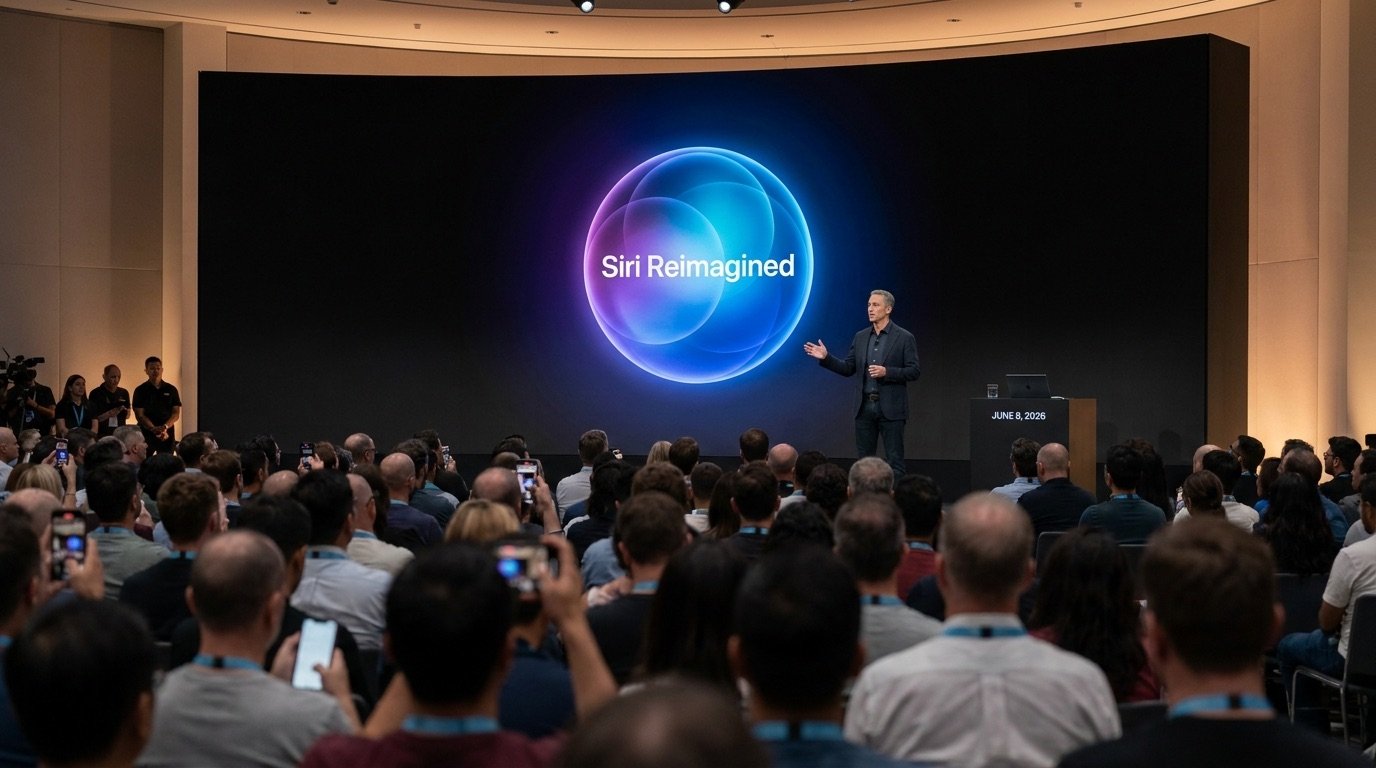
Apple used its 2026 Worldwide Developers Conference to do something it rarely does: admit that its most famous piece of software needed to be torn down and rebuilt from scratch. The headline announcement of the week was a reinvented Siri, branded internally as the next generation of Apple Intelligence, that the company says can finally hold a real, flowing conversation, pull context from a user's emails, messages and photos, answer live questions from the open web, and take meaningful action across third-party apps.
The most striking detail was where some of that new intelligence comes from. After years of positioning itself as the company that would keep artificial intelligence firmly in-house, Apple confirmed that the rebuilt assistant leans on Google's Gemini models for parts of its reasoning, a tacit acknowledgement that its own foundation models had fallen behind the frontier. For a firm that has spent a decade marketing privacy and self-reliance, the partnership is a genuine philosophical shift.
The keynote, which opened a conference running from 8 to 12 June, also delivered iOS 27, macOS 27 and watchOS 27, a redesigned system-wide search engine, and a tighter set of parental controls. Taken together, it was one of the most ambitious software overhauls Apple has shipped in years, and a clear signal that the company intends to spend 2026 catching up rather than coasting.
A new Siri, and a new dependence
The new Siri now exists as a standalone app while retaining its cross-app reach. Apple demonstrated the assistant resolving multi-step requests, drawing on a user's personal data to do so, and answering open web queries rather than punting them to a search engine. The Phone app, notably, can now surface context from Mail and Messages during a live call, so the device can remind a user of relevant details mid-conversation.
Apple framed the Gemini collaboration carefully, stressing that personal data is handled within its privacy framework even when external models do the heavy lifting. Craig Federighi, the company's software chief, set the tone in a line that quickly travelled across the technology press.
“We believe privacy in AI is non-negotiable.”
— Craig Federighi, Apple senior vice-president of software engineering
Industry watchers read the move as pragmatic rather than ideological. Apple has the distribution, the hardware and the trust of a billion-plus users; what it lacked was a competitive large language model. Renting Google's, at least for now, lets it ship a credible product this year instead of waiting for its own models to mature.
“Apple has effectively conceded the model race for this cycle and decided that owning the experience matters more than owning the engine. It is a defensible bet, but it hands Google enormous strategic leverage inside Apple's ecosystem.”
— an industry analyst
iOS 27 and the performance pitch
Beyond the assistant, Apple leaned hard on speed and reach. iOS 27 extends support back to the iPhone 11, which the company described as its broadest compatibility rollout ever, a notable choice at a time when many rivals quietly drop older hardware. The update bundles measurable performance gains rather than purely cosmetic change.
- Photos that the company says load up to 70 per cent faster
- AirDrop transfers roughly 80 per cent quicker than before
- Improved CPU scheduling for smoother multitasking on older devices
- A completely rebuilt system search powering Spotlight, Mail and Photos
- New AI photo tools including Reframe, Extend and an upgraded generative Cleanup
The search rebuild is quietly one of the most consequential changes. Spotlight, Mail and Photos search have long frustrated users with inconsistent results, and Apple says the new foundation is more stable and efficient. For a company whose AI ambitions ultimately rest on understanding a user's own data, fixing the plumbing of on-device search is arguably as important as any flashy assistant demo.
Guardrails for younger users
Apple also expanded its parental controls, allowing parents to create child accounts that are mandatory for under-13s and can persist until the age of 18. Parents can restrict who children call, which apps and websites they reach, and rely on age-appropriate recommendations from the system, with Ask to Browse and Ask to Buy features switched on by default for the youngest users.
The timing is no accident. Regulators in the UK, EU and US have spent the past two years tightening expectations around how platforms protect minors, and a robust, default-on safety layer gives Apple a useful answer when lawmakers come asking.
Background
Apple first announced Apple Intelligence in 2024, promising a more capable Siri that repeatedly slipped its deadlines. The delays became an embarrassment for a company unaccustomed to shipping late, and rivals including Google and Samsung used the gap to push their own assistants aggressively. The 2026 reset, and the willingness to partner externally, is the clearest sign yet that Apple recognised the original plan was not working.
What happens next: the new software arrives for the public this autumn, and the real test will be whether the rebuilt Siri performs as smoothly in millions of hands as it did on stage. Equally important is how the Google partnership evolves, both technically and commercially. If Apple's own models catch up, the Gemini deal may prove a bridge; if they do not, this week may be remembered as the moment Apple quietly became dependent on its biggest search rival for the brains of its most personal product.
Sources: reporting by TechCrunch.
The NE Times is an independent news and analysis publisher. Our articles combine factual reporting with clearly-written, impartial analysis. Content is for general information and does not constitute professional advice. Disclaimer.
You may also like to read
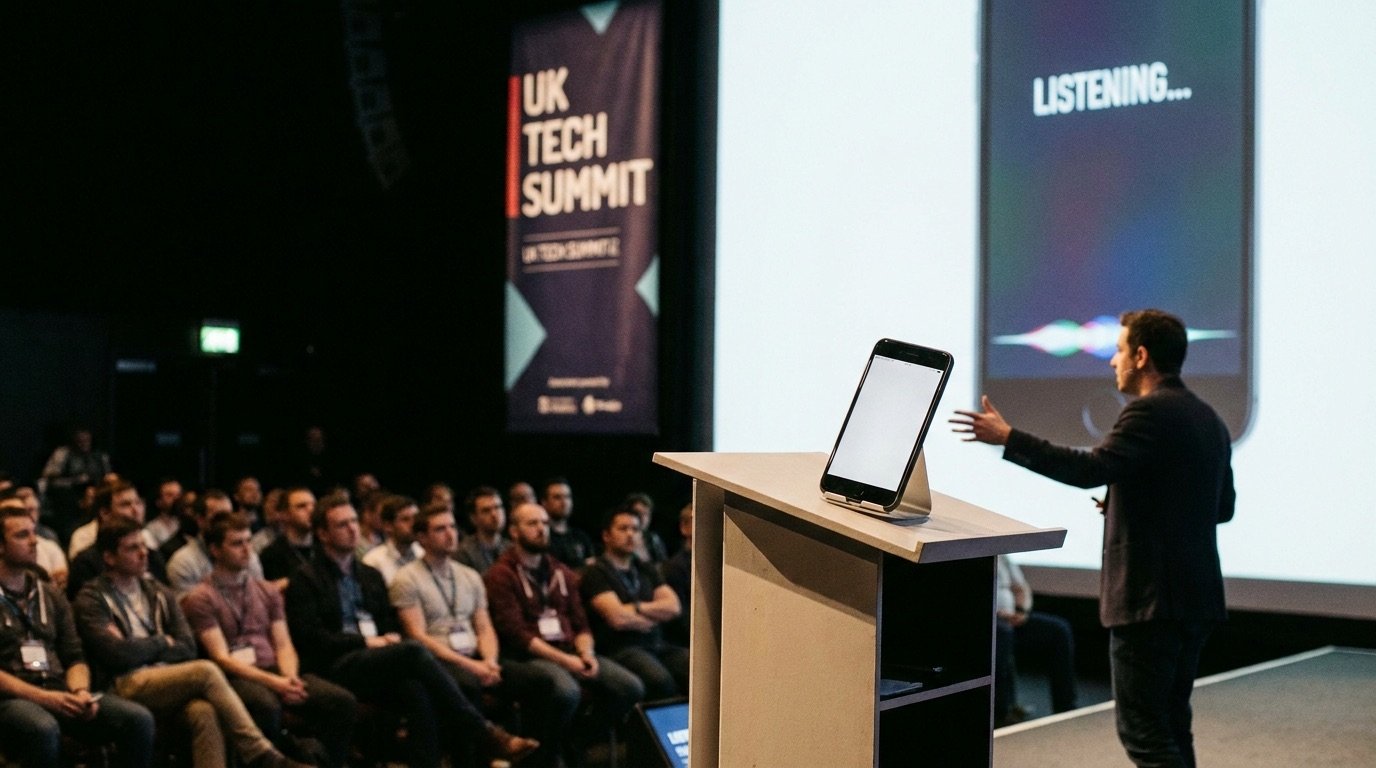
Apple finally gives Siri its long-promised brain at WWDC 2026
A rebuilt, conversational Siri and a performance-focused iOS 27 headlined Apple's developer conference, as the company leaned on its own Foundation Models alongside Google's Gemini.

RAISE US launches with $500m to retrain workers for the AI economy
A bipartisan nonprofit founded by Gina Raimondo and Eric Holcomb plans to work with states and employers on education and retraining.

UN presses AI companies to disclose environmental impact and go renewable by 2030
Secretary-general Antonio Guterres calls on artificial intelligence firms to reveal data-centre energy and water use, putting AI's climate footprint under fresh scrutiny.
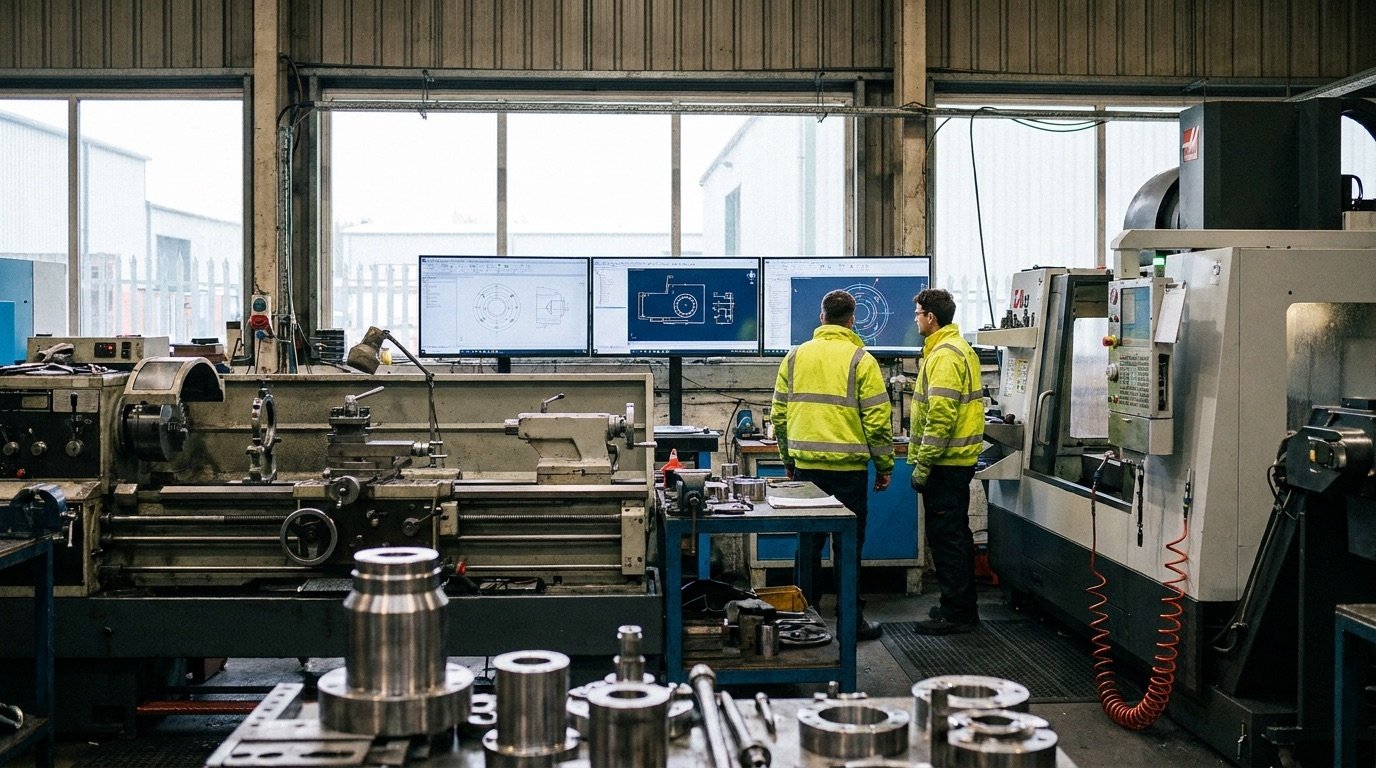
Bezos's Prometheus raises $12bn to build an 'artificial general engineer'
The secretive physical-AI startup co-led by Jeff Bezos is now valued at $41bn as it pursues software to design and manufacture everything from jet engines to drugs.