Apple finally gives Siri its long-promised brain at WWDC 2026
A rebuilt, conversational Siri and a performance-focused iOS 27 headlined Apple's developer conference, as the company leaned on its own Foundation Models alongside Google's Gemini.
Rajan Mehta
Writer ·
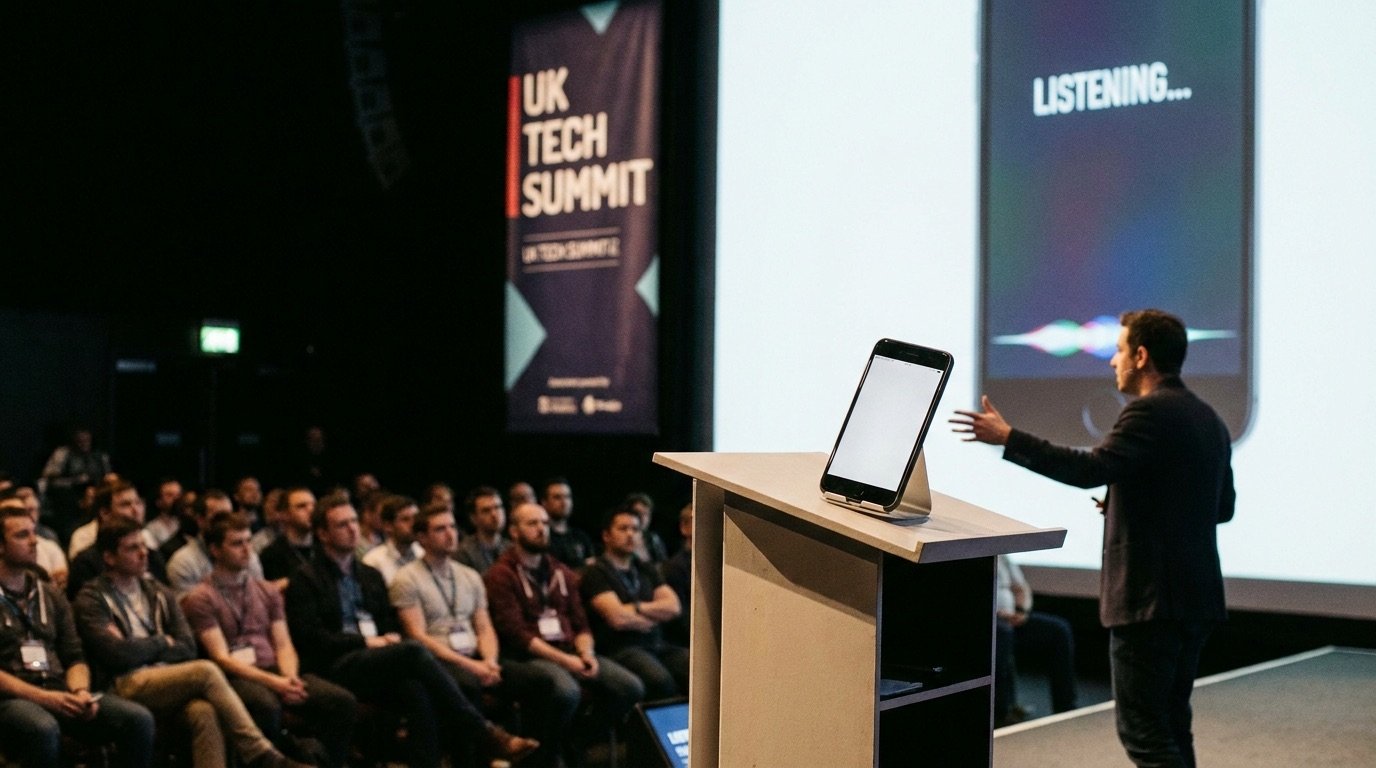
After years of missed deadlines and quietly walked-back promises, Apple used its annual Worldwide Developers Conference on 8 June to unveil the substantially rebuilt version of Siri it has been teasing since 2024. The assistant is now positioned as an operating-system-level feature rather than a bolt-on, with Apple promising a more conversational, context-aware experience across its devices.
The headline change is what powers the assistant. The new Siri draws on Apple's own Foundation Models combined with Google's Gemini technology, an unusual acknowledgement that the iPhone maker has been playing catch-up in generative AI. Notably, Apple says routine queries will no longer be handed off to third-party providers such as ChatGPT by default.
For a company that has built its brand on polish and predictability, the admission that it needed outside help is striking. It also reframes the competitive landscape: rather than racing to ship a single flagship chatbot, Apple is betting that the assistant most people use every day will be the one already woven into their phone, watch and laptop.
A Siri rebuilt from the ground up
The version of Siri demonstrated on stage is a marked departure from the rigid, command-driven assistant users have lived with for more than a decade. Apple says the new system can hold multi-turn conversations, remember the thread of a discussion and act on requests that span several apps, rather than treating each query as an isolated instruction.
Central to this is a hybrid model architecture. Smaller, privacy-preserving tasks are handled by Apple's on-device Foundation Models, while more demanding requests can be routed to larger models, including Google's Gemini, running on Apple's own Private Cloud Compute infrastructure. The company has consistently argued that this design keeps sensitive personal data on the device or within a hardened, auditable server environment.
The shift away from defaulting to ChatGPT is significant. When Apple first introduced its generative features, many of the more advanced answers were quietly passed to OpenAI's models. By bringing routine handling back in-house and leaning on a deeper partnership with Google for the heavy lifting, Apple is asserting more control over the experience and the data that flows through it.
“The new Siri now operates at the operating-system level and will be more conversational, detailed and engaging.”
— WWDC 2026 keynote
A clean-up release for iOS
Alongside the assistant, Apple framed iOS 27 as a clean-up release reminiscent of the old Snow Leopard update for the Mac, prioritising speed and reliability over flashy features. The company claims up to 30 per cent faster app launches, photos that load up to 70 per cent more quickly and AirDrop transfers up to 80 per cent faster. Every iPhone from the iPhone 11 onward will be eligible.
The decision to emphasise performance over novelty is itself a statement. Recent releases have been criticised for shipping ambitious features that arrived buggy or incomplete, and a back-to-basics update signals that Apple has heard the complaints. By widening eligibility to older handsets, the company also keeps a vast installed base on a single, current version of the software, which matters both for security and for developers.
Among the headline performance claims, Apple highlighted several areas where it says everyday tasks will feel noticeably quicker:
- Up to 30 per cent faster app launches across the system
- Photos loading up to 70 per cent more quickly
- AirDrop transfers up to 80 per cent faster
- Compatibility extended to every iPhone from the iPhone 11 onward
- Deeper, system-wide integration of Apple Intelligence features
Apple Intelligence spreads deeper
Apple Intelligence is also spreading deeper into the system, with cross-app context awareness, AI-suggested replies in Messages, tab management in Safari and a Phone app that can pull relevant details from Mail and Messages mid-call. Desktop users get macOS 27, codenamed Golden Gate.
These additions point to a strategy of small, frequent assists rather than a single attention-grabbing feature. A Phone app that surfaces a confirmation number while you are talking to an airline, or a Messages window that drafts a plausible reply, is the kind of quiet utility Apple believes will keep users inside its ecosystem. The challenge is consistency: such features only build trust if they work reliably, and earlier rollouts have stumbled on exactly that point.
“The bar for an assistant baked into a billion devices is reliability, not novelty. People forgive a missing feature far more readily than one that gets things wrong.”
— Industry analyst
Background: a long road to a smarter Siri
Siri launched in 2011 as a genuine first, but it spent much of the following decade falling behind rivals from Amazon and Google. When the generative-AI boom arrived, Apple was conspicuously cautious, and the more capable Siri it promised at earlier conferences slipped repeatedly, with some features delayed well beyond their announced windows. That history is the backdrop against which this year's announcements are being judged.
The reliance on Gemini also reflects a wider industry reality. Building and running frontier models is enormously expensive, and even the world's most valuable companies are increasingly forming partnerships rather than going it alone. For Apple, the calculation appears to be that owning the user relationship and the privacy story matters more than owning every layer of the model stack.
What happens next
Whether the revamped assistant lives up to the demonstrations will only become clear once the software reaches the public this autumn. For a company that has repeatedly delayed its most ambitious Siri features, the pressure to deliver this time is considerable. If the new Siri ships on schedule and works as shown, it could reset expectations for what a built-in assistant can do; if it slips again, it will reinforce a narrative that Apple has struggled to keep pace with the AI era.
Sources: reporting by TechCrunch.
The NE Times is an independent news and analysis publisher. Our articles combine factual reporting with clearly-written, impartial analysis. Content is for general information and does not constitute professional advice. Disclaimer.
You may also like to read
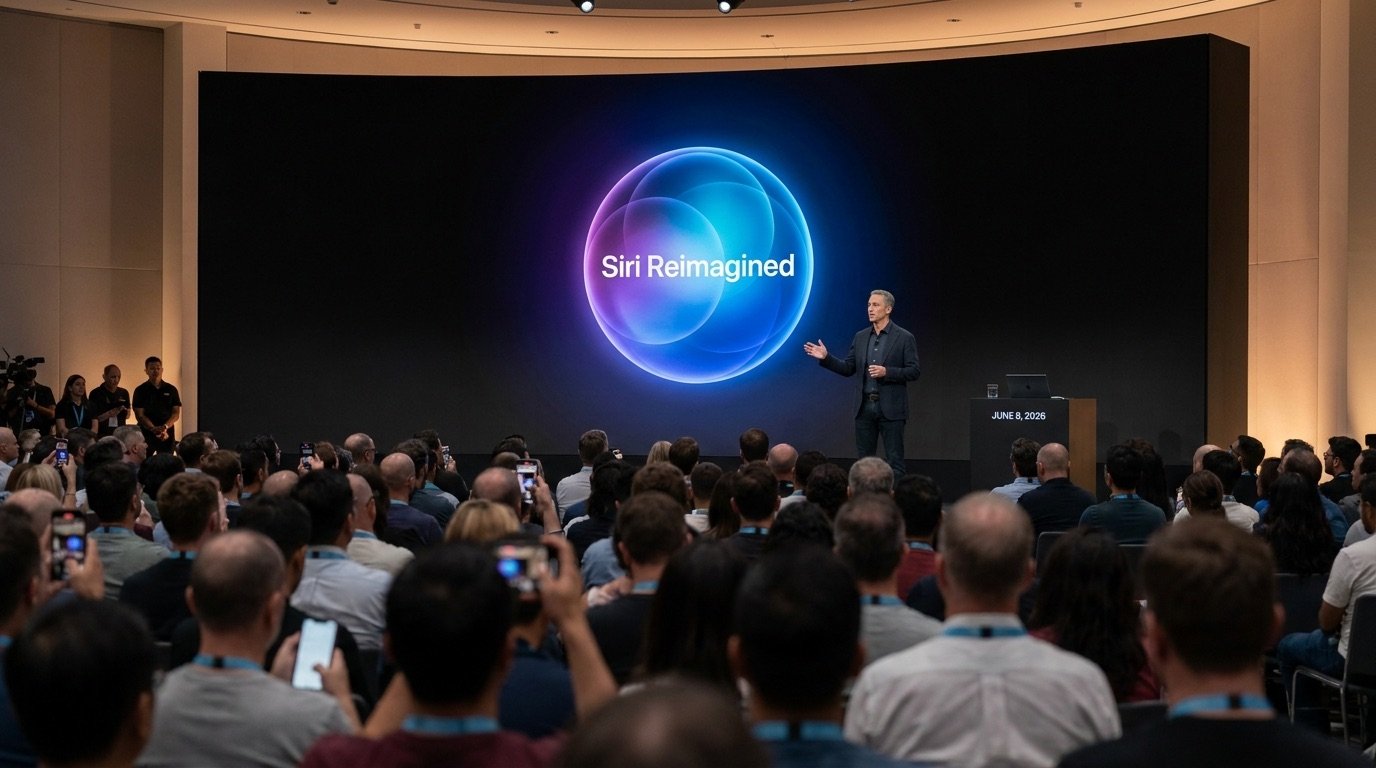
Apple bets its assistant's future on Google's Gemini as a rebuilt Siri AI headlines WWDC 2026
At its annual developer conference, Apple unveiled a ground-up reinvention of Siri powered partly by Google's models, alongside iOS 27 and a sweeping Apple Intelligence overhaul.

RAISE US launches with $500m to retrain workers for the AI economy
A bipartisan nonprofit founded by Gina Raimondo and Eric Holcomb plans to work with states and employers on education and retraining.

UN presses AI companies to disclose environmental impact and go renewable by 2030
Secretary-general Antonio Guterres calls on artificial intelligence firms to reveal data-centre energy and water use, putting AI's climate footprint under fresh scrutiny.
Bezos's Prometheus raises $12bn to build an 'artificial general engineer'
The secretive physical-AI startup co-led by Jeff Bezos is now valued at $41bn as it pursues software to design and manufacture everything from jet engines to drugs.