Bezos's Prometheus raises $12bn to build an 'artificial general engineer'
The secretive physical-AI startup co-led by Jeff Bezos is now valued at $41bn as it pursues software to design and manufacture everything from jet engines to drugs.
Rajan Mehta
Writer ·
Prometheus, the AI startup co-founded by Jeff Bezos, has raised 12 billion US dollars in a funding round that values the company at roughly 41 billion dollars. The deal comes only months after the firm emerged from stealth with a 6.2 billion dollar round late last year.
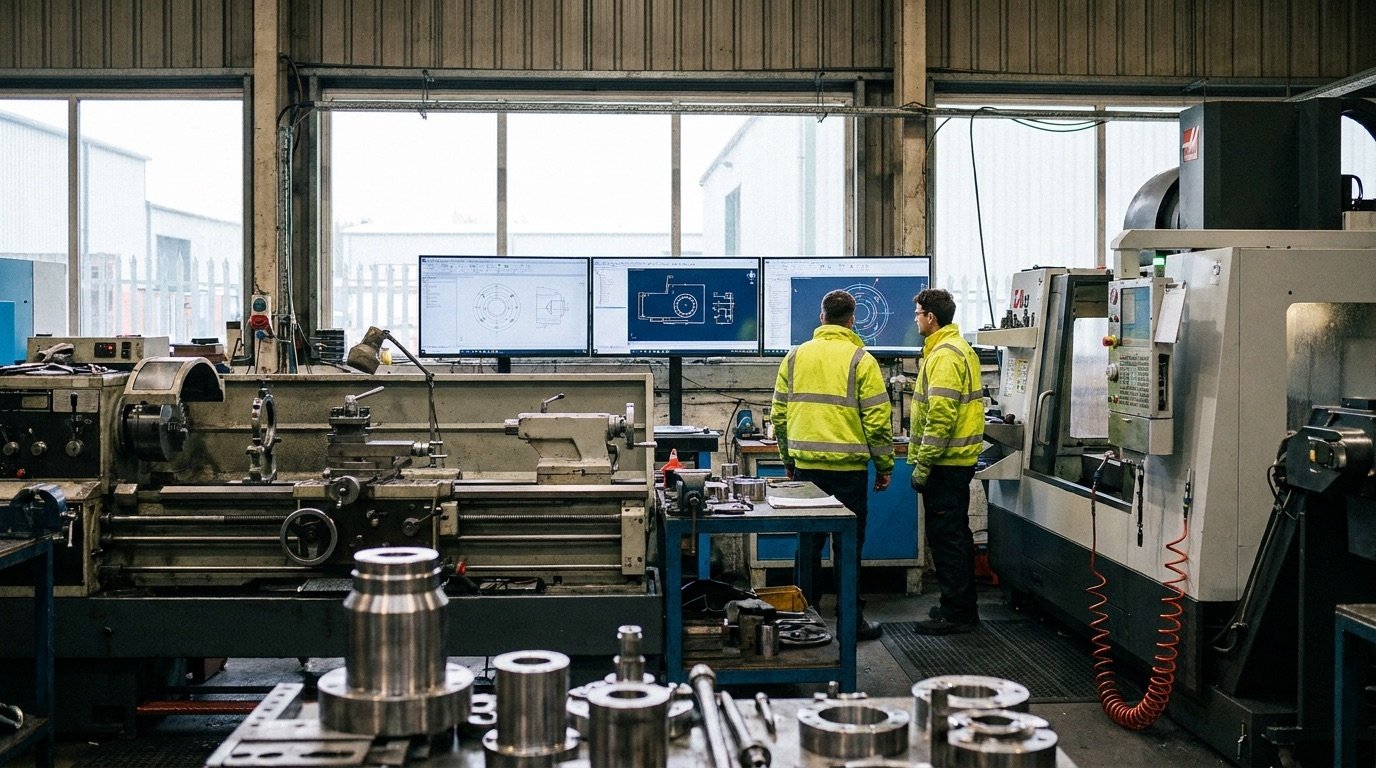
The company is pursuing what it calls an artificial general engineer, software intended to automate the design and manufacture of complex physical systems. According to the firm, that could span objects as varied as jet engines and pharmaceutical compounds, putting it squarely in the fast-growing physical-AI space rather than chatbots.
The ambition marks a deliberate departure from the crowded market for conversational AI. Where many of the best-known startups focus on generating text, images or code, Prometheus is positioning itself at the messier intersection of software and the physical world, where the work involves materials, tolerances, supply chains and the laws of physics rather than language alone.
Heavyweight backers and a small team
Bezos co-founded Prometheus with Vik Bajaj, a former co-founder of Verily, Alphabet's life-sciences unit, and the two serve as co-chief executives. Investors in the latest round include JPMorgan Chase, Goldman Sachs and BlackRock, alongside Bezos himself. Despite the eye-watering valuation, the company employs only around 150 people across San Francisco, London and Zurich.
The roster of backers is notable for its blue-chip character. The involvement of major Wall Street institutions, rather than purely venture-capital firms, signals that the appetite for large AI bets has spread well beyond Silicon Valley's traditional financiers. It also underscores how much capital investors believe is required to compete at the frontier of the field.
The contrast between the valuation and the headcount is striking. A company worth tens of billions of dollars with only around 150 employees reflects a pattern increasingly common in elite AI ventures, where small teams of specialists command enormous resources on the strength of their expertise and ambition rather than revenue or products already in the market.
Bezos plays down the job-loss fears
Speaking publicly about the venture for the first time, Bezos played down fears that such automation would destroy jobs, arguing the economy would face labour scarcity rather than mass unemployment. He suggested productivity gains would lift living standards and might let workers cut overtime rather than lose their roles entirely.
His comments tap into one of the central debates around advanced automation. Optimists argue that more productive economies create new kinds of work and raise prosperity overall, much as previous waves of technology did. Sceptics counter that the speed and breadth of AI-driven automation could be different in kind, displacing skilled engineering and design work that was once thought safe.
“Significant productivity in the economy is going to raise the standard of living.”
— Jeff Bezos, co-CEO of Prometheus
What the company says it is building
Details about Prometheus's technology remain scarce, but the broad pitch is clear. The firm wants to compress the painstaking cycle of designing, testing and manufacturing physical products, using AI to explore vast numbers of possible designs and predict how they will behave before anything is built. The potential targets it has named span several industries:
- Aerospace components such as jet engines
- Pharmaceutical compounds and drug design
- Complex industrial and manufactured systems
- Faster iteration between design and physical production
- Tools aimed at engineers rather than general consumers
If even part of that vision is realised, it could shorten development timelines that currently run for years in industries such as aerospace and pharmaceuticals. But applying AI to the physical world is far harder than to purely digital tasks, because mistakes can be costly, safety-critical and slow to verify.
Background: the rise of physical AI
Prometheus is part of a broader shift in the AI industry towards what is often called physical AI, the application of machine learning to robotics, manufacturing, materials science and engineering. Backers of the trend argue that the biggest economic gains from AI may ultimately come not from generating content but from transforming how things are made. The sheer scale of recent funding rounds in the area reflects that conviction.
For Bezos, the venture is also a notable personal turn. Having stepped back from day-to-day leadership at Amazon, he is now taking a hands-on co-CEO role at a company explicitly aimed at reshaping industry, a move that lends Prometheus both visibility and credibility regardless of how much of its technology has been proven.
“A multibillion-dollar valuation before a product ships is a bet on people and ambition as much as on technology.”
— Technology investor
What happens next
Much about the company's actual technology remains undisclosed, and a 41 billion dollar valuation for a barely public startup will fuel debate about froth in AI investing. The coming months should reveal whether Prometheus can move from ambition to demonstrable results, and whether its physical-AI thesis attracts imitators or scepticism. For now, the company has the capital and the names to make its ambitions hard to ignore.
Sources: reporting by TechCrunch.
The NE Times is an independent news and analysis publisher. Our articles combine factual reporting with clearly-written, impartial analysis. Content is for general information and does not constitute professional advice. Disclaimer.
You may also like to read

RAISE US launches with $500m to retrain workers for the AI economy
A bipartisan nonprofit founded by Gina Raimondo and Eric Holcomb plans to work with states and employers on education and retraining.

UN presses AI companies to disclose environmental impact and go renewable by 2030
Secretary-general Antonio Guterres calls on artificial intelligence firms to reveal data-centre energy and water use, putting AI's climate footprint under fresh scrutiny.
Apple finally gives Siri its long-promised brain at WWDC 2026
A rebuilt, conversational Siri and a performance-focused iOS 27 headlined Apple's developer conference, as the company leaned on its own Foundation Models alongside Google's Gemini.
Apple bets its assistant's future on Google's Gemini as a rebuilt Siri AI headlines WWDC 2026
At its annual developer conference, Apple unveiled a ground-up reinvention of Siri powered partly by Google's models, alongside iOS 27 and a sweeping Apple Intelligence overhaul.