The Balogun ruling: how one red card became a test of FIFA's independence
FIFA suspended Folarin Balogun's ban after a reported White House call to Infantino — turning a World Cup discipline case into a governance question.
Daniel Fletcher
Writer ·
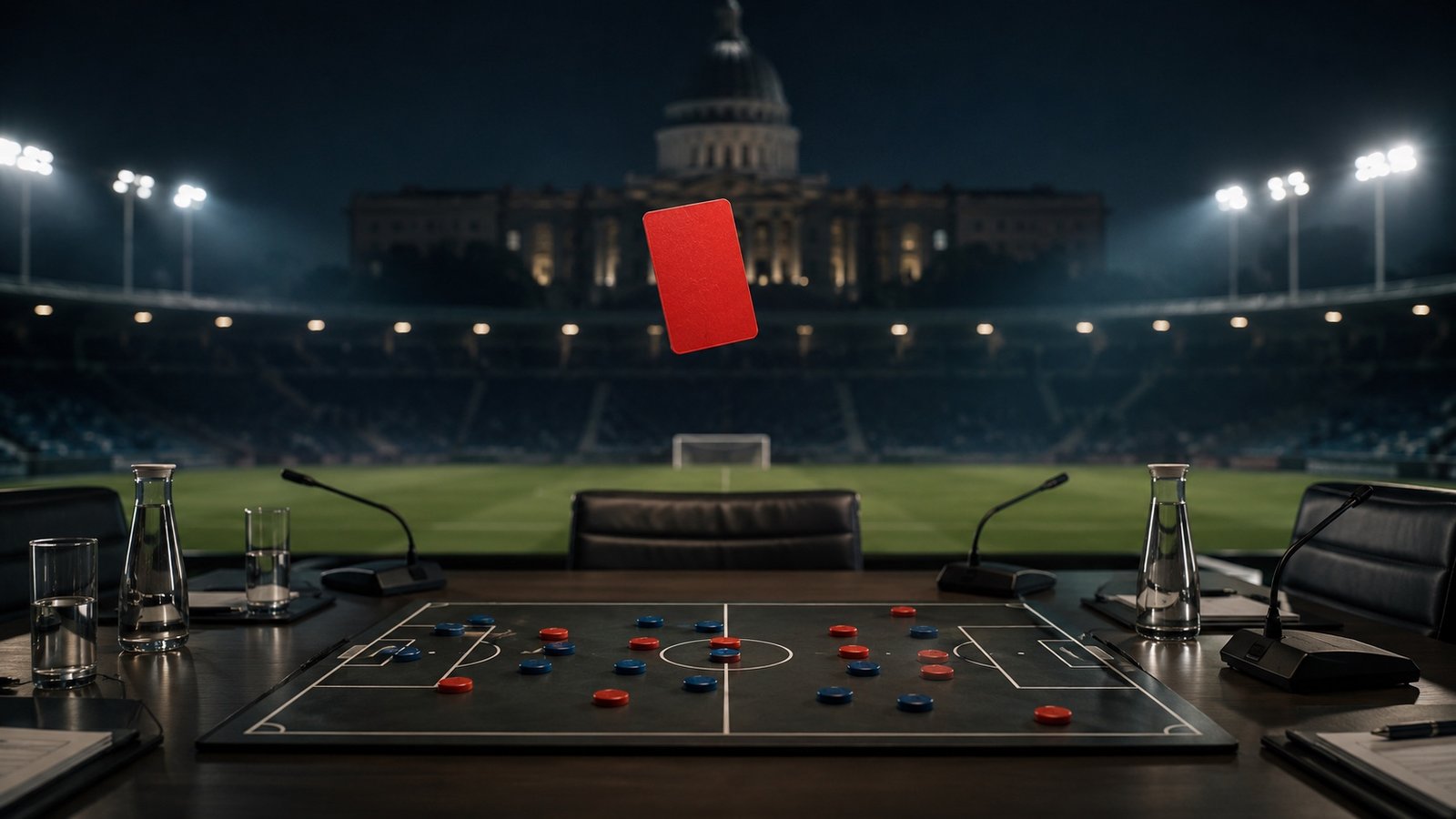
The most revealing part of the Folarin Balogun story is not that the United States forward will be available against Belgium. It is the route by which that happened — a disciplinary matter, normally settled inside football's own machinery, becoming a public test of where sport ends and political influence begins.
What happened
Balogun was sent off in the round-of-32 win over Bosnia in Santa Clara after a challenge on Tarik Muharemovic, triggering a one-game ban. The Associated Press then reported two things: that the White House called FIFA president Gianni Infantino to request a review, according to a person familiar with the call, and that FIFA suspended the ban, clearing Balogun to face Belgium. The Guardian reported FIFA invoked Article 27 of its disciplinary code, placing the player on a one-year probation under which a similar offence would revive the sanction — and that the Royal Belgian Football Association has criticised the decision.
Why it matters
Elite sport's legitimacy rests not only on rules being applied but on everyone believing those rules are insulated from outside influence. Disciplinary reviews after a match are routine; a reported call from a government office to the FIFA president about a specific player's suspension is not. Even if the processes ran entirely properly, the sequence creates a perception problem — and in a tournament watched by billions, perception is part of the product. Belgium's federation crying foul shows how quickly a technical ruling becomes a competitive-fairness dispute.
The counter-view
Fairness requires saying what the known facts do not establish. The reported call does not prove FIFA changed course under pressure. FIFA has genuine review mechanisms for red cards, weighing the referee's report and video evidence, and Article 27 exists precisely for cases where a sanction is judged disproportionate. It is also normal — unavoidable, during a World Cup — for FIFA's leadership to be in constant contact with a host government over security, visas and ceremonies. The governance challenge is keeping that operational contact visibly separate from competition decisions, which is a boundary question, not evidence of a fix.
That is why transparency is the cheapest remedy available. A clear public explanation — whether the original red card met the threshold for a ban, what evidence supported suspending it, whether the probation is standard practice — would shrink the space for speculation. Silence leaves the narrative to be written by suspicion, fandom and national interest.
What happens next
On the pitch, the calculus is simple: Balogun's pace and finishing stretch Belgium's defensive planning, and in knockout football an available first-choice forward changes both teams' preparation. The player's best answer to the controversy is a performance that stands on its own. For FIFA, the episode is a reminder that process is part of the spectacle — the World Cup's authority depends on the belief that disciplinary outcomes follow football logic rather than proximity to power, and that belief needs maintenance.
Sources: reporting by Associated Press.
The NE Times is an independent news and analysis publisher. Our articles combine factual reporting with clearly-written, impartial analysis. Content is for general information and does not constitute professional advice. Disclaimer.
You may also like to read
Trump set to hand over the World Cup trophy at the 2026 final, says Infantino
FIFA's president has indicated the US leader will present the trophy to the winners on 19 July, adding a fresh political dimension to a final already framed by American venues and heavy security planning.
The Hossam Hassan Dallas incident shows how World Cup security is now part of the story
Egypt's coach says a hotel confrontation with Dallas police is resolved — but the episode shows the fragile line between security and football culture.
Rodrygo's World Cup observation: football's loudest culture meets its biggest market
Rodrygo's Guardian column on the gulf between Brazilian and American football culture shows what the World Cup can and cannot export.
France grind, Morocco glide: two routes into the World Cup quarter-finals
Mbappe's winner edged Paraguay 1-0 while Morocco swept Canada aside 3-0 to make African football history — two contrasting models of knockout control.