A Cabinet hollowed out: Jarvis takes Defence as Starmer patches a depleted top team
After a wave of resignations stripped the government of senior figures, Dan Jarvis has been handed Defence as the caretaker prime minister tries to keep his Cabinet functioning.
Eleanor Whitfield
Writer ·

The government Sir Keir Starmer now leads in name is a markedly thinner operation than the one he assembled after the last general election. Weeks of resignations have stripped out a health secretary, a defence secretary, an armed forces minister and a clutch of junior ministers and aides, leaving the caretaker prime minister to plug gaps in a top team he will not lead for much longer.
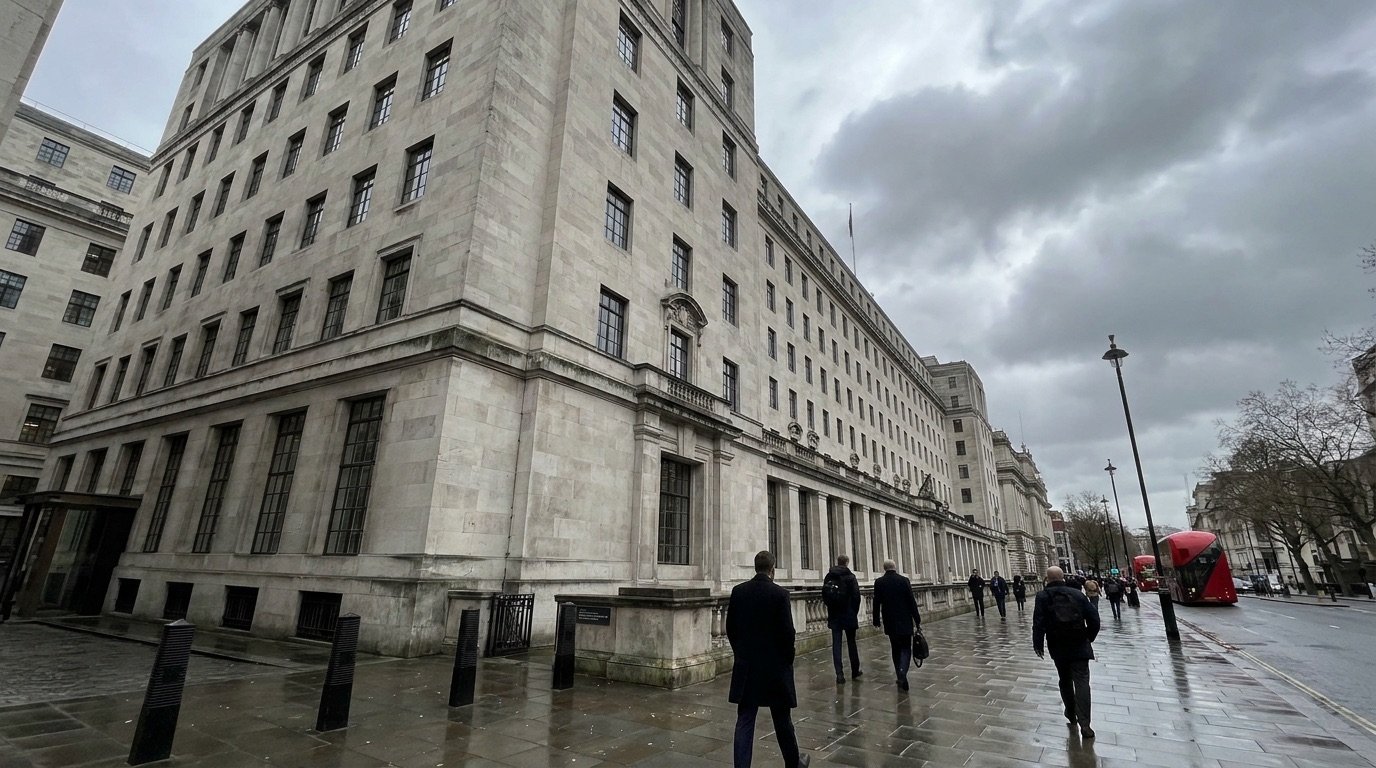
The most consequential move came in Defence. After John Healey resigned as defence secretary over what he argued was an inadequate funding settlement, the government confirmed by the end of the day that Dan Jarvis would take over the department, one of the most sensitive briefs in Whitehall at a moment of heightened international tension.
It is a reshuffle born of necessity rather than design. A prime minister on his way out has little authority to remake his Cabinet, and few appetites among ambitious colleagues to accept a promotion that may last only weeks.
The Defence vacancy and its successor
Mr Healey's departure was the most damaging of the resignations because of the reason he gave for it. He argued that the Defence Investment Plan agreed by the Treasury fell short of the United Kingdom's strategic needs, that the settlement delayed necessary investment, and that the armed forces risked being left under-resourced amid rising threats.
Mr Healey is reported to have sought a settlement of around £18bn, while Chancellor Rachel Reeves had declined to go beyond roughly £12bn. The gap was political as much as financial, and it handed the opposition a potent line of attack on national security. Dan Jarvis, a former soldier, inherits both the department and the unresolved argument over its budget.
“Because the prime minister was unable and the Treasury unwilling to match the funding required, I was left with no option but to step down.”
Jarvis's appointment steadies the department in the short term, but he takes office knowing the next prime minister may set an entirely different course on defence spending within weeks.
The wider exodus
Defence was not the only casualty. Wes Streeting had earlier left the health brief, and the resignations spread across government as the crisis deepened. Armed forces minister Al Carns went alongside Mr Healey, and a string of junior ministers and parliamentary aides quit during the weeks of turmoil that preceded Sir Keir's decision to stand down.
Each departure forced a small act of reconstruction, but the cumulative effect is a government running on a reduced roster of seniority and experience. Several of those who left are now expected to be among the most influential voices in the leadership contest to come.
- John Healey resigned as defence secretary, citing an insufficient funding settlement.
- Dan Jarvis was confirmed as the new defence secretary the same day.
- Armed forces minister Al Carns also resigned over defence funding.
- Wes Streeting had earlier left the Cabinet before backing Andy Burnham for the leadership.
- Several junior ministers and aides resigned during the weeks of crisis.
A reshuffle without authority
The constraint on the caretaker prime minister is stark. Conventionally, an outgoing leader avoids sweeping appointments that would tie the hands of a successor, and most of the talent in the parliamentary party is now focused on the contest rather than on serving in a Cabinet with a short shelf life.
The result is a holding team, assembled to keep departments staffed rather than to drive a programme. Officials emphasise that essential decisions are still being taken, but the political energy has plainly drained out of the building and migrated to the leadership campaign.
Background
The resignations were the most visible symptom of a collapse in confidence that had been building since the spring. Heavy losses in May's local elections, a surging Reform UK and growing disquiet over policy on defence, welfare and the economy combined to convince much of the parliamentary party that Sir Keir could not lead it into the next election.
What happens next is that the incoming leader will conduct the real reshuffle. The current arrangement is a stopgap, and every minister in post knows that their tenure may be measured in weeks rather than years, depending on who wins the contest and what team they choose to build.
Sources: reporting by PBS NewsHour.
The NE Times is an independent news and analysis publisher. Our articles combine factual reporting with clearly-written, impartial analysis. Content is for general information and does not constitute professional advice. Disclaimer.
You may also like to read
Healey quits as Defence Secretary in protest at military spending settlement
John Healey accused the Prime Minister and Treasury of failing to fund the armed forces adequately, in a resignation that deepened Labour's crisis.

Starmer names Dan Jarvis Defence Secretary in rapid reshuffle after revolt
The former Parachute Regiment officer takes over a department engulfed in a funding row as the Prime Minister moves to steady his government.
UK-UAE Sudan Testimony Raises Questions For Ministers
A parliamentary committee is to hear claims that ministers prioritised ties with the UAE over stronger action on mass atrocities in Sudan.
Federal judge blocks key parts of Trump's mail voting order
A Boston court sided with states arguing that running elections is a matter for states and Congress, not the White House.