Cape Verde Leave the World Cup Beaten but Bigger Than They Arrived
A 3-2 extra-time defeat to Argentina ended Cape Verde's first World Cup, but the run by a nation of 500,000 may prove the tournament's defining human story.
Daniel Fletcher
Writer ·
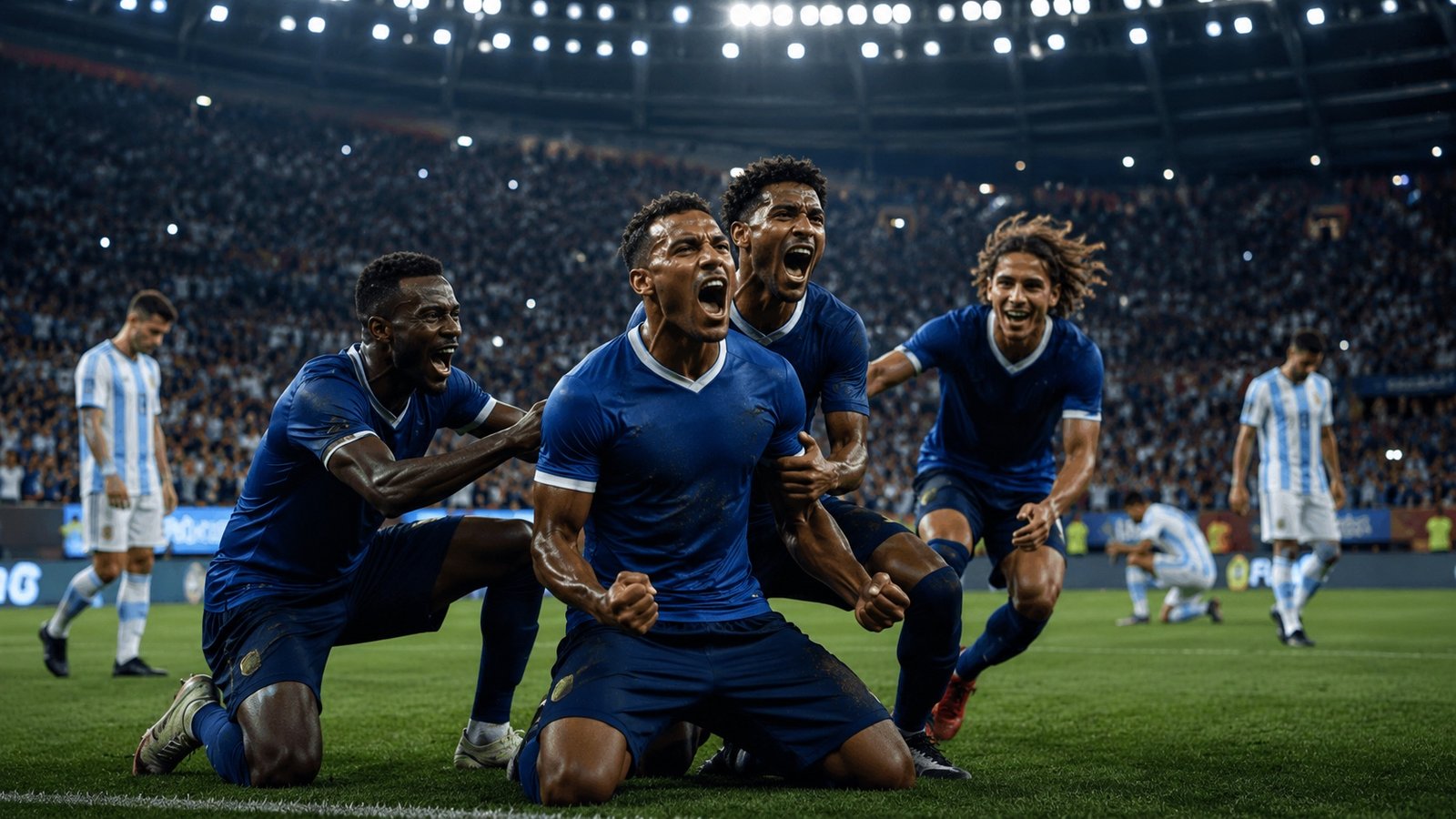
The scoreline says Argentina won 3-2 after extra time and advanced. The wider story says something more interesting. The Associated Press reported that Lionel Messi and the defending champions had to survive a genuine thriller against one of the tournament's smallest nations, while the Guardian judged Cape Verde's performance one that will live in World Cup lore. Elimination, it turns out, is not the same as disappearance.
What happened
Cape Verde did not win a match at their first World Cup, and the record will state that plainly. But the Argentina tie crystallised what the record cannot hold: a country of about 500,000 people equalising against the champions, dragging the game into extra time and forcing panic into its final stages. Messi scored and extended his extraordinary World Cup legacy, yet the night refused to become only his chapter. It was competitive not because Argentina were careless, but because Cape Verde made it so.
Why it matters
The word underdog is used lazily in sport; here it is structurally accurate. Cape Verde lack the financial base, domestic machinery and player pool of football's giants, and many of their squad arrived through diaspora pathways — the team represents a dispersed community as much as a federation. That is why veteran goalkeeper Vozinha's post-match words carried weight: the team, he said, had dignified Cape Verde before much of the world, and seeds had been planted. A strong World Cup changes how young players imagine possibility, how scouts view a pathway, and how a federation is treated by sponsors. The run is also an argument in the expansion debate — proof of what the enlarged format makes possible when a debutant arrives prepared, proud and tactically coherent.
The counter-view
Admiration fades fast once a tournament moves on, and small federations have historically struggled to convert a breakthrough into infrastructure. A heroic defeat opens doors; it cannot walk through them. Argentina, for their part, will treat the night as survival and warning in equal measure — when a side with far less pedigree can stretch a knockout tie that deep, the champions have control problems to solve, whatever Messi's scoring form suggests.
What happens next
The next phase belongs to administrators rather than heroes: youth development, diaspora scouting, administrative capacity and a fixture calendar that keeps the team visible between tournaments. If attention becomes structure, the 3-2 defeat to Argentina may be remembered not as the end of a magical ride but as the match that convinced the football world to take Cape Verde seriously. They arrived with less and left with more respect than they brought — which is, in its way, the World Cup working exactly as intended.
Sources: reporting by Associated Press.
The NE Times is an independent news and analysis publisher. Our articles combine factual reporting with clearly-written, impartial analysis. Content is for general information and does not constitute professional advice. Disclaimer.
You may also like to read
The Hossam Hassan Dallas incident shows how World Cup security is now part of the story
Egypt's coach says a hotel confrontation with Dallas police is resolved — but the episode shows the fragile line between security and football culture.

Rodrygo's World Cup observation: football's loudest culture meets its biggest market
Rodrygo's Guardian column on the gulf between Brazilian and American football culture shows what the World Cup can and cannot export.

France grind, Morocco glide: two routes into the World Cup quarter-finals
Mbappe's winner edged Paraguay 1-0 while Morocco swept Canada aside 3-0 to make African football history — two contrasting models of knockout control.
Norway 2-1 Brazil: a World Cup upset built on composure, not chaos
Erling Haaland's late double sent five-time champions Brazil out in the last 16 — an upset that was less a miracle than a masterclass in patience.