Badenoch turns the screw: Tories demand an election and warn Britain's problems outlast Starmer
Kemi Badenoch dismissed the prime minister's 'farewell tour' and argued the country needs a general election unless Labour's new leader can answer on national security.
Eleanor Whitfield
Writer ·
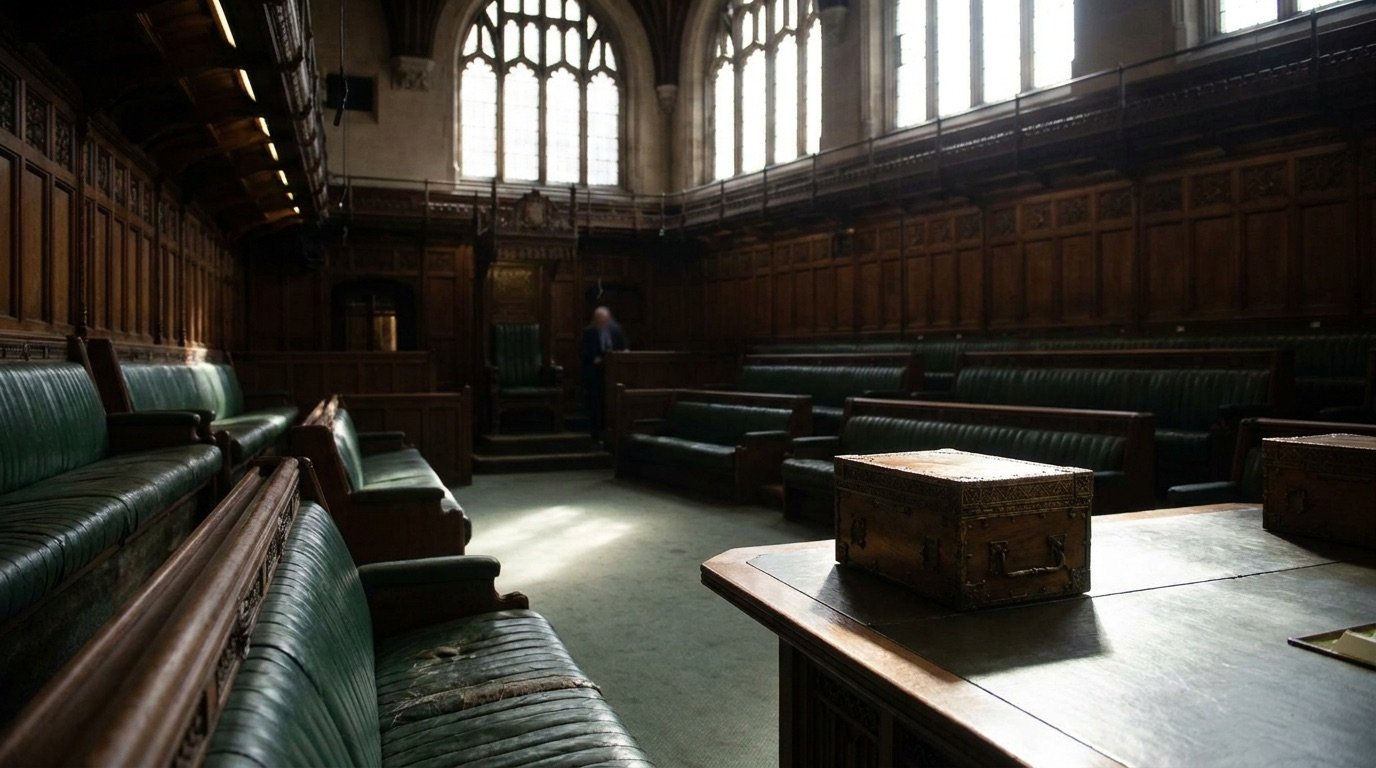
The Conservatives moved quickly to capitalise on Labour's disarray, with leader Kemi Badenoch dismissing Sir Keir Starmer's drawn-out departure as a 'farewell tour' and pressing the case that the country needs a general election rather than a private Labour stitch-up to choose its next prime minister.
Mrs Badenoch's central argument was that swapping one Labour leader for another solves nothing. 'Britain is not ungovernable,' she said. 'Keir Starmer is a terrible prime minister. But the problem isn't just Starmer.' Her aim was to tie any successor, and Andy Burnham in particular, to the record of the government he hopes to inherit.
Yet the Conservative position is a delicate one. The party is demanding a contest it currently trails in the polls, and its call for an immediate election is hedged with a condition designed to keep the focus on its strongest ground: national security.
The national security gambit
Mrs Badenoch leaned heavily on the circumstances of Sir Keir's fall, noting that the prime minister had been forced out in part because his defence secretary judged he was not adequately funding national security. She sought to make defence the test by which any successor should be measured.
Pressed on whether she would call an election immediately, she set a clear condition. 'We should have a general election if Andy Burnham is not able to set out how he is going to keep our country safe,' she said, framing the demand around the incoming leader's credibility on defence rather than the simple fact of an unelected handover.
“Britain is not ungovernable. Keir Starmer is a terrible prime minister. But the problem isn't just Starmer.”
The calculation is that defence is one of the few areas where the Conservatives still command public trust, and that a fresh Labour leader without a clear answer on military funding can be cast as a security risk.
A broader charge sheet
Beyond defence, Mrs Badenoch sought to pin a string of grievances on the outgoing government. She criticised its record on tax, welfare reform, energy policy and key appointments, presenting the leadership change as cosmetic rather than substantive and arguing that the same policies and the same MPs would simply continue under new management.
The line, repeated by Conservative spokespeople through the day, was that the country had been denied a say. A new prime minister chosen by Labour members, they argued, would arrive without a mandate from the public to govern through to the next scheduled election.
- Kemi Badenoch dismissed Sir Keir Starmer's resignation timetable as a 'farewell tour'.
- She argued the country's problems will outlast Starmer and are not solved by a leadership swap.
- Her call for a general election is conditioned on Labour's successor failing the national security test.
- The Conservatives are pressing defence funding as their strongest line of attack.
- The party insists the public, not Labour members, should choose the next prime minister.
The Tories' own predicament
For all the energy of the attack, the Conservatives face an awkward reality. They are no longer the principal challenger in much of the polling, having been overtaken in places by Reform UK, and an immediate general election could expose that weakness as starkly as it would Labour's.
That helps explain the careful conditionality of Mrs Badenoch's election demand. The party wants to look like it is holding Labour to account without committing to a contest that might confirm its diminished standing on the right of British politics.
Background
Sir Keir Starmer announced his resignation on 22 June after a collapse in confidence within his parliamentary party, heavy local election losses and a series of ministerial resignations over defence funding. Andy Burnham, freshly returned to the Commons through the Makerfield by-election, is the clear frontrunner to succeed him.
What happens next will test whether the Conservatives can convert Labour's turmoil into recovery, or whether the spoils flow elsewhere. With Reform UK leading in the polls and demanding the same election, Mrs Badenoch must persuade voters that her party, and not Nigel Farage's, is the credible alternative to a government in crisis.
Sources: reporting by GB News.
The NE Times is an independent news and analysis publisher. Our articles combine factual reporting with clearly-written, impartial analysis. Content is for general information and does not constitute professional advice. Disclaimer.
You may also like to read
Westminster reacts: Farage demands election as rivals circle after Starmer quits
Reform UK called immediately for a general election and the Conservatives went on the attack, while Labour figures lined up behind the frontrunner to succeed the departing Prime Minister.

Farage seizes the moment: Reform UK demands a snap election and sets its sights on Burnham
With Reform UK leading the polls, Nigel Farage claimed to have 'deposed' Sir Keir Starmer and declared he is not frightened of Andy Burnham or any Labour successor.
Will Britain go to the polls? The election-timing question facing the next PM
Sir Keir Starmer's successor will inherit a Commons majority but no personal mandate — and the frontrunner has already left the door to an early general election ajar.

Reform UK extends polling lead as Labour and Conservatives trail
An Opinium survey put Nigel Farage's party on 29 per cent, well ahead of Labour and the Conservatives, underlining the fragmentation of British politics.