Egypt's lost Byzantine city is a bigger story than the headline suggests
A Byzantine-era settlement found at Marina el-Alamein reopens a neglected chapter of Egypt's past — and poses a stewardship test that starts now.
Marcus Reeve
Writer ·
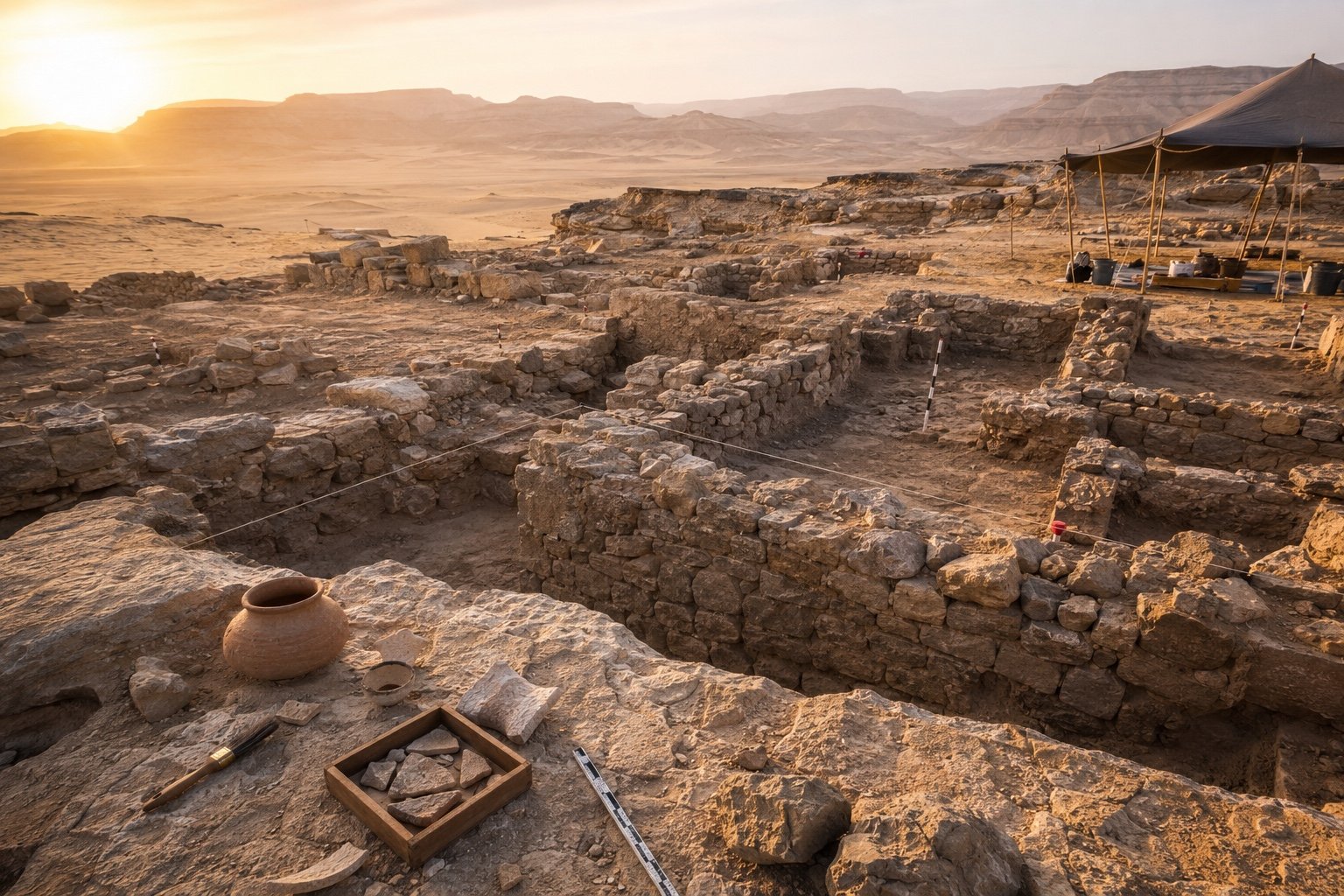
Egypt announces discoveries with practised regularity, and most arrive wrapped in the language of pharaohs. The lost city announced this week is different. It is Byzantine — a period the popular imagination tends to skip — and that is exactly what makes it worth slowing down for.
What happened
According to the Associated Press, Egyptian authorities announced the discovery of a lost Byzantine-era city at the Marina el-Alamein archaeological site, west of Alexandria on the country's Mediterranean edge. Images from the site show limestone-built tombs on the surface alongside newly recovered artefacts. It is an early-stage find: what has been announced is a beginning, not a fully excavated settlement.
Why it matters
A city is not a single object; it is evidence of organised life — housing, burial practice, trade goods, water management, religious space. The stretch of coast around Marina el-Alamein was a meeting zone, where local societies plugged into wider Mediterranean routes while the desert behind demanded hard practical knowledge about water and movement. A Byzantine settlement here would have lived with layered identities: local custom, imperial administration, Christian institutions and coastal commerce all at once. That texture rarely survives in the simplified national story of pyramids, mummies and then a leap to the modern state.
There is a caution worth stating, too. Burial evidence tends to survive better than domestic evidence, and tombs tell us what families wanted preserved — or could afford to preserve — not how most residents actually lived. The site's long-term value depends on whether excavators can connect ceremonial, domestic and economic evidence into one coherent picture, and that work is patient, technical and often unglamorous.
The bigger picture
Egypt understandably promotes archaeology as part of its cultural economy, and there is nothing improper in that. But publicity carries a cost: once a site is publicly known, it attracts attention that demands active stewardship. Desert conditions preserve remains for centuries, yet they are no defence against development pressure, looting or unmanaged visitation. Conservation decisions taken in the next few years will determine whether future researchers can ask better questions than this week's announcement could answer.
What happens next
Expect the story to mature slowly — documented layouts, comparative artefact studies, possibly inscriptions — with interpretations that shift as layers come up. That uncertainty is not a weakness of archaeology; it is the discipline working properly. If Marina el-Alamein is excavated and protected with care, its greatest contribution may be to make Egypt's later ancient world feel as vivid as its famous one.
Sources: reporting by Associated Press.
The NE Times is an independent news and analysis publisher. Our articles combine factual reporting with clearly-written, impartial analysis. Content is for general information and does not constitute professional advice. Disclaimer.
You may also like to read
When Confidentiality Feels Like a Gag: Australia's Parliamentary Watchdog Under Scrutiny
A staffer's account of jail-threat confidentiality warnings puts Australia's parliamentary complaints body — and workplace reform everywhere — to the test.
The Brooklyn Bridge Fire Shows What Civic Spectacle Really Depends On
A fireworks malfunction set the Brooklyn Bridge alight during America's 250th Independence Day show — a test of the invisible systems behind celebration.
At Mount Vernon, America's 250th birthday became a citizenship story
150 people from 50 countries took the oath of US citizenship at George Washington's estate on 4 July — giving the semiquincentennial a human scale.
In El Obeid, Sudan's drone war is measured in cancelled deliveries and closed roads
Reporting from the besieged Sudanese city shows how drone strikes are compounding displacement and shortages — and testing the limits of humanitarian work.