England Confirms Energy Drink Sales Ban for Under-16s From April 2027
England will ban sales of high-caffeine energy drinks to under-16s from April 2027, covering shops, vending machines and online. Here is what the policy involves and who it affects.
Culture & Features Editor ·
Why it's trending
Parents, schools, retailers and teenagers are searching for the practical details: when the ban begins, which drinks are covered and whether tea, coffee or sports drinks are included.
The policy has moved from promise to timetable
The government has confirmed that England's ban on selling high-caffeine energy drinks to under-16s will begin in April 2027. The announcement gives families and retailers the practical deadline that was missing from earlier political commitments. It will apply across physical shops, online sellers and vending machines, preventing a patchwork in which a child refused at a supermarket could simply order the same drink elsewhere. The central threshold is more than 150 milligrams of caffeine per litre, a level already used for high-caffeine labelling and many voluntary retail restrictions. Tea and coffee are not included in the planned ban.
Why ministers are acting
The public-health argument centres on sleep, anxiety, concentration and the cumulative effect of high caffeine consumption on developing bodies. Government figures say about 100,000 children in England consume at least one high-caffeine energy drink every day, with consumption higher in some deprived communities. Evidence does not mean every can causes a medical emergency, and responsible reporting should avoid sensationalism. The concern is population-level exposure: heavily marketed products can contain substantial caffeine and sugar, are easy to buy, and may be consumed quickly or combined with other stimulants. For schools, the immediate effects can include tiredness, agitation and reduced attention.
What counts as an energy drink
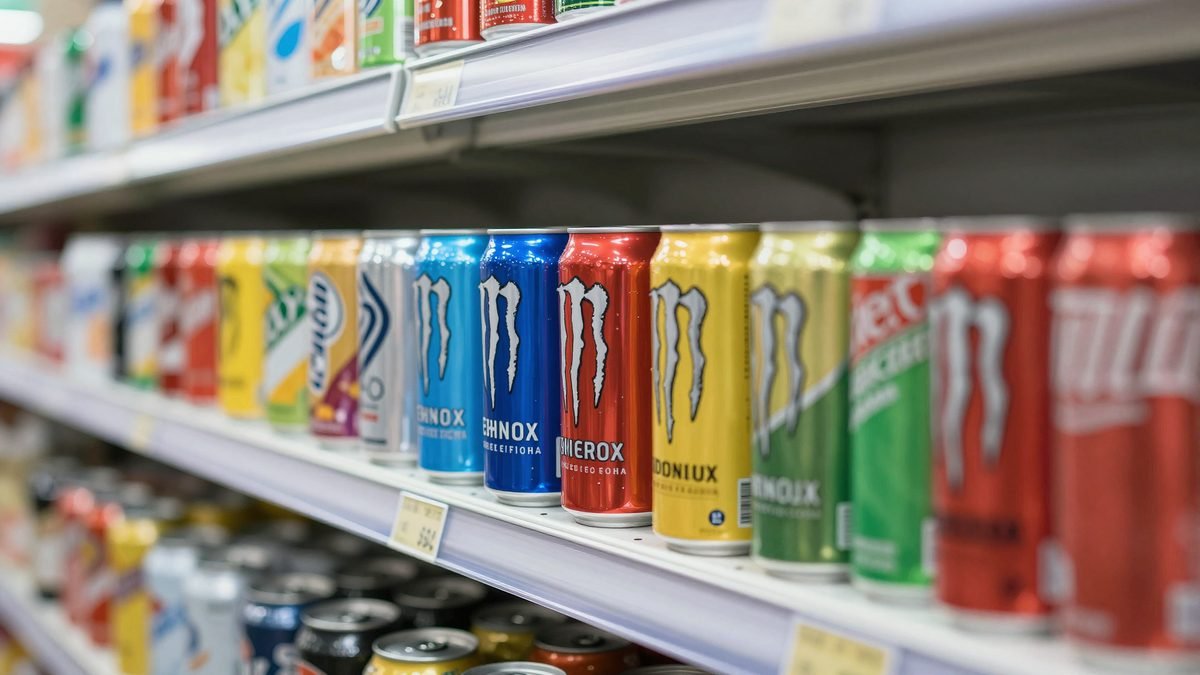
The restriction is based on caffeine concentration rather than brand identity or packaging style. Drinks over the 150mg-per-litre threshold are already required to carry warnings that they are not recommended for children or pregnant women. Many well-known energy drinks fall into this category. Conventional soft drinks with lower caffeine content are outside the definition, as are tea and coffee under the proposed rules. Sports drinks that focus on hydration and electrolytes may also fall outside it unless their caffeine level crosses the threshold. This distinction matters because consumers often use 'energy drink' as a broad label for very different products.
How age checks may work
Retailers already use Challenge 25 or similar systems for alcohol, tobacco and some voluntary energy-drink restrictions. The new rule is expected to require businesses to take reasonable steps to prevent sales to children, including staff training, till prompts, age-verification processes and controls for online delivery. A 15-year-old does not usually carry formal identification, which creates a practical difficulty. Retailers may therefore apply a higher visible-age threshold, asking anyone who looks under 18 or 25 for approved proof. The final secondary legislation and enforcement guidance will determine how proportionate compliance is judged and which authorities issue penalties.
The online and vending-machine problem
A ban limited to staffed shops would leave major loopholes. Online retailers must be able to verify age at purchase or delivery, rather than relying only on a tick box. Vending machines present an even harder challenge because they may be located in leisure centres, transport hubs or workplaces without direct supervision. Operators could remove covered products, add secure age-verification technology or reposition machines in controlled areas. The implementation period to April 2027 gives businesses time to adapt systems, but smaller retailers will want clear and affordable guidance. Enforcement that is technically demanding but poorly supported can produce inconsistent results.
Why voluntary restrictions were not enough
Large supermarkets and some convenience chains have refused sales to under-16s for years, demonstrating that an age limit is workable. However, voluntary action is uneven. A child may be refused by one retailer and served by another, while online availability remains broad. A statutory rule creates a common minimum standard and prevents responsible businesses from being commercially disadvantaged. It also changes the social message: high-caffeine products are not treated like ordinary soft drinks for children. Critics may argue that parents, not the state, should decide. Supporters respond that age-based product rules are justified when marketing, access and health risks extend beyond individual households.
The inequality argument
The government has emphasised that consumption can be higher among children in more deprived areas. That makes the policy part of a wider debate about health inequality. Restrictions alone will not solve poor sleep, stress, food insecurity or the intense marketing environment surrounding young people. There is also a risk that fines fall heavily on small shops unless education precedes enforcement. A fair implementation would combine clear rules with school information, retailer support and monitoring of whether children switch to other high-caffeine products. The strongest public-health policies usually change the environment while giving people understandable reasons for the change.
What opponents are likely to challenge
Questions will focus on evidence, personal choice and consistency. Why ban a canned drink but not a large takeaway coffee? Why set the age at 16 rather than 18? Could reformulation reduce caffeine without removing products? The government's answer is that the threshold targets products specifically associated with high caffeine and youth marketing, while tea and coffee have different patterns of consumption. The age of 16 aligns with existing voluntary policies and the evidence base considered in consultation. These choices are contestable, and parliamentary or legal scrutiny may test whether the final regulations are clear, proportionate and enforceable.
What families and businesses should do now
Nothing changes at the till immediately; the start date is April 2027. Parents can use the announcement as a prompt to check labels and discuss caffeine rather than treating the issue as a moral panic. Schools may review vending and catering contracts. Retailers should identify which products exceed the threshold, plan staff training and examine online age controls. Manufacturers may reformulate or change package sizes and marketing. The success of the ban will not be measured only by the number of penalties. It will depend on whether children's routine exposure falls, sleep and classroom outcomes improve, and enforcement is consistent enough that the law is understood rather than easily bypassed.
Sources & verification
- GOV.UK - energy drinks ban announcement (www.gov.uk)
- GOV.UK - consultation and policy detail (www.gov.uk)
- Obesity Health Alliance - response (obesityhealthalliance.org.uk)
Filed under Health · Written by Sophie Bennett
You may also like to read