Free Bus Travel for Children Starts in England: August 2026 Eligibility, Savings and Local Participation
The scheme begins this weekend and affects family budgets, leisure travel, operators and local transport authorities across England.
UK News & Politics Editor ·
Why it's trending
The scheme begins this weekend and affects family budgets, leisure travel, operators and local transport authorities across England.
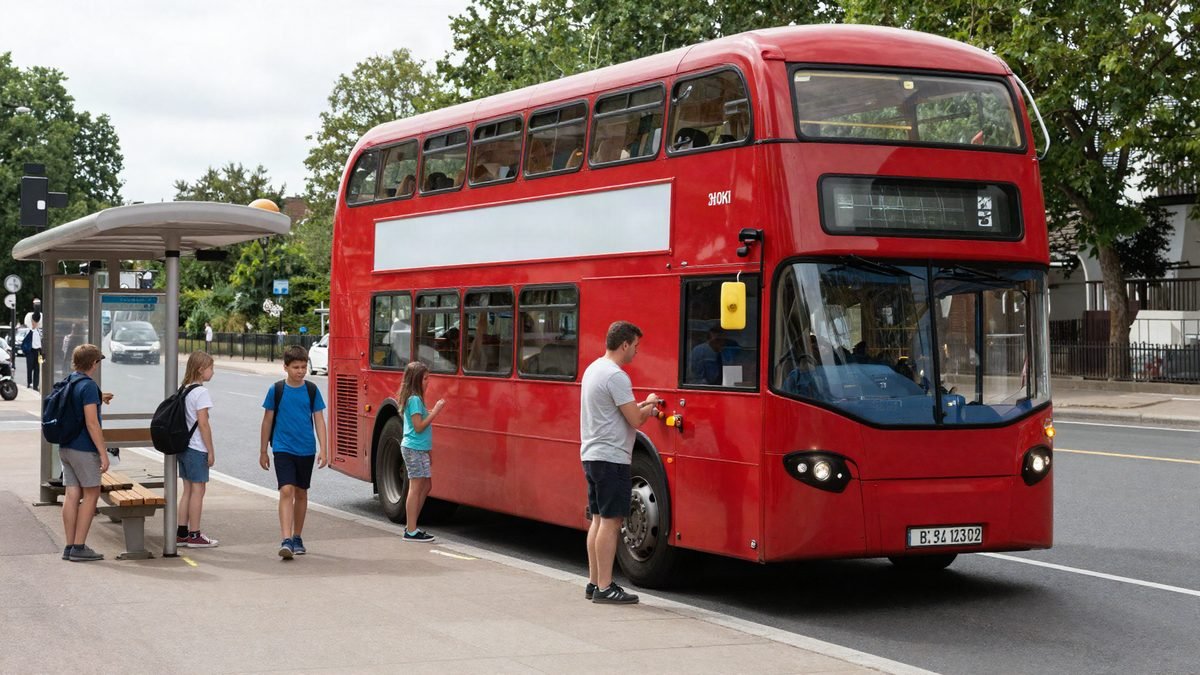
A nationwide summer offer is giving many children free local bus travel during August. The measure is designed as a cost-of-living intervention and an invitation for families to reach beaches, museums, parks, town centres and relatives without paying a child fare. This development is part of the UK news agenda for the week from 27 July to 2 August 2026. It is receiving attention because the scheme begins this weekend and affects family budgets, leisure travel, operators and local transport authorities across England.. The essential task is to separate confirmed facts from interpretation, explain the practical effect and identify what readers should verify before acting on the information.
Who qualifies
The core age range is five to 15, but operators may specify how age is verified. Younger children often travel free under existing rules, while 16-year-olds and older teenagers may need local youth passes or standard tickets. That context changes how the headline should be understood. The distinction between an announcement and an operating policy is important here. Ministers can change the political direction quickly, but delivery normally depends on budgets, statutory authority, civil-service instructions and organisations outside Whitehall. For free bus travel children England August 2026, the strongest future evidence will be published guidance, measurable milestones and independent scrutiny rather than the volume of launch-day coverage. Readers should therefore separate the confirmed decision from the assumptions being made about its eventual impact.
Which journeys are covered
The scheme concerns participating local buses in England. Long-distance coaches, private tours, replacement services and journeys crossing into devolved nations may follow different rules, so a national headline should not be read as universal coverage. The operational detail is where the story becomes useful to readers. The distributional question deserves equal attention. A national policy can create different outcomes by region, income, age, disability or institutional capacity. Coverage of free bus travel children England August 2026 should ask who receives the immediate benefit, who carries administrative or financial risk and whether protections exist for people who are least able to navigate a new system. Those questions are not objections to change; they are the practical test of whether reform works fairly.
How much families may save
A household making several trips each week could save a meaningful amount, particularly when multiple children travel. The benefit is largest where services are frequent and destinations are reachable without several paid connections. This is also the point at which different interests begin to diverge. There is also a governance issue. Responsibility may be shared between central departments, regulators, councils, mayors, employers or service providers, and unclear hand-offs are a common source of delay. A credible programme needs named decision makers, transparent reporting and a route for complaints or correction. In the case of free bus travel children England August 2026, scrutiny should follow the delivery chain instead of assuming that a statement from No 10 automatically changes practice everywhere.
The operator and funding challenge
Bus companies need reimbursement, clear ticketing instructions and driver guidance. If the process is complicated or payment arrives late, participation can become uneven, undermining the simplicity of the public message. The next stage will reveal whether the stated objective is realistic. Political incentives will shape the next stage. The government wants visible evidence that a new prime minister has changed priorities, while opposition parties have reasons to emphasise cost, competence or unintended consequences. The useful reporting task is to test both sides against documents and outcomes. free bus travel children England August 2026 may remain popular as an idea even if implementation becomes contested, so the article should keep policy substance separate from party strategy.
Wider transport policy
The offer sits alongside the future £2 adult fare cap and devolution plans. Temporary free travel can build ridership, but lasting behaviour change also requires reliable routes, evening services, accessible vehicles and integration with rail. For publishers, precision on timing and scope is particularly important. Cost and capacity are likely to decide whether the promise lasts. New rights and services can fail when funding is temporary, staff are unavailable or digital systems are not ready. Equally, a targeted intervention can deliver value when it replaces fragmented spending and gives organisations certainty. Reporting on free bus travel children England August 2026 should track total cost, funding source, workforce requirements and the assumptions behind any savings claim.
A practical checklist
Families should use official operator websites, plan return journeys and check last-bus times. Editorial coverage should state the dates and age range prominently while warning that participation and local evidence requirements may vary. The wider significance extends beyond the immediate announcement. Legal status must be described precisely. A consultation, press release, rule change, court judgment and Act of Parliament do not have the same force or timetable. Transitional provisions can matter as much as the headline, particularly for applications or cases already under way. The safest approach to free bus travel children England August 2026 is to date each stage, identify territorial scope and update the explanation when regulations or guidance are published.
What happens next
The next update on free bus travel children England August 2026 should be judged against the specific commitments and dates already published. Readers should watch for formal guidance, revised platform listings, implementation data, court or parliamentary developments, and statements from organisations directly responsible for delivery. Operator participation and proof-of-age rules may vary. Verify individual routes and avoid implying that every bus or coach journey is free. The article should therefore be refreshed immediately before publication and again when the first measurable outcomes are available.
Sources & verification
- GOV.UK - free bus travel for children
Filed under UK News · Written by Eleanor Whitfield