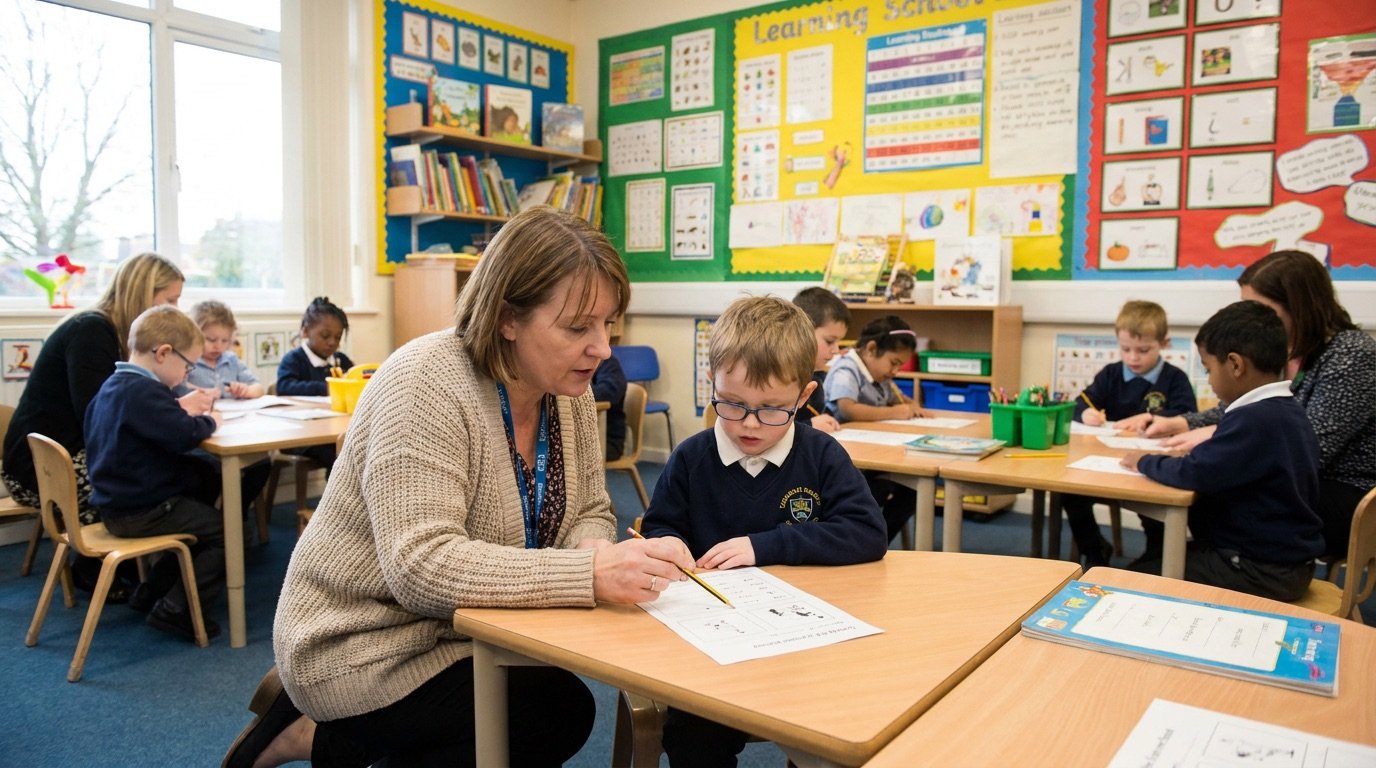
Half a Million More Children to Get Free School Meals From September
Every pupil in a household on Universal Credit will become entitled to a free school lunch from the new academic year, in the biggest expansion of the scheme in years, as councils urge families to reapply before the changes take effect.
UK News & Politics Editor ·
Why it's trending
From September, every child in a Universal Credit household qualifies for free school meals — over half a million more children.
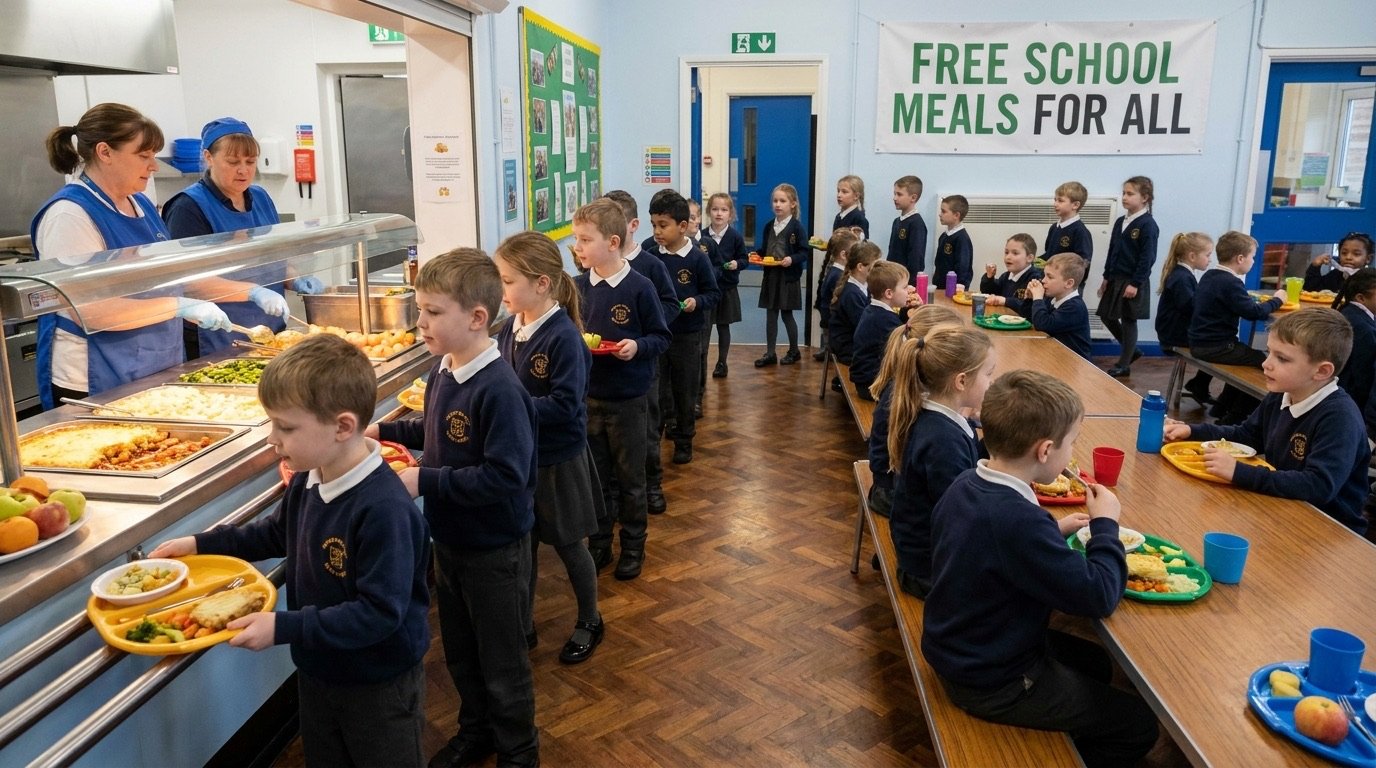
The biggest expansion of free school meals in years takes effect this September: every pupil in a household receiving Universal Credit will be entitled to a free school lunch, regardless of household income. The change, announced on GOV.UK, removes the income threshold that previously excluded hundreds of thousands of children in working families.
More than 500,000 additional children are expected to benefit. Councils are urging families to register before the new school year — entitlement may be automatic in principle, but school funding and pupil premium calculations still depend on families being correctly recorded, and a new eligibility checking service has been available to councils since June.
At a glance
- Eligibility extends to all pupils in Universal Credit households
- Change takes effect from the start of the 2026 school year
- More than 500,000 additional children expected to benefit
- Income threshold for eligibility removed
- New eligibility checking service available to councils from June
What actually changes
Until now, children in Universal Credit households qualified only if household earnings fell below a threshold of £7,400 a year — a line that produced perverse outcomes, cutting off support as parents took extra hours. Abolishing the threshold makes the rule simple: Universal Credit in the household means free lunch for every child in it.
Simplicity is itself a policy gain. Complex eligibility rules suppress take-up among precisely the families that need support most; a clean rule is easier for schools to administer and for parents to understand.
Why school food matters
The evidence on school meals is unusually consistent: children who eat a proper lunch concentrate better in afternoon lessons, and universal or near-universal provision reduces the stigma that deters eligible families from claiming. Teachers have long reported hungry children as a visible fact of classroom life.
For household budgets, the value is concrete — several hundred pounds per child per year — arriving in the school term when food costs, uniforms and transport already stack up. For families with several children, the expansion is one of the larger cost-of-living interventions of recent years.
The registration catch
The practical risk is under-registration. Schools attract pupil premium funding based on recorded free-school-meals eligibility, so a family that never signs up costs its school money as well as missing meals. This is why councils are running reapplication campaigns ahead of September.
The new eligibility checking service should reduce friction, letting councils verify Universal Credit status directly rather than demanding paperwork from parents. Auto-enrolment — long urged by child-poverty campaigners — is the logical end point, and the new data plumbing brings it closer.
What it does not fix
Campaigners welcomed the expansion while noting its edges: children in families with no recourse to public funds sit outside Universal Credit altogether, and holiday hunger — the school-holiday gap in provision — is untouched by a term-time entitlement.
There is also the question of meal quality and funding rates paid to schools and caterers, which determine whether the entitlement on paper translates into a decent plate of food. Expansion of numbers puts more weight on those per-meal economics.
What happens next
September's rollout will be the operational test: half a million new entitlements landing at once, school kitchens scaling up, and the first data on take-up. Expect early figures on how many eligible families have actually registered.
Beyond that lies the auto-enrolment argument and pressure to extend provision further — breakfast, holidays, or universal primary meals as some parts of the UK already offer. The threshold's abolition has moved the debate from whether to expand school food support to how far.
Sources & verification
- GOV.UK — primary reporting referenced by this article
Filed under UK News · Written by Eleanor Whitfield
You may also like to read