Green Man's refugee training scheme shows what a festival can do beyond the stage
The Welsh festival's decade-old programme has trained 191 refugees from 52 countries, turning a music event into practical civic infrastructure.
Eleanor Whitfield
Writer ·
What happened
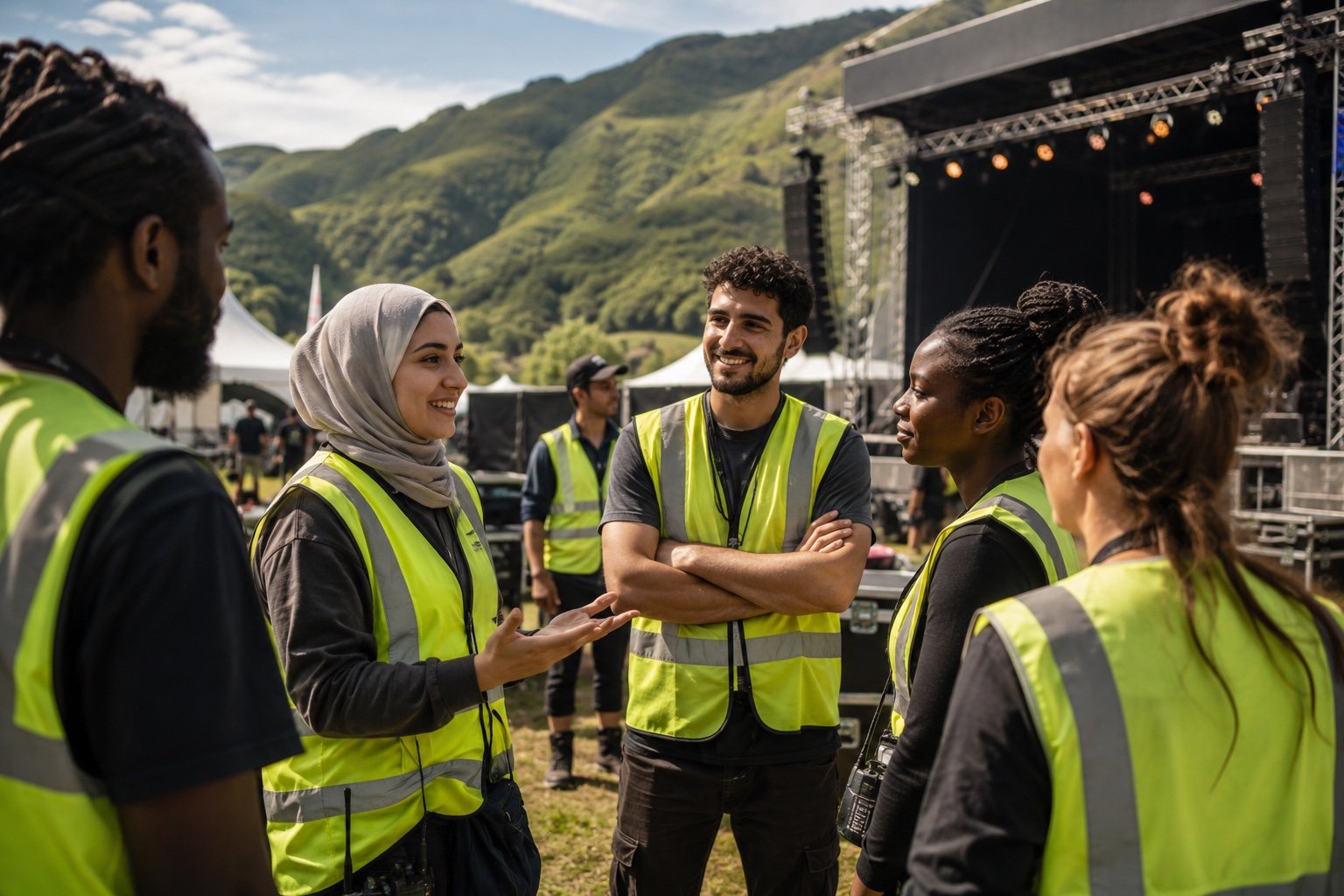
Green Man, the independent festival held in the Brecon Beacons, has reached the tenth year of a training programme run through the Green Man Trust that offers refugees and asylum seekers hands-on placements at the event. According to Guardian reporting, 191 people from 52 countries have taken part over the decade, learning front-of-house work, communication, health and safety, food management, money handling and how to deal with the public at a large live event.
Participants quoted in the coverage give the scheme its human shape. Mina, a former cyclist who fled the Taliban in 2022, described the festival as a way to connect with life in the UK. Javid, also from Afghanistan, said Green Man was his first experience of a concert, camping and festival life, and linked the placement to rebuilding confidence. Olga, from Ukraine, spoke of feeling part of a crew rather than a recipient of help.
Why it matters
The scale is modest set against the size of Britain's migration debate, but that is partly the point. The programme is framed as training rather than charity theatre, and the skills involved are portable into hospitality, retail, events and community work. For people rebuilding lives amid legal and housing uncertainty, a placement cannot resolve status or trauma, but it creates a small zone of agency. In our view, that practical modesty is precisely what makes the model credible where grander gestures often are not.
Festivals are, in effect, temporary cities. They need stewards, caterers, problem-solvers and calm public-facing teams, and they generate a rare social setting in which people usually discussed through the language of crisis can participate as colleagues. Green Man has identified a genuine use for its own machinery.
The counter-view
Not every event could or should copy this. Green Man's owner, Fiona Stewart, told the Guardian that many festivals would not offer a safe enough environment for such a scheme, and that caveat deserves weight. A chaotic or poorly managed site could convert opportunity into stress, and inclusion becomes meaningful only when attached to training budgets, safeguarding and patient supervision. The model is transferable in principle; the conditions that make it work are not automatic.
What happens next
The wider live-music industry, under pressure over pricing, sustainability and the fragility of independent events, has an interest in what this experiment demonstrates: that festivals can function as cultural infrastructure, not just weekends of consumption. If other organisers adapt the approach to their own circumstances rather than copying it wholesale, a decade of quiet work in a Welsh valley may prove to be one of the more consequential ideas in British live music.
Sources: reporting by The Guardian.
The NE Times is an independent news and analysis publisher. Our articles combine factual reporting with clearly-written, impartial analysis. Content is for general information and does not constitute professional advice. Disclaimer.
You may also like to read
Rhun ap Iorwerth's minority Wales: Plaid Cymru governs after ending Labour's century of dominance
For the first time since devolution began, Wales is governed by a party other than Labour. Rhun ap Iorwerth leads a Plaid Cymru minority administration that must now turn campaign promises on speed limits, the M4 and the NHS into deliverable policy without a majority.
Welsh Labour's reckoning: interim leader Skates steers a shrunken party towards a winter contest
After Eluned Morgan became the first sitting head of a UK government to lose her own seat, Welsh Labour is regrouping with Ken Skates as interim leader and a full leadership election pencilled in for the autumn, with the winner inheriting opposition rather than office.
Temporary protection and 20-year settlement: the asylum overhaul taking shape
Home Secretary Shabana Mahmood's reform package, set out in March, is now being implemented — with refugee protection becoming temporary and support shifting from duty to discretion.

Bellamy's Burnley talks raise question over Wales role
Reports that Wales boss Craig Bellamy is in discussions with Burnley over their head-coach job have sparked debate about club ambition and international continuity.