Rhun ap Iorwerth's minority Wales: Plaid Cymru governs after ending Labour's century of dominance
For the first time since devolution began, Wales is governed by a party other than Labour. Rhun ap Iorwerth leads a Plaid Cymru minority administration that must now turn campaign promises on speed limits, the M4 and the NHS into deliverable policy without a majority.
Eleanor Whitfield
Writer ·
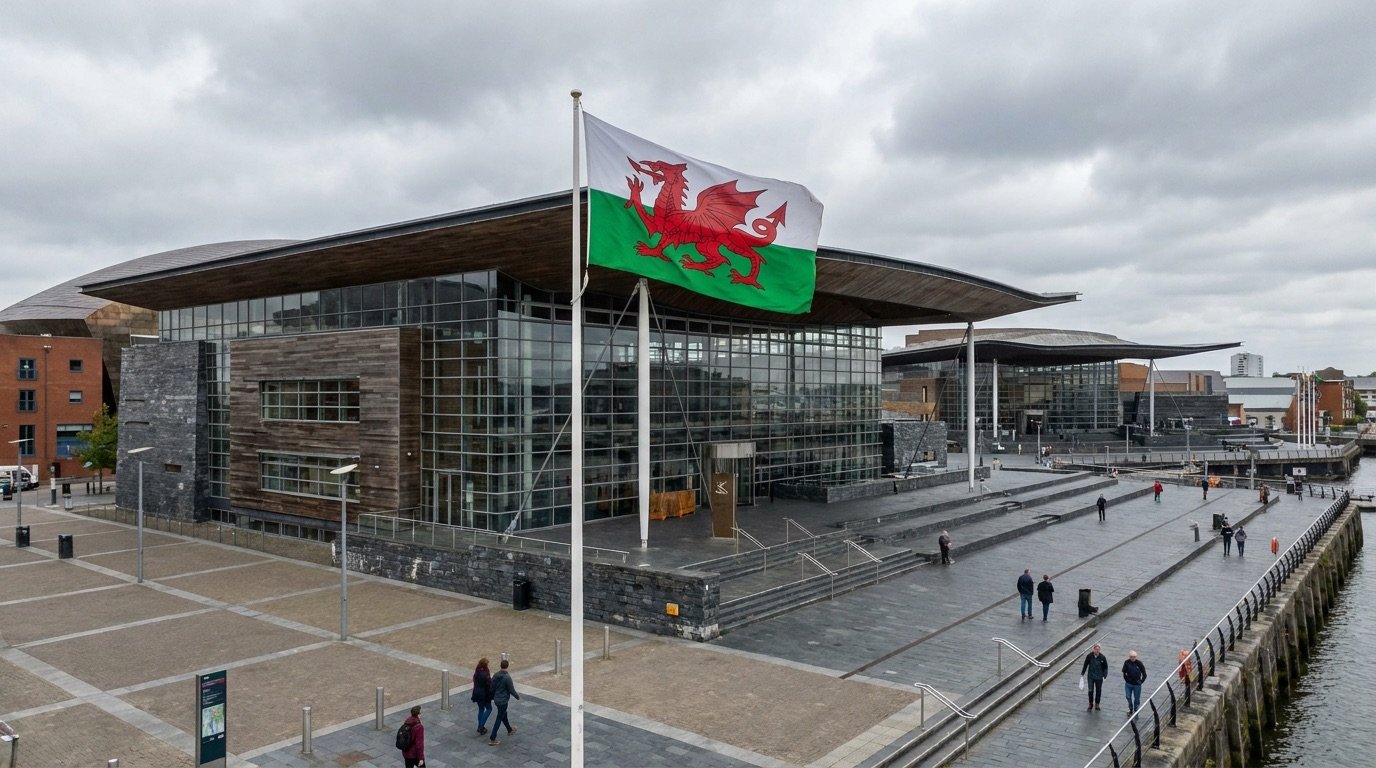
Wales has a new kind of government. After the May Senedd election Plaid Cymru emerged as the largest party for the first time in the institution's history, and Rhun ap Iorwerth was confirmed as First Minister, the first to come from a party other than Welsh Labour since devolution began in 1999.
The scale of the realignment is hard to overstate. Welsh Labour, which had been the dominant force in Welsh politics for more than a century, was reduced to nine seats and third place, while Plaid took 43 and Reform UK surged into second with 34.
Ap Iorwerth chose not to seek a formal coalition. With 43 seats, six short of a majority in the expanded 96-member Senedd, he confirmed his party would govern as a minority, preferring what he has called a cooperative approach to issue-by-issue deal-making.
A cabinet drawn from a single party
Ap Iorwerth was appointed on 12 May through a Senedd vote, elected by 44 members: 42 of his own party plus the two Green members, a coalition of convenience rather than a governing pact.
He moved quickly to name a Plaid Cymru cabinet, signalling that the party intends to govern in its own right rather than diluting its programme through power-sharing arrangements with rivals.
That decision carries risk. A minority government can be outvoted on any measure, and the new First Minister will need to find votes from Labour, the Liberal Democrats or, more awkwardly, Reform, to pass anything contested.
The promises that won the election
Plaid campaigned on a set of pledges that broke sharply with the outgoing Labour administration, including reversing the default 20mph speed limit that had become a lightning rod for public anger.
The party also committed to building the long-stalled M4 relief road around Newport, proposing to fund it as a toll road, alongside a broad pitch on the NHS and the Welsh economy.
The central tasks now facing the new government:
- Set out a programme for government that translates manifesto pledges into legislation.
- Decide how and when to amend the default 20mph speed limit policy.
- Advance plans for the M4 relief road as a tolled route around Newport.
- Stabilise NHS Wales waiting times, a persistent voter grievance.
- Build the cross-party votes a minority administration needs to survive each budget.
Reform's arrival reshapes the chamber
The other story of the election is Reform UK's leap to 34 seats, making it the official opposition and the largest unionist voice in a parliament now led by a pro-independence party.
That dynamic will colour every debate in this term, with a nationalist government on one side and a resurgent right-populist opposition on the other, and a diminished Labour caught between them.
“We will govern for the whole of Wales, working with anyone who shares our ambition for the country, but we will not abandon the priorities the people voted for.”
Background
Welsh Labour had held power in Cardiff continuously since the Senedd's creation, governing alone or in partnership with smaller parties. Its collapse to nine seats ended a run of electoral dominance that stretched, in Welsh terms, back generations.
Plaid Cymru's breakthrough came in part from gains in traditional Labour heartlands in the south, where economic discontent and disillusionment with Westminster combined to break the old loyalties.
What happens next: ap Iorwerth's first full programme for government will be the real test, revealing whether a minority Plaid administration can deliver enough to consolidate its historic win before the next contest.
Sources: reporting by ITV News Wales.
The NE Times is an independent news and analysis publisher. Our articles combine factual reporting with clearly-written, impartial analysis. Content is for general information and does not constitute professional advice. Disclaimer.
You may also like to read

Plaid ascendant: how Labour's Welsh heartland slipped away
With Plaid Cymru now the largest party in the Senedd and Westminster Labour in turmoil, Wales has joined Scotland and Northern Ireland in nationalist hands.

First non-Labour First Minister settles in as Plaid governs Wales alone
Rhun ap Iorwerth's minority administration faces the challenge of passing its programme in a transformed and crowded Senedd.
Welsh Labour's reckoning: interim leader Skates steers a shrunken party towards a winter contest
After Eluned Morgan became the first sitting head of a UK government to lose her own seat, Welsh Labour is regrouping with Ken Skates as interim leader and a full leadership election pencilled in for the autumn, with the winner inheriting opposition rather than office.

Green Man's refugee training scheme shows what a festival can do beyond the stage
The Welsh festival's decade-old programme has trained 191 refugees from 52 countries, turning a music event into practical civic infrastructure.