Del Toro's Barcelona breakthrough: a Tour stage won against rivals and rising heat
The 22-year-old Mexican's stage-two win on Montjuic, gifted by Pogacar, signals UAE's depth — as 38C heat and Pyrenees wildfires reshape the 2026 Tour.
Daniel Fletcher
Writer ·
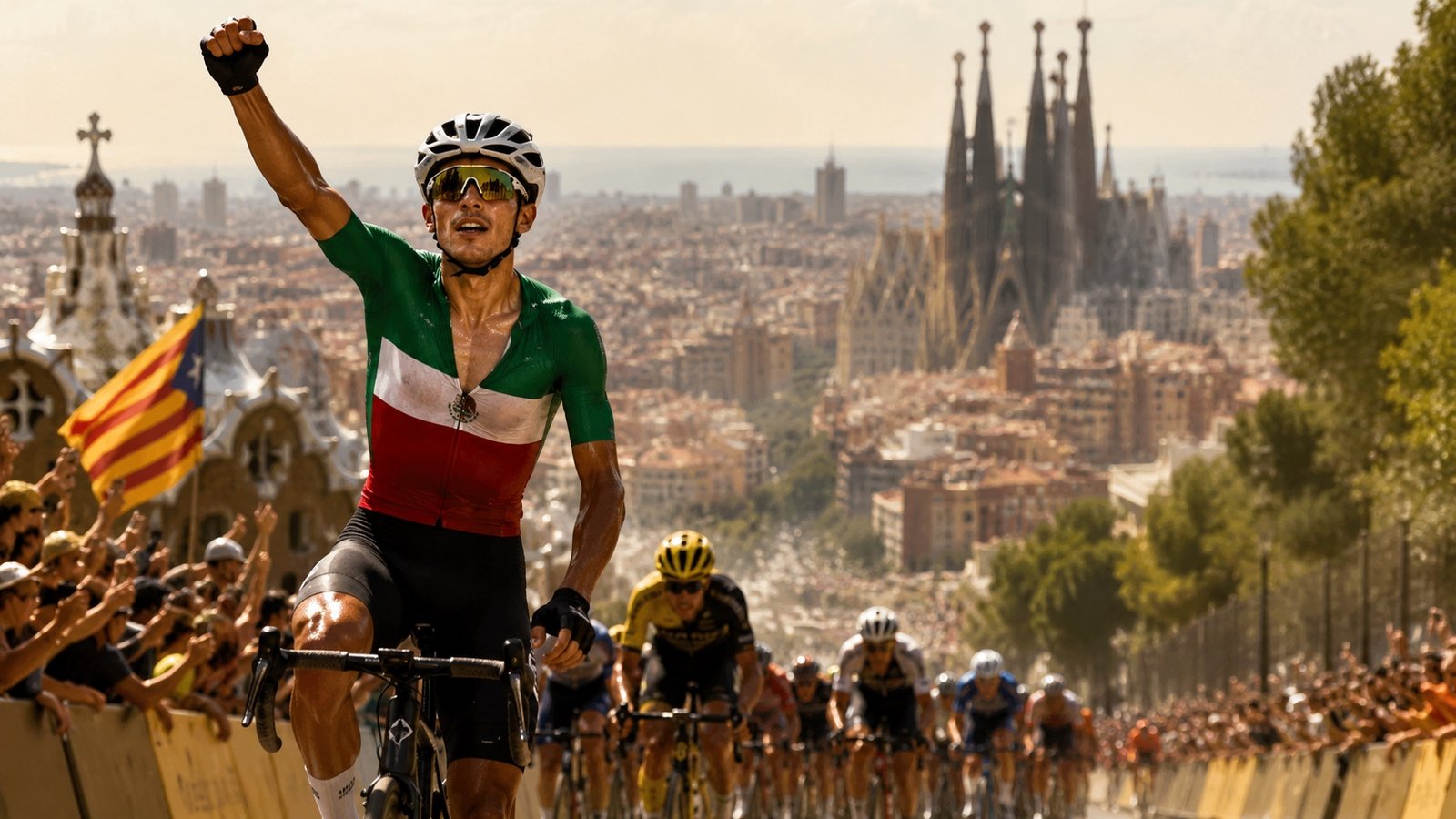
The Tour de France spends its opening days announcing its themes, and stage two of the 2026 edition offered an unusually rich set: a 22-year-old debutant winning in Barcelona, a superteam displaying strength and generosity in the same move, and a heat-stressed route reminding everyone that modern cycling is contested against conditions as much as against rivals.
What happened
The Guardian reported that Isaac del Toro, the young Mexican rider for UAE Team Emirates-XRG, won stage two in Catalonia with a decisive uphill move on Montjuic. Tadej Pogacar and Jonas Vingegaard followed the attack, with Pogacar appearing to sit up near the line to let his teammate take the win. Remco Evenepoel crossed third, Vingegaard fourth — and the Dane kept the yellow jersey earned through Visma-Lease a Bike's stage-one team time trial. The stage unfolded in temperatures around 38C, and organisers confirmed stage three would run on an adapted route, with no spectators on its French sections, because of wildfires in the eastern Pyrenees.
Why it matters
A debutant winning a Tour stage is always a story; a debutant winning in the company of Pogacar, Vingegaard and Evenepoel is a signal. Del Toro did not profit from a breakaway the favourites ignored — he beat the men expected to decide the race, which reframes UAE's depth as an attacking resource rather than mere protection for its leader. Pogacar's gesture, meanwhile, was generosity with an edge: a team that can afford to spend a victory on morale is telling its rivals it expects plenty more. Vingegaard's grip on yellow keeps the race healthily balanced. UAE looked explosive, Visma retained command of the jersey, and Evenepoel stayed within touching distance — the ideal early-Tour condition in which nobody has won anything and nobody has lost anything, yet every contender has already touched the front of the story.
The bigger picture
The competitive drama cannot be separated from the climate around it. Cycling has always prized exposure to landscape, but when wildfire risk closes roadsides to spectators and extreme heat shadows the peloton, the Tour becomes a test of adaptation as well as endurance. Organisers must now balance tradition, television, safety and local emergencies; riders must treat cooling, hydration and recovery as strategy rather than routine. Del Toro's breakthrough came under precisely those pressures — which makes it a truer sample of what the modern Tour is becoming.
What happens next
Stage three's adapted route will test how smoothly the race can bend around conditions, and the mountains will eventually ask harder questions of UAE's dual threat and Vingegaard's defence. Stage two settled no hierarchy; it complicated one. The race's real question is no longer simply who is strongest, but who can stay strong, safe and tactically clear while the road itself keeps changing the terms.
Sources: reporting by The Guardian.
The NE Times is an independent news and analysis publisher. Our articles combine factual reporting with clearly-written, impartial analysis. Content is for general information and does not constitute professional advice. Disclaimer.
You may also like to read
Vingegaard in Yellow From Day One Changes the Shape of This Tour
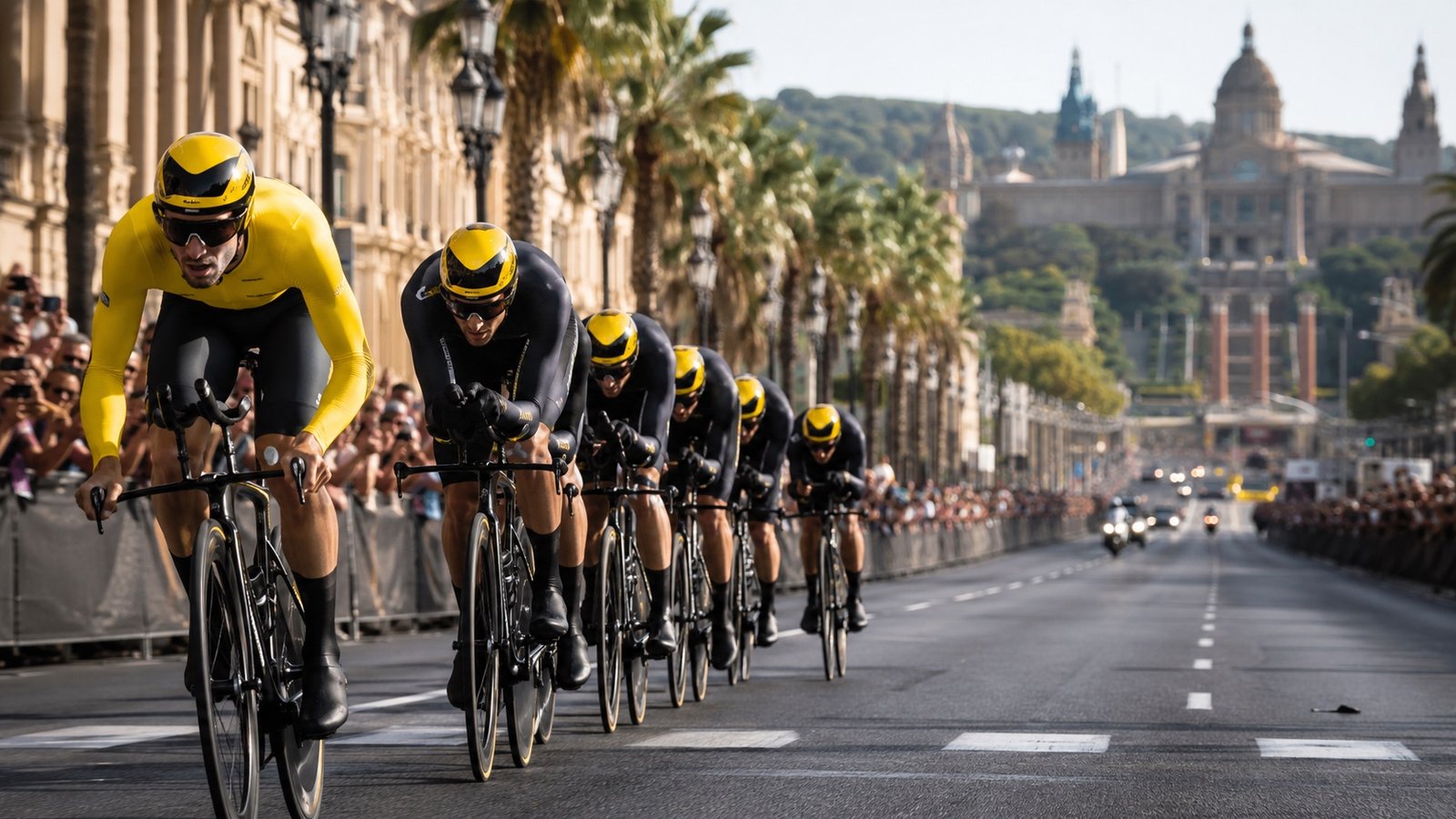
Visma-Lease a Bike's team time trial win in Barcelona put Jonas Vingegaard in yellow and left Tadej Pogacar chasing from the very first evening.

Paul Seixas turns Tour de France pressure into a generational test
The 19-year-old, France's youngest Tour debutant since 1937, carries national expectation into a field led by Pogacar and Vingegaard.

Isaac del Toro storms to Critérium du Dauphiné title with back-to-back mountain wins
Mexico's Isaac del Toro tore the race apart in the high mountains to snatch overall victory at the renamed Critérium du Dauphiné, sending an ominous warning to his rivals just weeks before the Tour de France.

France's heatwave death surge turns climate adaptation into a public health test
Deaths rose 29.1% — 2,025 excess deaths — in France's record June heatwave week, exposing how homes, health systems and cities fail in extreme heat.