Maine mill owner's death turns an industrial accident into a safety reckoning
Alden J. Robbins has died of injuries from the May fire and explosion at Robbins Lumber, raising the toll to three and renewing dust-hazard scrutiny.
Marcus Reeve
Writer ·
What happened
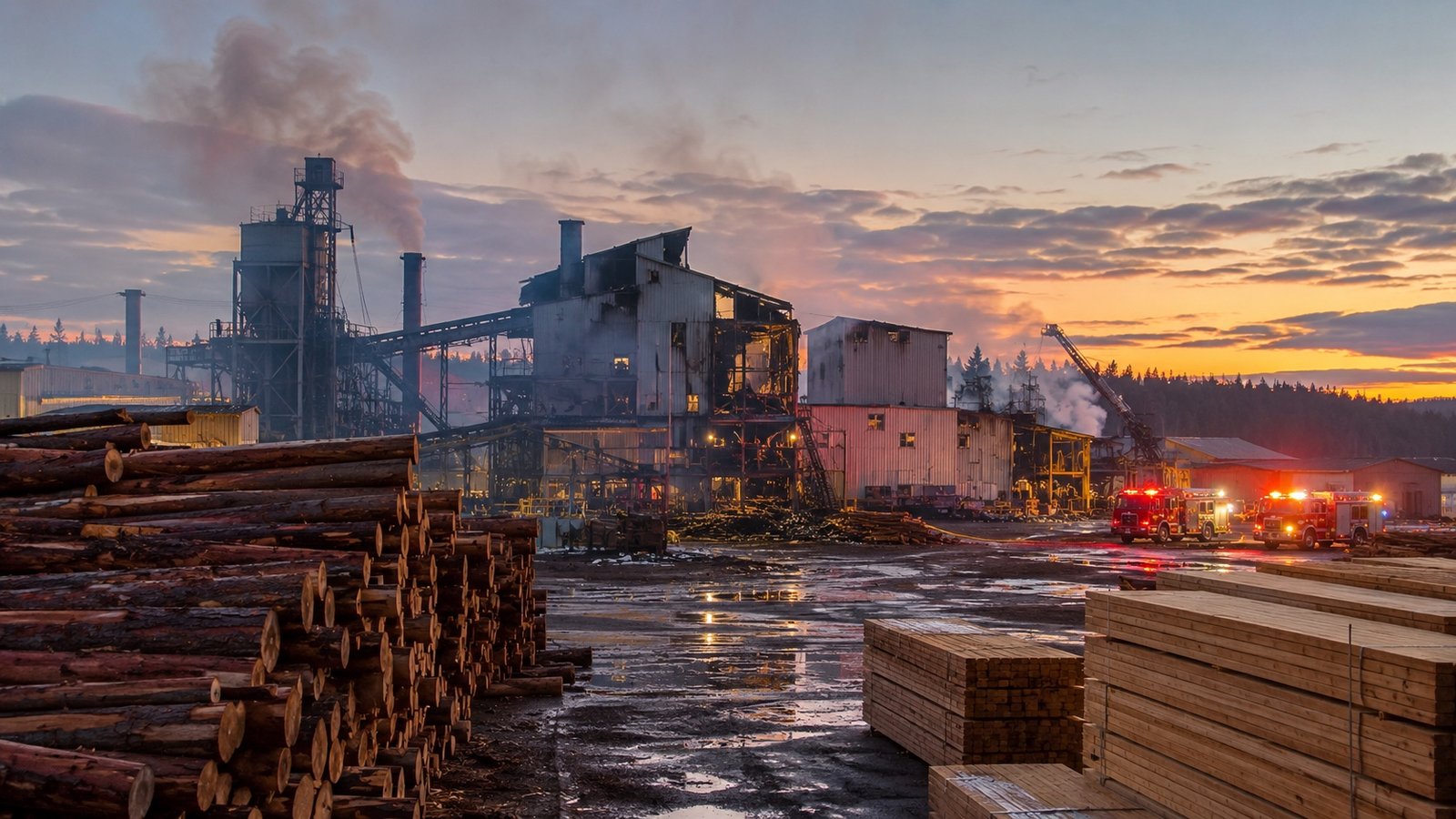
Alden J. Robbins, co-owner of Robbins Lumber in Searsmont, Maine, has died from injuries suffered in the fire and explosion that tore through the mill on 15 May, the Associated Press reported, bringing the death toll to three. Two firefighters who responded to the blaze, Searsmont assistant fire chief Wayne Woodbury and Morrill volunteer firefighter Andrew Cross, had already lost their lives. Ten other people were injured, among them Robbins' daughter. The Boston Globe reported that Robbins died after nearly two months of treatment.
Investigators have determined the fire was accidental, beginning at the base of a silo where rapid ignition of particulate matter caused an explosion that lifted the silo from its base and released sawdust that fed the spreading blaze, according to AP. The investigation into contributing factors remains ongoing.
Why it matters
Combustible dust is one of industry's most familiar and most underestimated hazards, and it is not confined to sawmills: grain stores, food processors and powder-handling plants worldwide face the same physics. The visible part of a mill is timber, machinery and skilled labour; the invisible part is the accumulation of fine material, the maintenance routines and the split-second chain by which a manageable hazard becomes an explosion. This incident sits squarely in that difficult category, and its lessons travel well beyond one Maine town.
The death of a co-owner also changes the emotional frame. In a longstanding rural business, a mill is often a local institution as much as an employer, binding family history, regional economy and community identity. The loss of two volunteer firefighters underlines a further truth: rural emergency response frequently depends on neighbours who answer the alarm, then face industrial conditions that are unpredictable and information-poor.
The bigger picture
It is tempting to frame safety scrutiny and economic sympathy as opposites. They are not. Communities can grieve a business leader, honour fallen firefighters and still press hard questions about dust collection, silo monitoring, ignition control and emergency coordination. Indeed, doing all three at once is the only serious response. Robust safety systems are what allow essential rural industries to survive shocks, keep workers and retain public trust; treating them as a regulatory burden misreads their purpose.
What happens next
The formal investigation will establish whether equipment, housekeeping or silo design played any role, and it is right not to outrun those findings. But the broader conversation need not wait. Any workplace storing combustible material has cause to revisit its assumptions, and any community reliant on volunteer responders has cause to examine training and mutual-aid planning. If the final report helps other facilities interrupt a similar chain of events, this tragedy will have produced something more useful than a death toll: memory attached to prevention.
Sources: reporting by Associated Press.
The NE Times is an independent news and analysis publisher. Our articles combine factual reporting with clearly-written, impartial analysis. Content is for general information and does not constitute professional advice. Disclaimer.
You may also like to read
When Confidentiality Feels Like a Gag: Australia's Parliamentary Watchdog Under Scrutiny
A staffer's account of jail-threat confidentiality warnings puts Australia's parliamentary complaints body — and workplace reform everywhere — to the test.
The Brooklyn Bridge Fire Shows What Civic Spectacle Really Depends On
A fireworks malfunction set the Brooklyn Bridge alight during America's 250th Independence Day show — a test of the invisible systems behind celebration.
At Mount Vernon, America's 250th birthday became a citizenship story
150 people from 50 countries took the oath of US citizenship at George Washington's estate on 4 July — giving the semiquincentennial a human scale.
In El Obeid, Sudan's drone war is measured in cancelled deliveries and closed roads
Reporting from the besieged Sudanese city shows how drone strikes are compounding displacement and shortages — and testing the limits of humanitarian work.