Bodycam shows Marine pilot walking away from F/A-18 crash in Washington: 'Hey buddy, I just crashed'
Newly released bodycam footage shows a US Marine Corps pilot — bloodied, composed and walking down a rural road — moments after ejecting from an F/A-18 Hornet that crashed into a mountainside in Washington state.
World Affairs Editor ·
Why it's trending
The Yakima County sheriff's office footage was released in mid-August, showing the pilot's first exchange with responders after the June crash.
The first thing the pilot said to the deputy who found him was an understatement for the ages: 'Hey buddy, I just crashed.' Newly released bodycam footage from the Yakima County sheriff's office shows US Marine Corps Major Jackson Simon — face bloodied, flight suit intact — walking calmly down a rural road minutes after ejecting from an F/A-18 Hornet that flew into a mountainside near Rimrock Lake, Washington.
The crash happened on 13 June 2026 during a low-level training sortie, but the footage only emerged in mid-August, turning a two-month-old incident into a global story. By the time first responders reached the area, Simon was already out of his parachute and walking towards them; he suffered only minor facial lacerations.
At a glance
- The F/A-18 Hornet crashed into a mountainside near Rimrock Lake, Washington, on 13 June 2026
- The pilot, Maj. Jackson Simon, ejected during a low-level training sortie and survived
- Bodycam footage from a Yakima County sheriff's deputy was released in mid-August
- Simon suffered only minor facial lacerations and was walking when responders arrived
- The wreck sparked a wildfire on the mountainside
What the footage shows
The video captures the moments most aviation stories never record: the immediate aftermath, before official statements and investigations reshape the narrative. Simon, blood visible on his face, greets the deputy almost conversationally and tries to reconstruct what happened. 'We were doing circles over the lake, doing some low-level training,' he says on the recording. 'And then I tucked in, and I'm not sure exactly.'
His composure is the reason the footage has travelled so widely. Ejecting from a fast jet at low altitude is among the most violent survivable events in aviation, and the video shows a man discussing it with the tone of someone reporting a flat tyre.
The physics of a low-level ejection
Low-level training is where ejection margins are thinnest. At altitude, a pilot has time for the seat's parachute sequence to complete; near the ground, the window between recognising an unrecoverable situation and being unable to escape it can be under a second. Modern ejection seats are engineered for exactly this envelope, but minor facial lacerations remain a remarkably light outcome for a mountainside impact scenario.
The crash also ignited a wildfire on the slope where the Hornet came down — a common secondary consequence of fast-jet crashes in dry terrain, and one that occupied responders long after the pilot was accounted for.
An ageing jet still doing frontline work
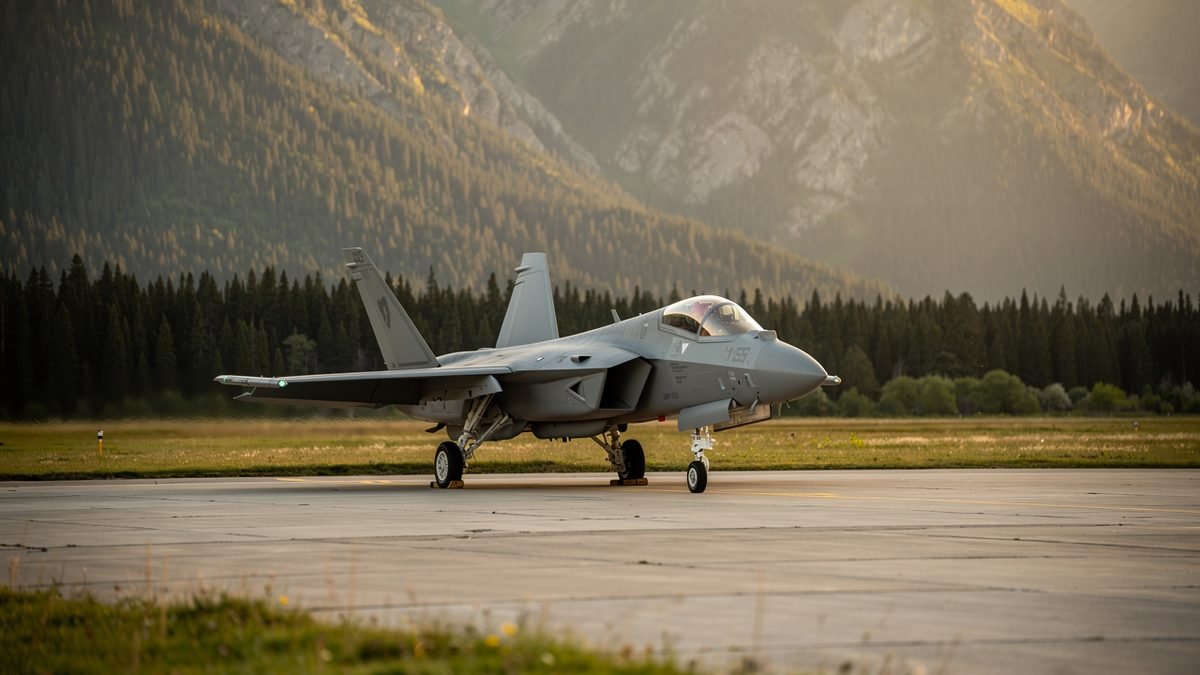
The F/A-18 Hornet that Simon flew belongs to a family of aircraft the US Marine Corps has operated since the 1980s, now in its final years of service as squadrons transition to the F-35. Legacy Hornets continue to fly demanding training profiles precisely because crews must stay current until the last airframe retires.
The Marine Corps has not published the investigation's findings, and the cause of the crash remains undetermined publicly. The footage's release came through local law enforcement records rather than the military.
What happens next
The formal mishap investigation will establish what happened in the seconds Simon himself could not reconstruct on camera — whether mechanical failure, spatial disorientation or terrain misjudgement put the Hornet into the mountainside. Those reports typically take many months. In the meantime, the two-minute exchange on a Yakima County road has already done what safety briefings struggle to: given the public a first-person sense of how close 'routine training' can run to the edge, and how well the escape systems work when it does.
Sources & verification
- Military Times — primary reporting and official updates
- Reporting reviewed on 21 August 2026; figures as published at that time
Filed under World · Written by Marcus Reeve
You may also like to read