A Petition of Hundreds of Thousands: What the Offshore Detention Debate Revealed
A public petition calling for offshore detention and mass deportation drew hundreds of thousands of signatures and a Westminster debate. Here is a measured look at the arguments, the law and the practicalities.
UK News & Politics Editor ·
Why it's trending
An e-petition attracting hundreds of thousands of signatures forced a parliamentary debate on offshore detention and mass deportation. The episode illustrates the strength of public feeling on immigration and the gap between demands and what law and logistics allow.
When a petition forces a debate
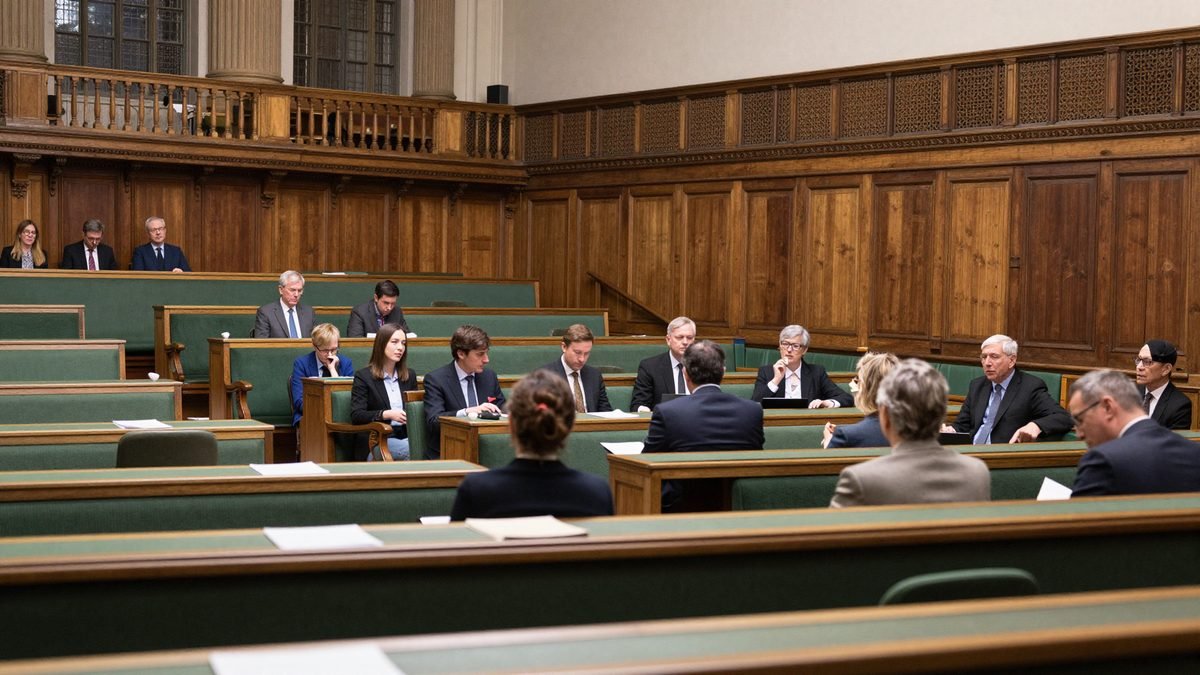
The UK's e-petition system allows the public to trigger a parliamentary debate when enough people sign. A petition calling for offshore detention facilities and mass deportation of people in the country illegally attracted a very large number of signatures, compelling MPs to debate the issue in Westminster Hall.
Such debates are a valuable feature of democracy: they give voice to public concern and require politicians to engage with it directly. They do not change the law by themselves, but they put issues on the record and test the arguments in the open.
The strength of public feeling
The scale of support for the petition reflects genuine and widespread concern about immigration and the asylum system, including the perception that rules are not enforced and that arrivals are not controlled. Dismissing that concern would be a mistake; it is real and deeply held across many communities.
At the same time, the wording of petitions often expresses a demand in its starkest form. Translating a slogan into workable, lawful policy is where the difficulty begins, and that gap is what a serious debate has to explore.
What the law allows
Immigration and asylum are governed by domestic law and international obligations, including commitments on refugees and human rights. Proposals for offshore detention or large-scale removals run into legal constraints, and previous attempts at offshoring have faced significant legal and practical obstacles.
This does not mean nothing can change; governments do reform immigration law. But it means that headline demands cannot simply be enacted overnight, and that policies must survive legal challenge to have any lasting effect. Honest debate acknowledges these limits rather than pretending they do not exist.
The practical obstacles
Beyond the law, there are formidable practical challenges. Offshore facilities require agreements with other countries, enormous costs and complex logistics. Large-scale removals depend on the cooperation of destination countries, documentation and functioning systems, none of which are simple to arrange.
Experience elsewhere shows that such schemes are expensive and difficult, often delivering far less than promised at very high cost. A realistic debate weighs not only whether a policy is desirable but whether it is deliverable and affordable.
The tone of the debate
Immigration debates carry a heavy responsibility. Language that dehumanises or inflames can cause real harm to individuals and community relations, while refusing to engage with legitimate public concern feeds distrust. Responsible debate holds both truths: that concern is valid and that people are entitled to dignity.
The best contributions in such debates distinguish between the goal, a controlled and fair system, and specific proposals that may or may not achieve it. That distinction allows disagreement about methods without denying the reality of the underlying concern.
The limits of enforcement alone
A recurring lesson of immigration policy is that enforcement, while necessary, cannot by itself resolve the pressures that drive irregular migration. People move for reasons ranging from persecution to poverty, and deterrence alone rarely stops determined or desperate individuals. Effective policy usually combines enforcement with functioning legal routes, international cooperation and efforts to address root causes.
This does not diminish the legitimacy of public demands for control, but it reframes them. The question is not whether to have a controlled system, which almost everyone supports, but how to achieve one that actually works. Policies that promise dramatic results through enforcement alone have often disappointed, which is why serious debate looks beyond the simplest slogans.
What responsible reform looks like
Between the extremes of the debate lies the difficult work of practical reform: faster and fairer decisions on claims, safe and legal routes that reduce dangerous crossings, cooperation with other countries, and enforcement that is firm but lawful. This work is less dramatic than headline demands, but it is where genuine improvement is possible.
Governments of different persuasions have grappled with these challenges, and none has found an easy answer. The value of a debate prompted by a large petition is that it can push politicians to engage seriously with the issue. Whether it leads to workable reform, or merely to promises that cannot be delivered, depends on the honesty with which the underlying difficulties are confronted.
What to watch next
Watch how the government responds to the petition, what immigration and asylum legislation it brings forward, and whether the measures proposed are both lawful and practical. The gap between rhetoric and workable policy will remain the central issue.
The petition and debate are a snapshot of a defining political argument. How that argument is conducted, whether with honesty about the law and the logistics or with promises that cannot be kept, matters as much as the policies that eventually emerge.
Sources & verification
- UK Parliament - e-petitions and Westminster Hall debate records
- House of Commons Library - asylum and immigration briefings
- Refugee and migration organisations - policy analysis
Filed under Politics · Written by Eleanor Whitfield
You may also like to read