NASA calls off pioneering mission to save the Swift telescope from falling to Earth
A first-of-its-kind attempt to catch and boost a dying space telescope has been called off, leaving NASA's Swift observatory to fall back to Earth within months.
Business & Technology Editor ·
Why it's trending
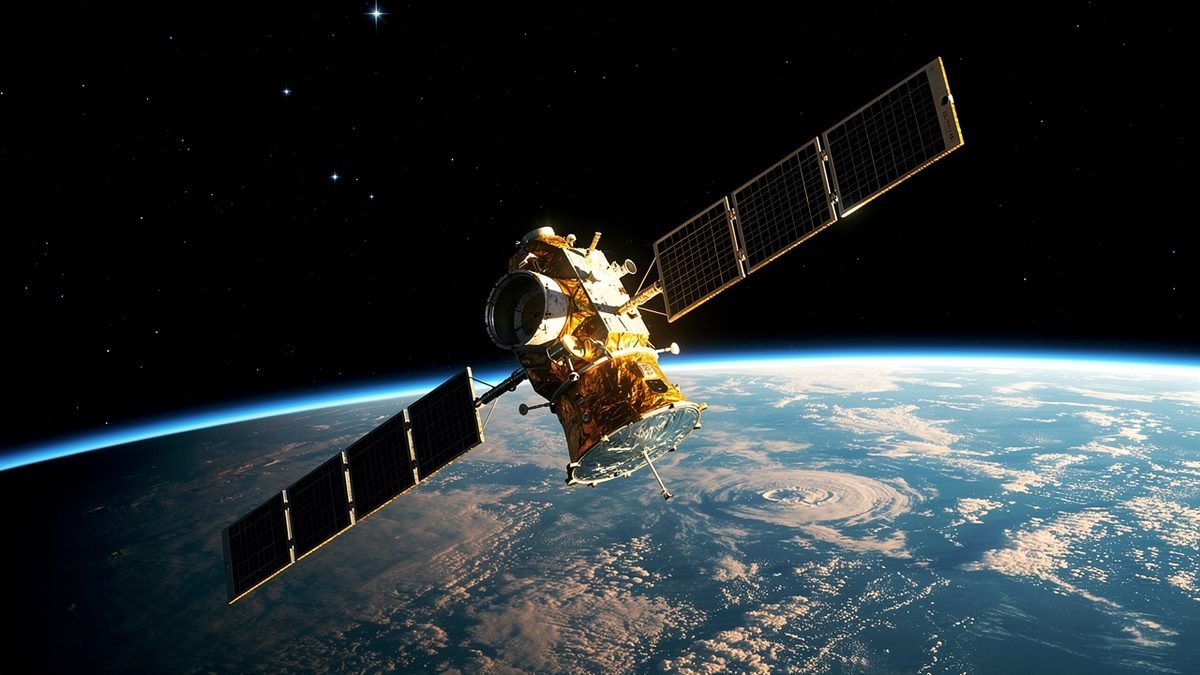
NASA and Katalyst Space Technologies announced on 19 August 2026 that the LINK spacecraft will not capture and boost the Swift observatory.
NASA and Katalyst Space Technologies confirmed this week that LINK, the commercial robotic spacecraft launched in early July to catch the sinking Neil Gehrels Swift Observatory and push it to a higher orbit, cannot complete its job. Persistent attitude control problems — the ability to point and position itself precisely — made the delicate capture impossible.
The decision ends an audacious experiment in orbital rescue, and it seals the fate of one of NASA's most productive telescopes. Swift, in orbit since 2004, is now expected to reenter the atmosphere and burn up, no earlier than October.
At a glance
- NASA and Katalyst Space Technologies have ended the LINK mission to capture and boost the Swift observatory
- Two of LINK's three reaction wheels failed weeks after its early-July launch, sending it into a spin
- Swift's orbit has decayed to around 214 miles; the mission had aimed to raise it to about 373 miles
- NASA paid Katalyst $30m for the rescue attempt; reentry is expected no earlier than October 2026
- Swift launched in 2004 to chase gamma-ray bursts and had its instruments switched off earlier this year
What went wrong
LINK's troubles began weeks after liftoff, when two of its three reaction wheels — the spinning flywheels a spacecraft uses to orient itself without thrusters — failed. The vehicle tumbled into an uncontrolled spin and communication became intermittent.
Katalyst's flight controllers managed to slow the tumble and regain contact, but the episode cost roughly a month against a schedule that had little slack. With pointing problems persisting, NASA and the company concluded the rendezvous and capture could not be attempted safely.
A race against the atmosphere
Swift's problem is altitude. Intense solar activity has swollen Earth's upper atmosphere, increasing drag and pulling the observatory down faster than expected. Its orbit has now decayed to around 214 miles; the plan was for LINK to grapple it and raise it to roughly 373 miles, buying years of extra life.
The observatory's science instruments were switched off earlier this year to slow the descent. Without a boost, the endgame is fixed: an uncontrolled reentry in which the spacecraft breaks up and burns, expected no earlier than October 2026.
Why NASA tried it
The agency paid Katalyst $30m for the attempt, and framed the gamble as worthwhile even in failure. "This is not the outcome we were working toward, but it does not change why this mission was worth attempting," NASA administrator Jared Isaacman said.
Katalyst chief executive Ghonhee Lee called it "this high-risk, high-reward challenge" and pointed to the milestones the mission did reach. Servicing and boosting satellites that were never designed to be touched in orbit is a capability NASA wants commercial industry to develop — the Swift attempt was as much about proving the approach as saving one telescope.
What is lost with Swift
Launched in 2004, Swift was built to chase gamma-ray bursts — the most violent explosions in the universe — slewing rapidly to catch their fading afterglows. Over two decades it became a general-purpose workhorse, observing everything from supernovae to comets, and its rapid-response design changed how astronomers follow transient events.
The loss also sharpens a bigger question. Hubble, which is likewise slowly descending, had been discussed as a candidate for a future commercial boost. LINK's failure shows how unforgiving that class of mission remains — and how much engineering distance is left between ambition and routine orbital servicing.
What happens next
Swift will be tracked down to its final orbits, with reentry projections refining as the date approaches; most of the spacecraft is expected to burn up. Katalyst will pore over LINK's telemetry to understand the reaction wheel failures, knowledge NASA hopes will feed the next rescue attempt. The concept of orbital servicing is not dead — but its first big test has ended, quite literally, in a fall to Earth.
Sources & verification
- Phys.org — primary reporting and official updates
- Reporting reviewed on 20 August 2026; figures as published at that time
Filed under Technology · Written by Rajan Mehta