The Nature Restoration Levy: Can Development and Nature Recovery Coexist?
A nature restoration levy would let developers pay into environmental improvement rather than mitigate on-site. Here is how it would work and why it divides builders and conservationists.
UK News & Politics Editor ·
Why it's trending
Reconciling the need to build with the duty to protect nature is one of the hardest problems in planning. A levy that lets developers fund environmental restoration elsewhere promises to unblock development but raises concerns about whether nature really benefits.
An attempt to break a deadlock
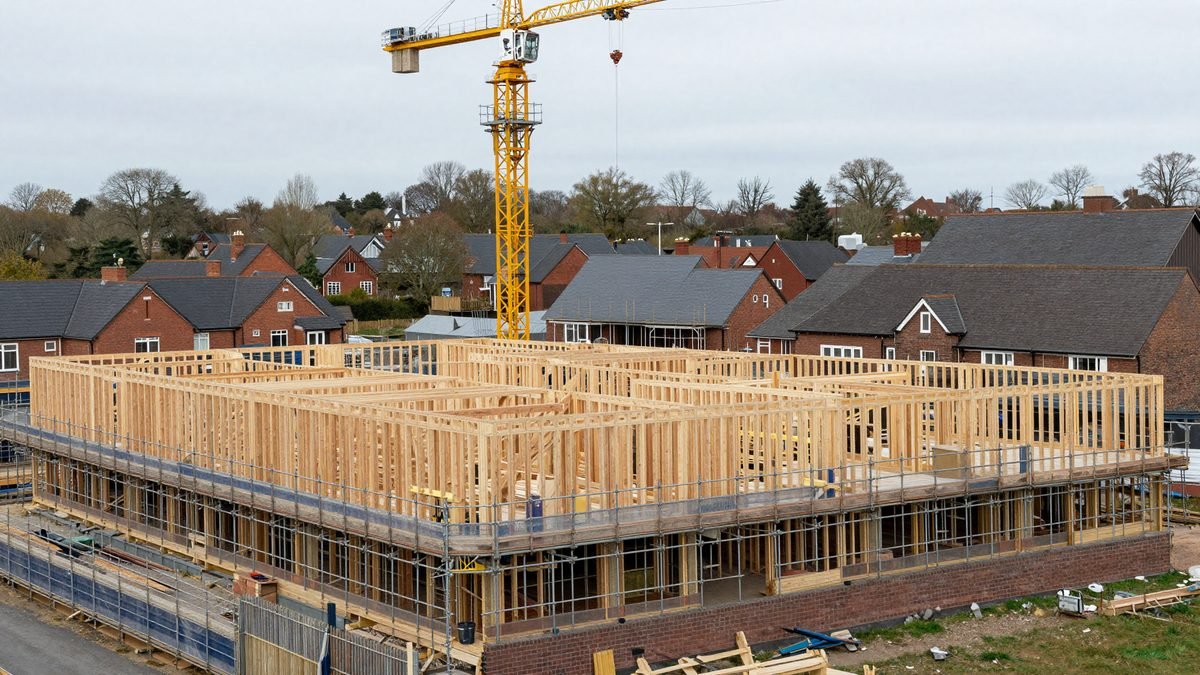
Development and environmental protection frequently collide in the planning system. Rules designed to protect habitats and water quality can hold up housing, while unrestrained building can damage nature. The nature restoration levy is an attempt to break this deadlock by changing how environmental harm is offset.
The idea is that instead of every development mitigating its impact on-site, developers can pay into a fund used to deliver environmental improvements strategically. In principle, this could unblock stalled projects while delivering better outcomes for nature at a landscape scale.
How the levy would work
Under the proposed approach, developers contribute to a levy, and a public body uses the pooled funds to carry out environmental restoration where it will do the most good. The logic is that coordinated, large-scale action can achieve more than piecemeal, site-by-site mitigation.
This pooling is the levy's central innovation and its central risk. Done well, it could deliver genuine, strategic nature recovery. Done badly, it could become a way for developers to pay a fee and build, with the promised environmental benefits arriving late, if at all.
The nutrient neutrality problem
Much of the pressure for this reform comes from specific blockages, such as rules on nutrient pollution in rivers that have halted housebuilding in affected areas. These rules exist for good environmental reasons, but they have stopped large numbers of homes from being built, creating pressure for a solution.
The levy is partly a response to these particular logjams. The challenge is to release development without simply relaxing the environmental protections that the rules were designed to uphold, which would trade homes for polluted rivers.
Why conservationists are wary
Environmental groups are cautious. Their concern is that offsetting can become a licence to damage, with restoration promised elsewhere but never fully delivered or genuinely additional. The credibility of the levy depends on whether the money produces real, measurable, lasting improvements to nature.
There is also a principle at stake: whether harm to one place can truly be compensated by improvement to another. For some habitats and species, loss in one location is not neatly offset by gains elsewhere, however well intentioned the scheme.
Why developers welcome certainty
For developers, the appeal is certainty and speed. Environmental requirements that are complex and site-specific create delay and risk. A levy offers a clearer, quantifiable obligation, allowing projects to proceed on a predictable basis. That predictability has real economic value.
The risk from a development perspective is that the levy is set too high or administered poorly, adding cost and complexity rather than removing it. The design and governance of the fund are therefore as important to builders as to conservationists.
Making offsetting credible
The credibility of any offsetting scheme rests on a few demanding conditions. The environmental improvements funded must be additional, meaning they would not have happened anyway; they must be real and measurable; and they must endure over time. Where these conditions are not met, offsetting risks becoming a mechanism that permits harm while delivering little genuine benefit in return.
Ensuring these conditions requires robust governance, independent monitoring and long-term commitment. The body administering the levy must be able to demonstrate that the money produces lasting ecological gains. Without that assurance, conservationists' fears of a licence to damage are well founded, and the scheme's legitimacy, and its political sustainability, would quickly erode.
Aligning growth and nature recovery
The deeper ambition behind the levy is to show that economic growth and nature recovery need not be opposed. If development contributes to strategic environmental improvement, the two goals can, in principle, reinforce each other rather than compete. This is an attractive vision, but it depends entirely on delivery matching the promise.
Achieving genuine alignment requires that nature recovery is treated as a real objective, not merely a box to be ticked to permit building. The levy could become a model for reconciling competing pressures, or a cautionary tale about the limits of offsetting. Which it becomes will depend on the seriousness with which the environmental commitments are pursued and enforced.
The levy will therefore be watched as a test case well beyond its immediate purpose. If it can demonstrably unblock development while delivering real, lasting gains for nature, it could become a template for reconciling growth and the environment across other areas of policy. If it cannot, it will reinforce the suspicion that offsetting too often serves development at nature's expense, and the search for a better model will continue.
What to watch next
Watch how the levy is calculated, which body administers the funds, and what safeguards ensure that restoration is real and additional. The reaction of environmental organisations will be a key test of its credibility.
The levy embodies a hard question: whether building and nature recovery can genuinely be reconciled, or whether one must give way to the other. Its success depends on turning a plausible principle into delivery that both homes and habitats can rely on.
Sources & verification
- UK Government - Nature Restoration Levy regulations
- Natural England - environmental mitigation guidance
- Wildlife and conservation organisations - policy responses
Filed under Politics · Written by Eleanor Whitfield