Norwich Airport to close for five hours Friday as air traffic control dispute heads for 24-hour strike
Norwich Airport will be closed to air traffic for five hours on Friday morning as industrial action by air traffic control staff escalates, with a full 24-hour strike now scheduled for 28 August.
UK News & Politics Editor ·
Why it's trending
The airport confirmed the Friday closure and a planned 24-hour strike this week, cancelling flights and leaving passengers checking with airlines for updates.
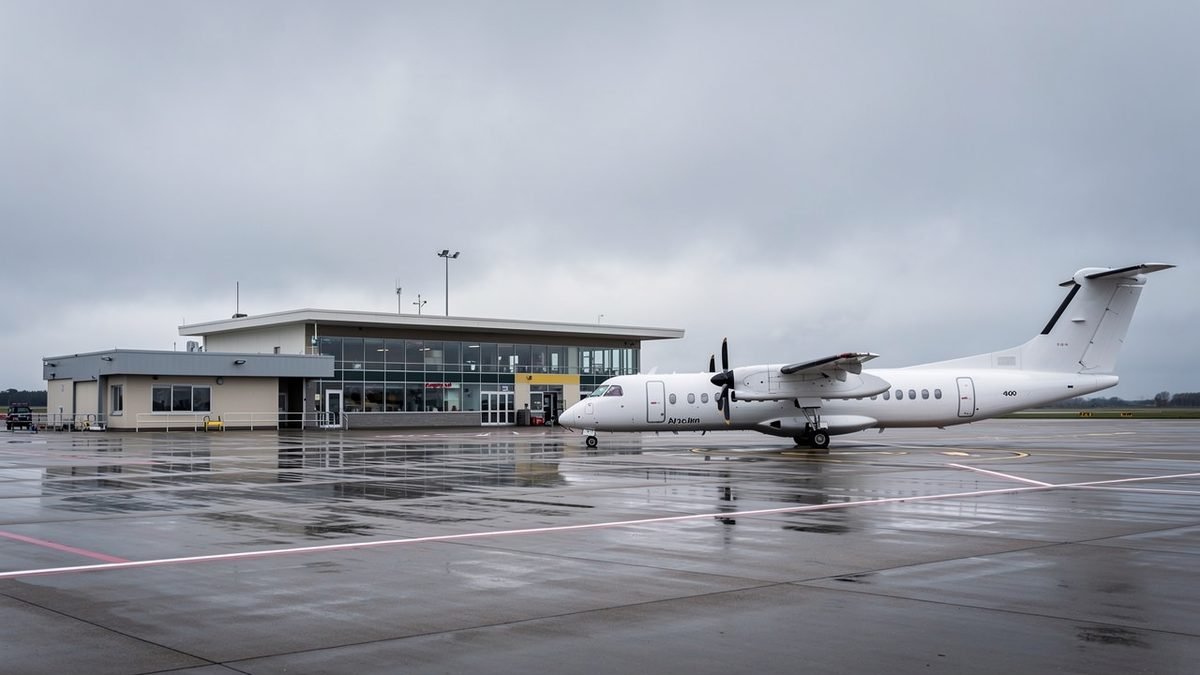
Norwich Airport will be closed to air traffic between 08:00 and 13:00 on Friday 21 August as industrial action by its air traffic control staff begins to ground flights. Four services have already been cancelled for the day: KLM's KL1055 and KL1056 between Amsterdam and Norwich, and Loganair's LM010 and LM011 linking the city with Aberdeen.
The action is being taken by members of the Prospect union working in air traffic control, who began action short of a strike on 17 August in a dispute over pay and conditions. Because that action includes working to contract and withdrawing goodwill, the airport says it cannot maintain normal air traffic operations during the affected hours — and the dispute is now set to escalate into a full 24-hour strike on Friday 28 August.
At a glance
- Norwich Airport closed to air traffic 08:00-13:00 on Friday 21 August
- Four flights cancelled: KL1055/KL1056 (Amsterdam) and LM010/LM011 (Aberdeen)
- Prospect union air traffic control members began action short of a strike on 17 August
- A full 24-hour strike is scheduled for Friday 28 August
- Passengers are advised to check in as normal and confirm flight status with their airline
Why a partial action closes a whole airport
Air traffic control is one of the few airport functions where a shortfall of even one or two rostered staff can make operations impossible rather than merely slower. Working to contract and refusing overtime are among the mildest forms of industrial action available to a union, but at a regional airport with a small controller team they have an outsized effect: without volunteers to cover gaps in the roster, there is no legal way to keep the tower open.
That is why Friday's action, formally short of a strike, still closes Norwich to all air traffic for five hours. The airport has said the disruption reflects staffing levels rather than any choice to suspend services.
The flights affected
The immediate casualties are the airport's core scheduled connections. KLM's Amsterdam rotation, KL1055 inbound and KL1056 outbound, is the airport's main link to an intercontinental hub, feeding connections across KLM's network at Schiphol. Loganair's LM010 and LM011 connect Norwich with Aberdeen, a route used heavily by energy industry workers moving between East Anglia and the North Sea sector.
The airport has advised passengers on other services to check in as normal and to check with their airline for the latest information about their flight, since knock-on delays are possible either side of the closure window.
A dispute heading in the wrong direction
The union's escalation path is clear: action short of a strike began on 17 August, the five-hour closure follows on 21 August, and a full 24-hour strike is now scheduled for Friday 28 August. Unless the dispute is resolved before then, that strike would shut the airport for a full operating day at the tail end of the summer holiday season.
In its update to passengers, the airport said: "We remain firmly committed to resolving this dispute through constructive dialogue." The fact that a strike date has nonetheless been set suggests the two sides remain some distance apart.
The wider pattern at regional airports
Regional airports operate on thin margins with small specialist teams, which makes them unusually exposed to industrial action. A dispute that a major hub could absorb through rostering flexibility becomes existential at an airport the size of Norwich, where a handful of controllers underpin every departure and arrival.
For the region, the stakes go beyond a week of cancellations. Norwich's business case to airlines depends on reliability, and carriers reviewing thin regional routes weigh disruption history when deciding where to place aircraft.
What happens next
The immediate question is whether talks can avert the 28 August strike. If it goes ahead, the airport has said it will be unable to operate that day, which would mean a full day of cancellations across all carriers. Passengers booked to fly from Norwich over the next fortnight should watch for airline notifications, and those with tight onward connections through Amsterdam may want to consider rebooking options before the strike date.
Sources & verification
- Norwich Airport — primary reporting and official updates
- Reporting reviewed on 20 August 2026; figures as published at that time
Filed under UK News · Written by Eleanor Whitfield