GPS restriction zones for serious violent and sexual offenders to begin in October
A new form of post-release control will allow probation officers to confine some serious violent and sexual offenders to tightly drawn GPS-monitored areas, with ministers presenting the measure as a way to give victims greater freedom rather than forcing them to avoid perpetrators.
UK News & Politics Editor ·
Why it's trending
The scheme starts in the same month as the revised early-release rules, putting probation supervision under immediate scrutiny.
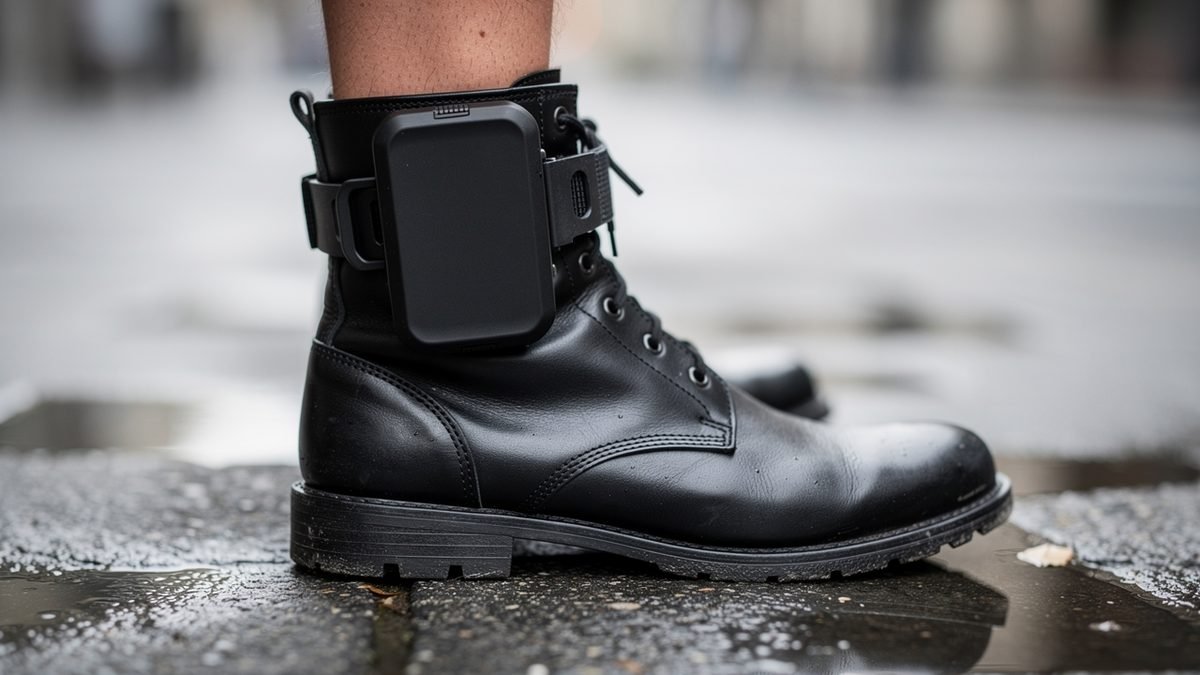
Restriction zones are due to begin in October, Justice Secretary Alex Norris has confirmed, according to BBC News. The zones can cover an area only a few miles wide and will be tailored around an offender's risk, essential appointments and rehabilitation needs. Victims are expected to be consulted on the boundaries. GPS monitoring will allow probation services to track compliance, while a breach can result in recall to prison.
At a glance
- The restriction-zone scheme for serious violent and sexual offenders is due to start in October 2026.
- Zones can be only a few miles wide and are intended to be tailored to the individual offender in consultation with victims.
- Restriction zones are a new licence condition that can be enforced through electronic monitoring.
- The wider release-point reforms were delayed to October and rape, serious child sexual offences and grooming offences were excluded from the reduced release points.
- Around 5,000 prisoners are expected to be affected by the revised early-release changes, and breaches of licence can trigger recall to prison.
A reversal of the traditional exclusion-zone model
Existing exclusion zones usually protect a victim's home, workplace or another named location by barring the offender from entering it. Restriction zones invert that logic: the offender is confined to an approved area and the victim is free to move elsewhere. That is the core political argument behind the reform. Norris has said victims should not have to change routines or keep looking over their shoulder. The measure is therefore as much about restoring freedom to victims as it is about increasing surveillance of offenders.
The map has to balance safety and rehabilitation
A zone drawn too broadly may add little protection; one drawn too tightly can make work, treatment, family contact or probation appointments impossible. BBC reporting says boundaries will be tailored and victims will have a voice in shaping them. That creates a demanding case-management task. Probation officers will need to translate risk assessments into geography and update plans when jobs, accommodation or treatment arrangements change. The effectiveness of the scheme will depend on those operational decisions rather than the headline size of a zone.
GPS makes breaches visible faster
The Sentencing Act 2026 expressly provides for restriction zones supported by electronic monitoring. GPS already tracks thousands of people across bail, post-release and immigration orders. The new element is the ability to use that infrastructure to police a defined area continuously. BBC News has reported that offenders can receive warnings as they approach a boundary. Whatever the alert mechanism, the enforcement consequence is clear: a licence breach or rising risk can lead to immediate recall.
Early release makes supervision more politically sensitive
The launch comes as the government implements revised release points to manage prison capacity. After a review ordered by Prime Minister Andy Burnham, rape, serious child sexual offences and grooming offences were excluded from the reduced release points, while roughly 5,000 other prisoners are still expected to be released earlier under the Sentencing Act changes. Restriction zones are not a substitute for custody, and they do not apply only to that cohort, but the timing means probation supervision will face intense scrutiny.
What happens next
The first operational questions are which offenders will receive the condition, how often zones will be reviewed and whether probation has enough staff to respond quickly to alerts. Ministers will also face pressure to publish data on breaches, recalls and victim satisfaction. The scheme's credibility will rest on whether GPS information leads to timely intervention rather than simply generating more monitoring data for already stretched probation teams.
Sources & verification
- BBC News — primary reporting and official updates
- Reporting reviewed on 23 August 2026; figures as published at that time
Filed under UK News · Written by Eleanor Whitfield