NE Times
Technology

UK Defence Innovation Cycle 8 Opens: Fast-Track Funding for Technology Deployable Within 12 Months

The competition reflects the pressure to shorten defence procurement cycles after lessons from Ukraine, drones and rapidly changing electronic warfare.

Rajan Mehta

Business & Technology Editor ·

4 min read
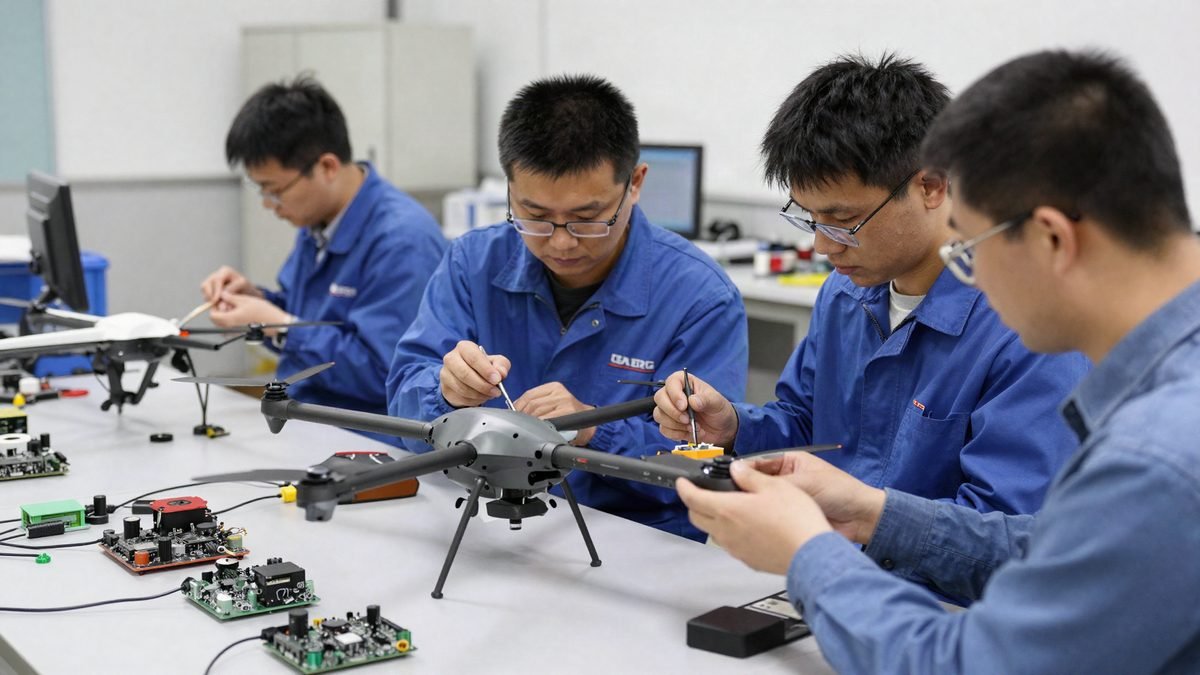
Engineers assembling a drone prototype in a defence technology lab
Engineers assembling a drone prototype in a defence technology lab · Illustrative image

Why it's trending

The competition reflects the pressure to shorten defence procurement cycles after lessons from Ukraine, drones and rapidly changing electronic warfare.

Britain's defence innovation system is trying to move promising technology from demonstration to military use more quickly. Cycle 8 of Innovation Support to Operations asks companies and researchers to show not only that an idea works, but how it can be fielded, supported and scaled. This development is part of the UK news agenda for the week from 27 July to 2 August 2026. It is receiving attention because the competition reflects the pressure to shorten defence procurement cycles after lessons from Ukraine, drones and rapidly changing electronic warfare.. The essential task is to separate confirmed facts from interpretation, explain the practical effect and identify what readers should verify before acting on the information.

Why speed has become a strategic requirement

Modern conflict changes software, sensors and countermeasures in weeks rather than procurement decades. Systems that arrive after a threat evolves may be technically impressive but operationally irrelevant. That context changes how the headline should be understood. The distributional question deserves equal attention. A national policy can create different outcomes by region, income, age, disability or institutional capacity. Coverage of UK Defence Innovation Cycle 8 should ask who receives the immediate benefit, who carries administrative or financial risk and whether protections exist for people who are least able to navigate a new system. Those questions are not objections to change; they are the practical test of whether reform works fairly.

What applicants must prove

A strong proposal needs a defined user problem, credible testing, security planning, manufacturability and access to military stakeholders. The 12-month deployment goal means integration and certification cannot be left until the end. The operational detail is where the story becomes useful to readers. There is also a governance issue. Responsibility may be shared between central departments, regulators, councils, mayors, employers or service providers, and unclear hand-offs are a common source of delay. A credible programme needs named decision makers, transparent reporting and a route for complaints or correction. In the case of UK Defence Innovation Cycle 8, scrutiny should follow the delivery chain instead of assuming that a statement from No 10 automatically changes practice everywhere.

Funding levels and project design

Most projects are expected to remain below £350,000, while awards up to £1m require a clear case. Smaller contracts can widen access for SMEs, but firms still need cash flow and intellectual-property clarity. This is also the point at which different interests begin to diverge. Political incentives will shape the next stage. The government wants visible evidence that a new prime minister has changed priorities, while opposition parties have reasons to emphasise cost, competence or unintended consequences. The useful reporting task is to test both sides against documents and outcomes. UK Defence Innovation Cycle 8 may remain popular as an idea even if implementation becomes contested, so the article should keep policy substance separate from party strategy.

From prototype to capability

Successful trials do not guarantee adoption. The Ministry of Defence must identify a budget owner, procurement route, training package, maintenance model and supply chain if a prototype is to become an operational capability. The next stage will reveal whether the stated objective is realistic. Cost and capacity are likely to decide whether the promise lasts. New rights and services can fail when funding is temporary, staff are unavailable or digital systems are not ready. Equally, a targeted intervention can deliver value when it replaces fragmented spending and gives organisations certainty. Reporting on UK Defence Innovation Cycle 8 should track total cost, funding source, workforce requirements and the assumptions behind any savings claim.

Security and export considerations

Dual-use technology may involve sensitive data, foreign investment screening, export controls and cyber accreditation. Applicants should understand these obligations early because late compliance work can erase the speed advantage. For publishers, precision on timing and scope is particularly important. Legal status must be described precisely. A consultation, press release, rule change, court judgment and Act of Parliament do not have the same force or timetable. Transitional provisions can matter as much as the headline, particularly for applications or cases already under way. The safest approach to UK Defence Innovation Cycle 8 is to date each stage, identify territorial scope and update the explanation when regulations or guidance are published.

What to watch

The quality of this cycle will be measured by contracts that continue after demonstration, not the number of applications. Future reporting should track which projects reach units, how quickly they scale and what lessons are published for unsuccessful bidders. The wider significance extends beyond the immediate announcement. Public trust is another part of the story. Voters have seen ambitious announcements followed by revised targets, delayed systems and responsibilities passed between institutions. Trust improves when government publishes limitations, explains trade-offs and admits what is not yet decided. For UK Defence Innovation Cycle 8, clear evidence and an honest account of uncertainty are more durable than presenting every development as a completed transformation.

What happens next

The next update on UK Defence Innovation Cycle 8 should be judged against the specific commitments and dates already published. Readers should watch for formal guidance, revised platform listings, implementation data, court or parliamentary developments, and statements from organisations directly responsible for delivery. Competition requirements can be amended. Applicants must rely on the official competition documents, not a news summary. The article should therefore be refreshed immediately before publication and again when the first measurable outcomes are available.

Sources & verification

  • GOV.UK - UKDI Cycle 8 announcement

Filed under Technology · Written by Rajan Mehta