The ball is now a witness: connected-ball tech and football's trust problem
A disallowed Croatian goal against Portugal shows connected-ball data now decides World Cup moments — and why accuracy alone cannot buy legitimacy.
Daniel Fletcher
Writer ·
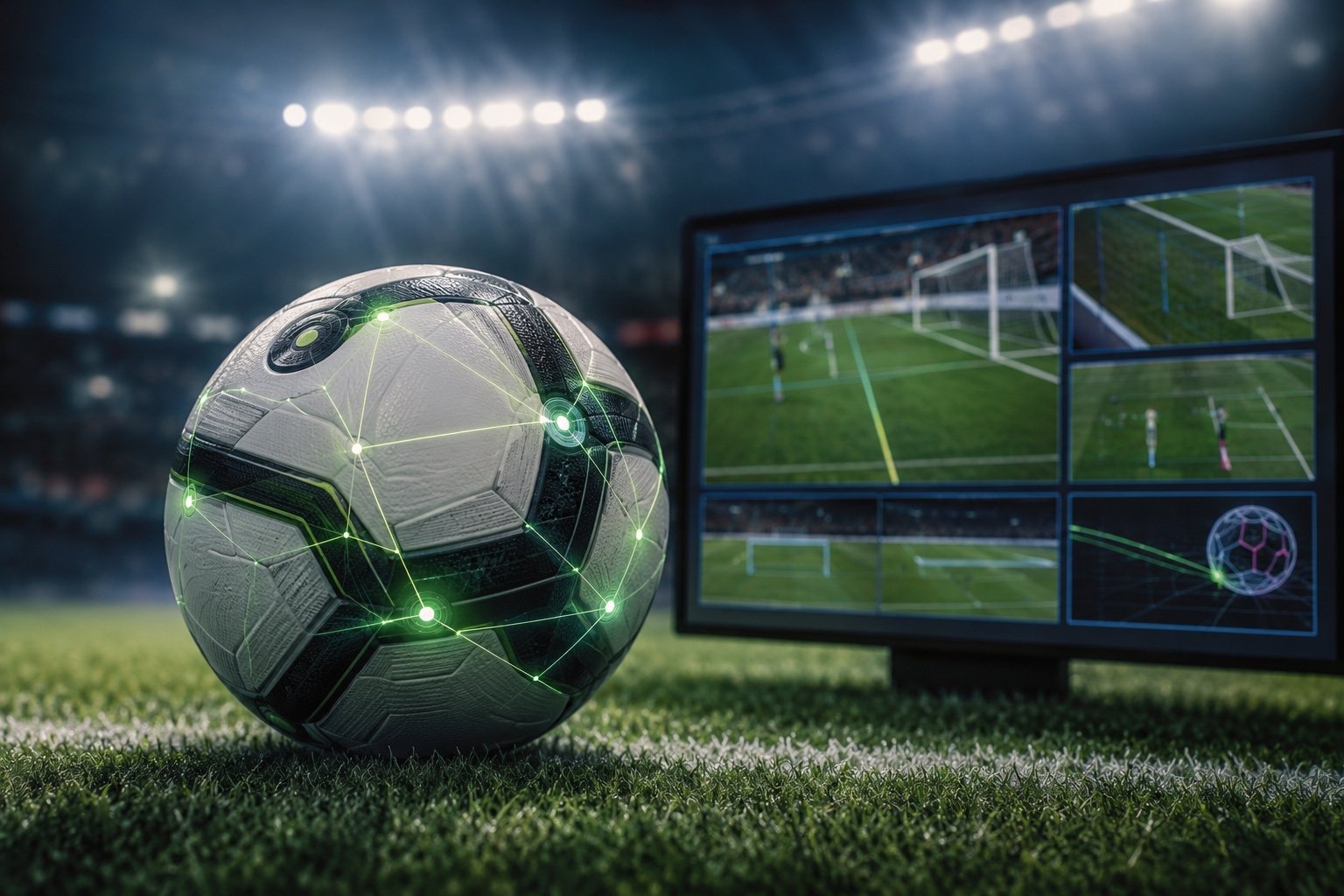
The most revealing football stories are not always about goals that stand. Sometimes they are about goals that disappear. In Portugal's round-of-32 win over Croatia in Toronto on 2 July, a Croatian goal was ruled out with the help of the tournament's connected match ball — and with it, the debate about technology in football moved to new ground.
What happened
As the Associated Press reported, sensor data from the high-tech ball helped officials pinpoint the moment of contact and align it with player-tracking to judge the play, in a knockout fixture featuring Cristiano Ronaldo, Luka Modric and Josko Gvardiol. The technology is no longer experimental: FIFA used connected balls at the 2022 World Cup and Euro 2024, and by this tournament it has become part of the operating system of elite refereeing.
Why it matters
The technology has not solved controversy; it has changed its shape. Fans once disputed what a referee saw, then what a replay showed. Now they are asked to trust a sensor timestamp — something you cannot feel from the stands the way you can form an opinion about a replay. The system can be perfectly correct and still feel alien, and that gap between accuracy and acceptance is now football's real problem. Offside calls combine movement, timing, perspective and law at speeds no human eye reliably resolves, so the case for the technology is genuine. But fairness in sport is a public experience as well as a technical condition.
The counter-view
The VAR years taught the game this lesson the hard way: a promise to correct clear errors became delays, drawn lines and interrupted celebrations. Connected-ball data fixes some of that by establishing contact precisely, but it intensifies the demand for transparent presentation. There is also a generational split — younger fans raised on goal-line graphics may find sensor-aided decisions normal, while others feel the game slipping from pitch and crowd towards technical rooms. Neither instinct is foolish, and the sport has to serve both.
What happens next
The Toronto decision will not be the last World Cup moment shaped by invisible data, nor the most contentious. The fix is not less technology but better communication: prompt, consistent explanations, broadcasts that show the contact point and the law it engages, crowds not left waiting in a fog. A connected ball can make football fairer. Only clear public grammar around it can make that fairness believable — and at a World Cup, the second task matters as much as the first.
Sources: reporting by Associated Press.
The NE Times is an independent news and analysis publisher. Our articles combine factual reporting with clearly-written, impartial analysis. Content is for general information and does not constitute professional advice. Disclaimer.
You may also like to read
FIFA pressed ahead with World Cup dynamic pricing despite objections from its own US staff
Leadership reportedly overruled American-based employees who opposed surge-style ticket pricing, intensifying a debate over affordability, resale costs and how aggressively organisers should chase revenue.
Trump set to hand over the World Cup trophy at the 2026 final, says Infantino
FIFA's president has indicated the US leader will present the trophy to the winners on 19 July, adding a fresh political dimension to a final already framed by American venues and heavy security planning.
FIFA's dynamic pricing row exposes the tension at the heart of the expanded World Cup
Reports that senior leadership overruled staff who opposed dynamic ticket pricing have reignited a debate about whether the tournament can balance record revenue with the trust of ordinary fans.
Qatar's Assim Madibo handed five-match ban for World Cup tackle that broke Kone's leg
FIFA disciplinary action over the challenge that fractured Canada midfielder Ismael Kone's leg becomes one of the tournament's defining safety cases.