Ministers launch biggest family law shake-up in decades for unmarried couples
A new consultation proposes automatic inheritance rights and stronger financial protections for cohabiting partners when relationships end or a partner dies.
Eleanor Whitfield
Writer ·

The government has opened a consultation on what the Ministry of Justice has billed as some of the biggest reforms to family law in decades, aimed at giving Britain's growing number of cohabiting couples far greater legal protection. The ten-week exercise runs until the middle of August.
At present, couples who live together without marrying or entering a civil partnership have no automatic right to inherit if their partner dies without a will, an omission that ministers say can leave the bereaved facing serious financial hardship. The proposals would grant qualifying cohabitants the same automatic inheritance rights as a spouse.
Cohabiting couples are among the fastest-growing family types in the country, yet the legal framework governing their relationships has changed little in generations. Ministers argue that the gap between how families actually live and how the law treats them has become untenable, exposing partners and children to uncertainty at moments of bereavement or separation.
Who would qualify
Under the plans, couples would be treated as cohabitants if they had lived together for at least three years or shared a child. The consultation also floats stronger financial safeguards when relationships break down, additional protections for survivors of domestic abuse, and the possibility of making pre- and post-nuptial agreements legally binding.
Defining who counts as a cohabitant is one of the thornier questions the consultation seeks to resolve. A qualifying threshold based on the length of cohabitation or the presence of a child is intended to capture committed, long-term relationships while avoiding sweeping in casual or transitory arrangements. The precise eligibility test, and how it would be evidenced in practice, is likely to attract close scrutiny from lawyers and campaigners alike.
The headline measures set out for consultation include the following:
- Automatic inheritance rights for qualifying cohabitants where a partner dies without a will, mirroring the rights of a spouse.
- A qualifying threshold based on living together for at least three years or sharing a child.
- Stronger financial protections when a cohabiting relationship breaks down.
- Additional safeguards for survivors of domestic abuse.
- The possibility of making pre-nuptial and post-nuptial agreements legally binding.
“The law has not kept pace with the way families actually live today, and too many people are left exposed at the most difficult moments of their lives.”
— A Ministry of Justice spokesperson
The myth of common law marriage
Campaigners have long argued that the so-called common law marriage is a myth that leaves millions wrongly assuming they have rights they do not possess. Surveys have repeatedly found that a large share of the public believes that simply living together for a number of years confers legal protections similar to marriage, when in fact no such status exists in the law of England and Wales.
That misconception can have severe consequences. A surviving partner may find themselves with no automatic claim on a shared home or savings, while a partner who gave up work to raise children may have little financial recourse if the relationship ends. Family law practitioners say they regularly encounter people who are shocked to learn, often too late, how little the law does to protect them.
A legal sector source said the proposals, if enacted, would represent a long-overdue modernisation, but cautioned that the detail would matter enormously, particularly around how rights are balanced against the wishes of those who deliberately choose not to marry.
Background
Reform of cohabitation law has been recommended by legal experts and parliamentary committees for many years, but successive governments have hesitated to legislate, mindful of the sensitivities around marriage and family policy. Critics of reform have argued that conferring marriage-like rights on couples who have chosen not to marry could undermine the institution of marriage or impose obligations on people who never sought them.
Supporters counter that the reforms are about protecting vulnerable partners and children, not about discouraging marriage, and point to other parts of the United Kingdom and to comparable jurisdictions that have already introduced protections for cohabitants. The consultation is the government's attempt to test where the balance of opinion lies before committing to legislation.
What happens next
The government says modernising the framework would reduce uncertainty and hardship, though any legislation would follow only after the consultation closes in the middle of August. Officials will then analyse the responses before deciding whether and how to bring forward a Bill, a process that could take many months. In the meantime, family lawyers are likely to continue urging cohabiting couples to make wills and consider formal agreements, rather than rely on protections that do not yet exist.
Sources: reporting by Today's Wills and Probate.
The NE Times is an independent news and analysis publisher. Our articles combine factual reporting with clearly-written, impartial analysis. Content is for general information and does not constitute professional advice. Disclaimer.
You may also like to read

UK-UAE Sudan Testimony Raises Questions For Ministers
A parliamentary committee is to hear claims that ministers prioritised ties with the UAE over stronger action on mass atrocities in Sudan.

Federal judge blocks key parts of Trump's mail voting order
A Boston court sided with states arguing that running elections is a matter for states and Congress, not the White House.

Brexit anniversary revives debate over a faster UK route back to the EU
A decade on from the referendum, a former EU negotiator suggested Britain could rejoin on a short timeline if it chose to, while stressing that core EU rules would apply.
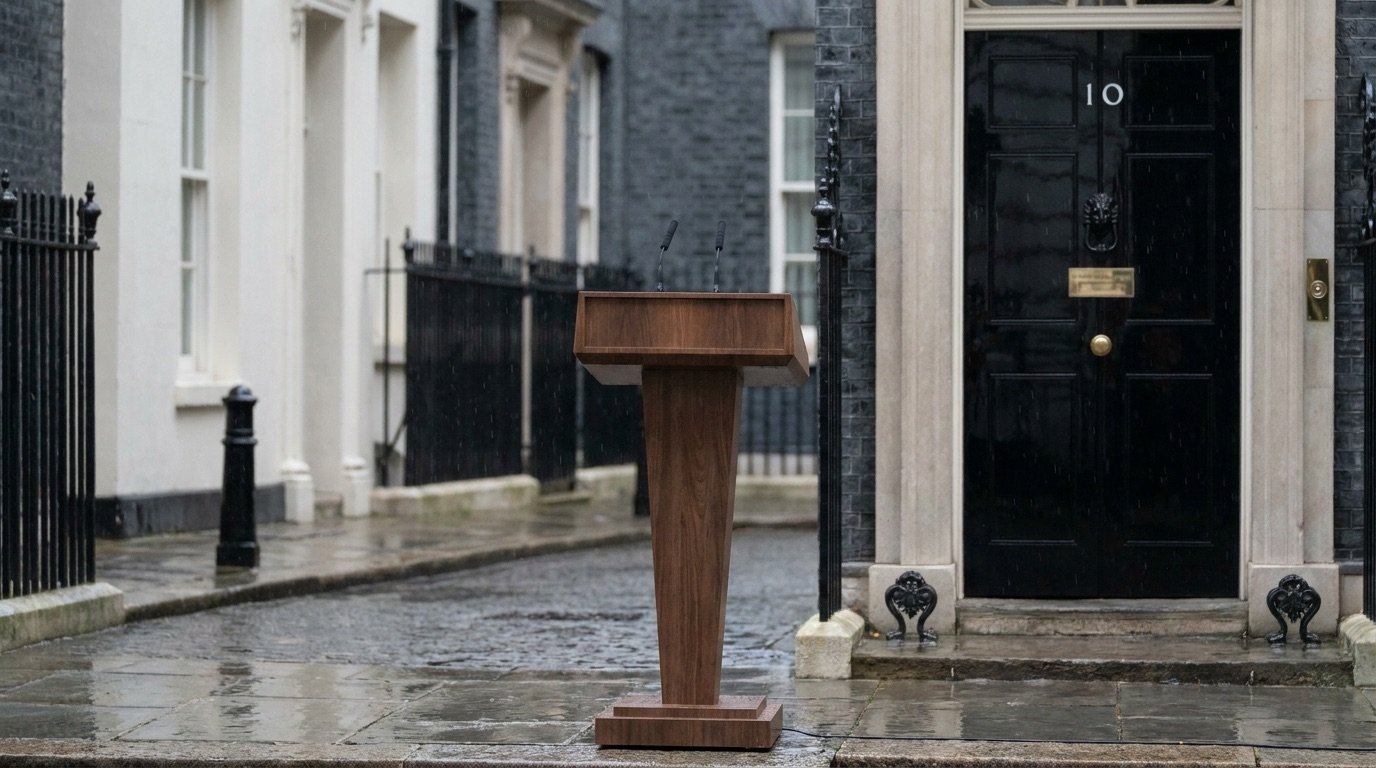
Sir Keir Starmer resigns as Prime Minister, triggering Labour leadership contest
The Prime Minister announced his departure outside Downing Street on Monday morning, ending a turbulent premiership and setting Britain on course for its seventh leader in a decade.