Health advice on social media has gone mainstream, which makes verification the real story
A Pew survey shows how many people now get health guidance from influencers and podcasts. The question is no longer whether the advice exists, but how to judge it.
Sophie Bennett
Writer ·
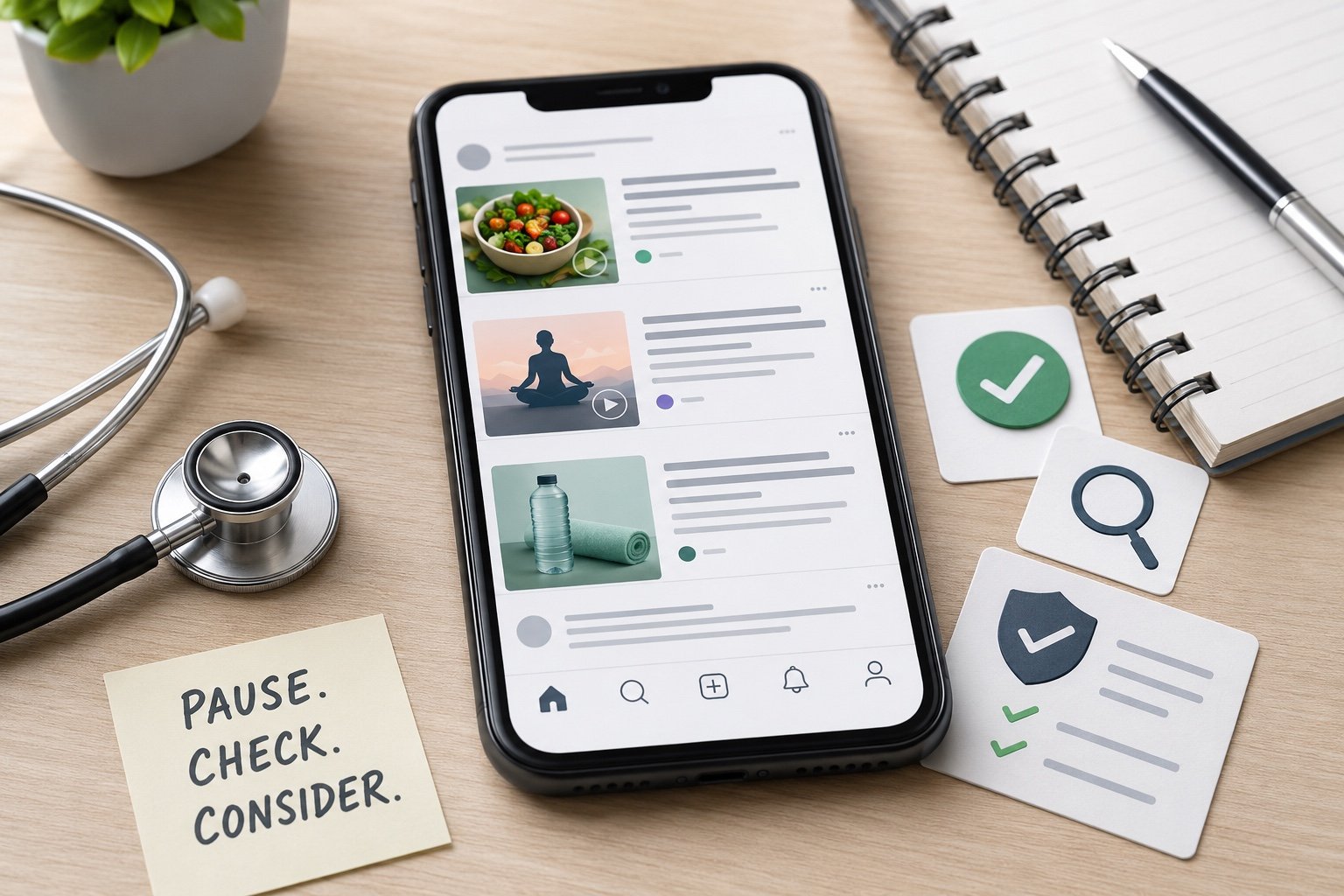
Health advice on social media used to be treated as a side channel: noisy, informal and separate from the serious business of medical care. That separation is harder to maintain now. The question is no longer whether the advice exists, but how readers can judge it before acting.
What happened
AP reported that a Pew Research Center survey found about four in 10 adults get health and wellness information from social media influencers or podcasts, with the share rising to about half among adults under 50. Pew's own report adds that many of these influencers describe themselves in varied ways, including health professionals, coaches and entrepreneurs. In other words, the modern health information environment is not a fringe space; it is a mainstream discovery system.
The AP piece keeps the issue practical. Experts quoted in the report advise scepticism, credential checks, attention to exaggerated claims and consultation with trusted medical professionals before acting on online advice. Those recommendations sound basic, but they are exactly the kind of guardrail that tends to disappear in algorithmic feeds built for speed and feeling rather than context and uncertainty.
Why it matters
Pew's findings help explain why the content spreads. Health is intimate, confusing and often expensive. People who feel unheard by formal systems may find an influencer more accessible than a clinic, and a short video can give language to symptoms someone has struggled to describe. The danger begins when relatability is mistaken for evidence, or when a personal story is presented as a universal rule. Personal experience can alert people to good questions for a clinician, but the scale of social media turns anecdotes into mass messaging before they have been tested.
Credential checking is necessary but not sufficient. AP notes that experts encourage users to ask whether a speaker is operating within the scope of their knowledge. A licensed professional in one area can still make unsupported claims in another, and a large audience is not a qualification. The most trustworthy health communicators tend to show their limits as clearly as their confidence.
The bigger picture
The financial layer matters too. Wellness content often sits close to products: supplements, apps, meal plans, courses and testing kits. That does not make advice false, but if a claim leads directly to a purchase, the audience should ask who benefits and whether independent sources agree. Emotional pressure is another warning sign. Viral posts often open with fear or revelation, because urgency drives engagement, but urgency is not accuracy. Good medical information often sounds less dramatic because it has to make room for exceptions and tradeoffs; a post that never says 'it depends' may be simplifying beyond usefulness.
The feed itself is part of the problem. Pew found that many users encounter health content incidentally rather than by deliberate search, meaning people may absorb guidance when they are least prepared to evaluate it. Passive exposure becomes perceived familiarity, and perceived familiarity can become misplaced trust.
What happens next
The solution is not to expect every user to become a medical researcher, but to build a short, repeatable checklist. Who is making the claim, what is their training, are they selling something, do they cite credible evidence, and do other reputable sources agree? Is the claim too broad, too fearful or too certain, and could it interact with medications, diagnoses, pregnancy or existing treatment? Online content can help people ask better questions, but it should not replace individualised medical care. In a world where a claim can reach millions before lunch, verification is not an optional extra. It is the core health skill.
Sources: reporting by Associated Press.
The NE Times is an independent news and analysis publisher. Our articles combine factual reporting with clearly-written, impartial analysis. Content is for general information and does not constitute professional advice. Disclaimer.
You may also like to read
Opinion: A social media ban for under-16s is the easy part. Enforcing it honestly is the test
Banning under-16s from TikTok, Instagram and YouTube answers a real public anxiety, but a law the government cannot enforce risks becoming a comforting fiction that lets the platforms off the hook.
Parents back tougher screen rules as children embrace AI, polling shows
New government polling reveals strong public support for limits on young children's screen time and a possible social media ban for under-16s, even as surveys find a majority of children already using AI every day.
Government unveils sweeping ban on social media for under-16s
Snapchat, TikTok, Instagram and X will be off-limits to children under 16 under plans the prime minister says will give young people their childhood back.
Opinion: A ban on social media for under-16s sounds decisive. The hard part comes after the announcement
The government is edging towards age restrictions on social media while resisting an outright phone ban. The instinct is right, but the enforcement is where this will be won or lost.