Opinion: A social media ban for under-16s is the easy part. Enforcing it honestly is the test
Banning under-16s from TikTok, Instagram and YouTube answers a real public anxiety, but a law the government cannot enforce risks becoming a comforting fiction that lets the platforms off the hook.
Sophie Bennett
Writer ·
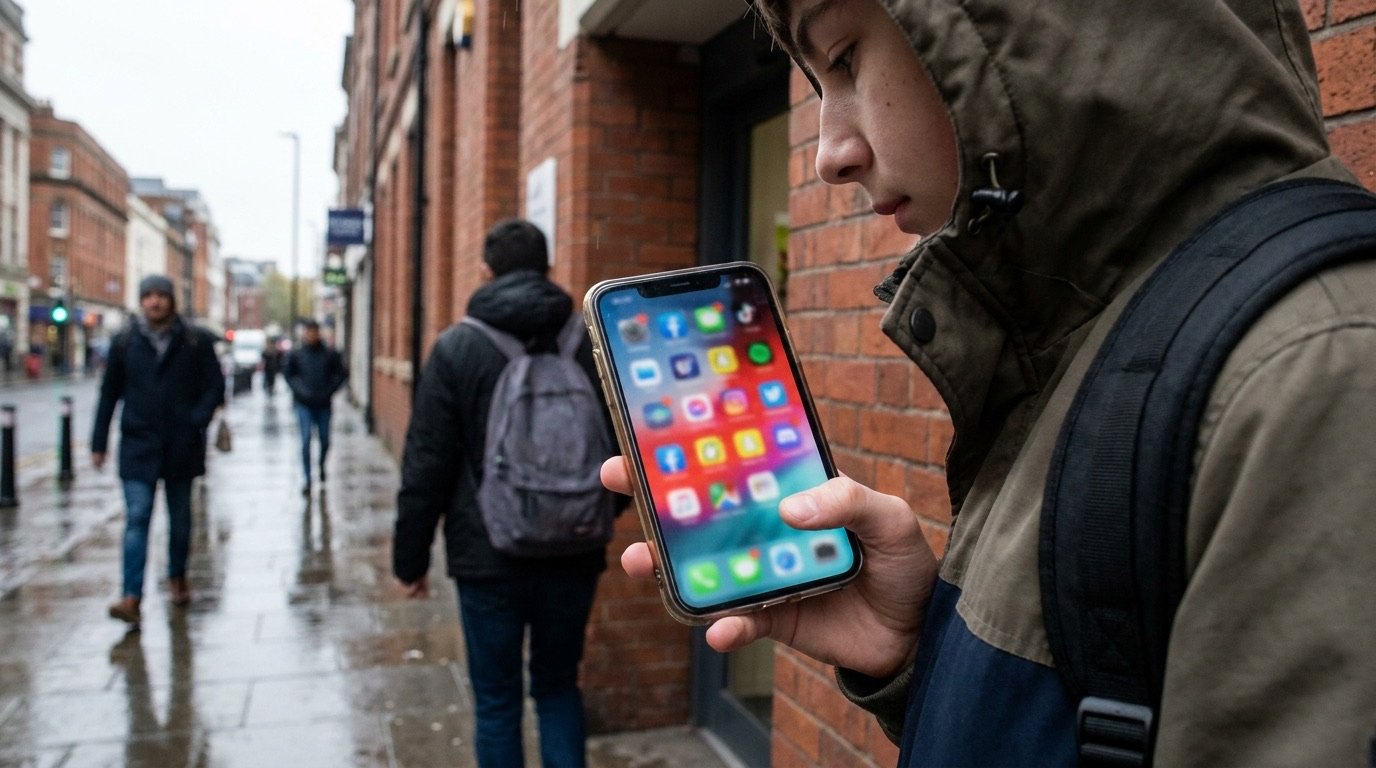
On Sunday the government confirmed what had been trailed for weeks: from spring next year, the major social media platforms, TikTok, Instagram, Snapchat, Facebook, X and YouTube, will be barred from offering accounts to anyone under 16. It is a striking intervention, and an emotionally resonant one. Ministers promise that children 'will be given back their childhoods', and it is hard to read the testimony of bereaved parents who have campaigned for years without feeling the pull of that promise.
Esther Ghey, whose daughter Brianna was murdered in 2023 by teenagers who had been exposed to disturbing material online, welcomed the move as something that could 'potentially save so many children's lives'. When a parent who has lost a child says that, the rest of us should listen carefully. But listening carefully also means being honest about what the policy can and cannot do. The danger is not that the ban goes too far. It is that, as written, it may do far less than its supporters hope while letting everyone declare victory.
The principle is defensible. The execution is where the argument really lives, and it is the execution that the government has so far been least willing to discuss.
The instinct behind the ban is sound
Let us not be precious about the status quo. The current settlement, in which platforms nominally bar under-13s through a checkbox and then optimise relentlessly for the attention of everyone who slips through, has failed. Algorithmic feeds are engineered to maximise engagement, and the engagement of an anxious 14-year-old is as valuable to an advertiser as anyone else's. We would not let a casino admit children on the honour system, and there is no obvious reason to treat an infinite-scroll feed tuned by machine learning more leniently.
Australia has already moved in this direction, and the British public is plainly receptive. Polling has consistently shown large majorities of parents in favour of harder limits. A government that responds to a genuine, widely felt anxiety is doing its job, not pandering. The objection that 'parents should just manage it themselves' ignores the collective-action trap every parent knows: it is far easier to deny a child something when their entire friendship group is denied it too. A clear legal line can do for screens what it once did for cigarettes, shifting the default and relieving individual parents of an unwinnable nightly negotiation.
But a ban you cannot enforce is worse than honesty
Here is the uncomfortable part. The whole edifice rests on age verification, and age verification is precisely where similar schemes have struggled. Kate Edwards of the Molly Rose Foundation has warned that the policy is 'far too easy to work around' and 'based on age verification tools that have been shown to be ineffective to date'. When Australia moved, downloads of VPNs surged among exactly the cohort the ban was meant to protect. Teenagers are, if nothing else, resourceful.
There is a second, quieter cost. To check that a user is over 16, a platform must in practice check the age of everyone, which means more of us handing identity documents or biometric face-scans to third-party verification firms. The Open Rights Group has rightly flagged the privacy implications. We risk building a vast new apparatus for proving who we are online in the name of protecting children, and then discovering that the determined 15-year-old has routed around it in an afternoon while the rest of us have surrendered our data.
Consider what a serious version of this policy would require:
- Age-assurance standards that are independently audited, not self-certified by the platforms
- Strict limits on how verification firms store and reuse the identity data they collect
- Meaningful penalties tied to outcomes, not box-ticking compliance
- Honest public reporting on how many under-16 accounts are actually being prevented
- Investment in digital literacy, so children who do go online are equipped to navigate it
“The risk is not a ban that overreaches, but a ban that reassures the public while the underlying business model carries on untouched.”
— Marcus Fenwick
Hold the platforms accountable, not just the children
The most persuasive case for the ban is also the most demanding one. If the problem is a business model that monetises the compulsive attention of minors, then the remedy cannot stop at the front door. The NSPCC was right to welcome the ambition while insisting on 'robust age checks' and real enforcement. The burden of proof should sit squarely with the companies, whose engineering talent is more than capable of building effective safeguards when their commercial interests require it. Funnily enough, that talent tends to appear when the fine is large enough.
There is also a question of scope that ministers have ducked. YouTube is on the list, yet for millions of children it is closer to a television channel than a social network, the place they watch homework explainers and football highlights. A ban that treats a maths tutorial the same as an algorithmic rabbit-hole will look arbitrary, and arbitrary rules breed contempt for the whole project. Precision matters. So does explaining the reasoning rather than reaching for a round number that polls well.
None of this is an argument for inaction. It is an argument for seriousness. The government has correctly identified that the old voluntary settlement is dead and that the public wants something firmer in its place. What it owes us now is candour about the hard part: the verification, the privacy trade-offs, the workarounds and the enforcement. Pass the ban, by all means. But measure it by whether children are actually safer in two years' time, not by the warmth of the headlines this week. If it turns out to be a line on a statute book that no one can hold, we will have spent a great deal of political capital teaching a generation that the law is something you scroll past.
Sources: reporting by NPR.
The NE Times is an independent news and analysis publisher. Our articles combine factual reporting with clearly-written, impartial analysis. Content is for general information and does not constitute professional advice. Disclaimer.
You may also like to read
Government unveils sweeping ban on social media for under-16s
Snapchat, TikTok, Instagram and X will be off-limits to children under 16 under plans the prime minister says will give young people their childhood back.
Opinion: A ban on social media for under-16s sounds decisive. The hard part comes after the announcement
The government is edging towards age restrictions on social media while resisting an outright phone ban. The instinct is right, but the enforcement is where this will be won or lost.
Parents back tougher screen rules as children embrace AI, polling shows
New government polling reveals strong public support for limits on young children's screen time and a possible social media ban for under-16s, even as surveys find a majority of children already using AI every day.
Ministers move to close the AI chatbot loophole in online safety law
The government is fast-tracking reforms to bring standalone AI chatbots within the scope of online safety rules, after an Ofcom investigation exposed a gap that left some tools outside the law entirely.