Kenya's Darts Revival Shows How Sport Really Grows: From the Ground Up
From the Jacaranda showground in Nakuru, Kenya's renewed love of darts shows a sport expanding through community ritual rather than broadcast money.
Daniel Fletcher
Writer ·
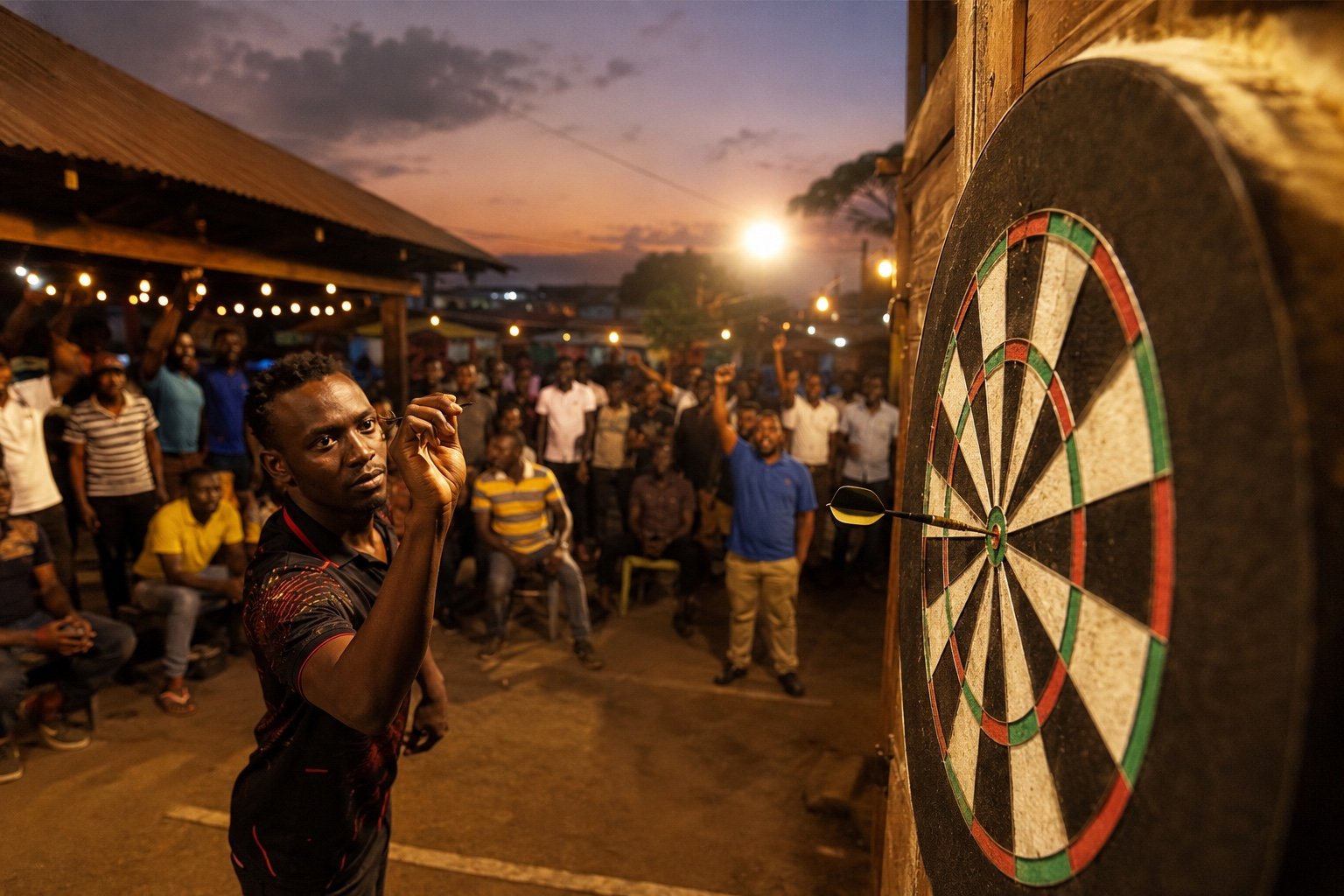
The most interesting sports stories are not always about billion-pound leagues. Sometimes they start with a dartboard, a close crowd and a player holding his nerve. The Guardian's dispatch from the Jacaranda showground in Nakuru, where Peter Wachiuri competed amid the concentration and noise of a local tournament, captures a Kenyan darts revival that deserves attention precisely because nobody bought it into existence.
What happened
Darts is often filed internationally under British pubs and televised walk-ons, but Kenya's scene is being remade by the communities adopting it. The sport's barrier to entry is remarkably low — a board, darts, space and practice — which makes it unusually portable in places where sporting infrastructure is uneven. It can spread through social venues, clubs and informal networks long before it needs a federation's blessing.
Why it matters
Accessibility should not be mistaken for simplicity. Good darts demands arithmetic under pressure, repeatable mechanics and recovery from tiny, instantly public errors. A player at the oche is alone in a very particular way, and spectators grasp the stakes without needing expertise — hit the target, hold your nerve, finish the leg. That is also why local scenes matter to the global game: professional tours can polish the television product all they like, but growth depends on the bottom layer of the pyramid being alive. Kenya's revival is that layer animating itself, creating gathering points, identity and intergenerational competition in a sport where a teenager and a veteran can genuinely share a stage.
The bigger picture
The framing matters. This is not "Kenya discovers darts", with the country as a backdrop for surprise; it is Kenyan players, organisers and fans building a darts culture with its own texture and stakes. The challenge is structure: coaching, youth access, women's participation, consistent calendars and links to regional bodies — the maintenance that stops grassroots excitement burning brightly and then fragmenting. The opportunity is that darts needs comparatively little investment to become organised, so modest support can produce visible results.
What happens next
International coverage brings visibility, and visibility can attract sponsorship, curiosity and pride. Whether the revival becomes a durable ecosystem now depends on organisers converting enthusiasm into calendars and pathways. Sport does not begin with a broadcast deal; it begins when people care enough to show up, compete, argue and return. From that repetition culture forms, from culture ambition follows — and a local pastime can start to look like the opening chapter of a bigger sporting story.
Sources: reporting by The Guardian.
The NE Times is an independent news and analysis publisher. Our articles combine factual reporting with clearly-written, impartial analysis. Content is for general information and does not constitute professional advice. Disclaimer.
You may also like to read
Osaka Stuns Sabalenka as Djokovic Passes Federer: Wimbledon's Day Seven Shifts the Draw
Naomi Osaka's straight-sets win over top seed Aryna Sabalenka and Novak Djokovic's record 106th Wimbledon victory made day seven the fortnight's pivot.
The ICC's Calendar Review Is Really a Question About What Cricket Is For
Fixed format windows, a T20 World Club Championship and shorter ODIs are all on the table as the ICC reviews cricket's crowded global calendar.
A $21m Ground in Pomona Is Cricket's Real Olympic Test
The LA Knight Riders' first home game at a purpose-built Pomona stadium asks whether 2028 Olympic momentum can turn American cricket into a habit.
The Hossam Hassan Dallas incident shows how World Cup security is now part of the story
Egypt's coach says a hotel confrontation with Dallas police is resolved — but the episode shows the fragile line between security and football culture.