A $21m Ground in Pomona Is Cricket's Real Olympic Test
The LA Knight Riders' first home game at a purpose-built Pomona stadium asks whether 2028 Olympic momentum can turn American cricket into a habit.
Daniel Fletcher
Writer ·
What happened
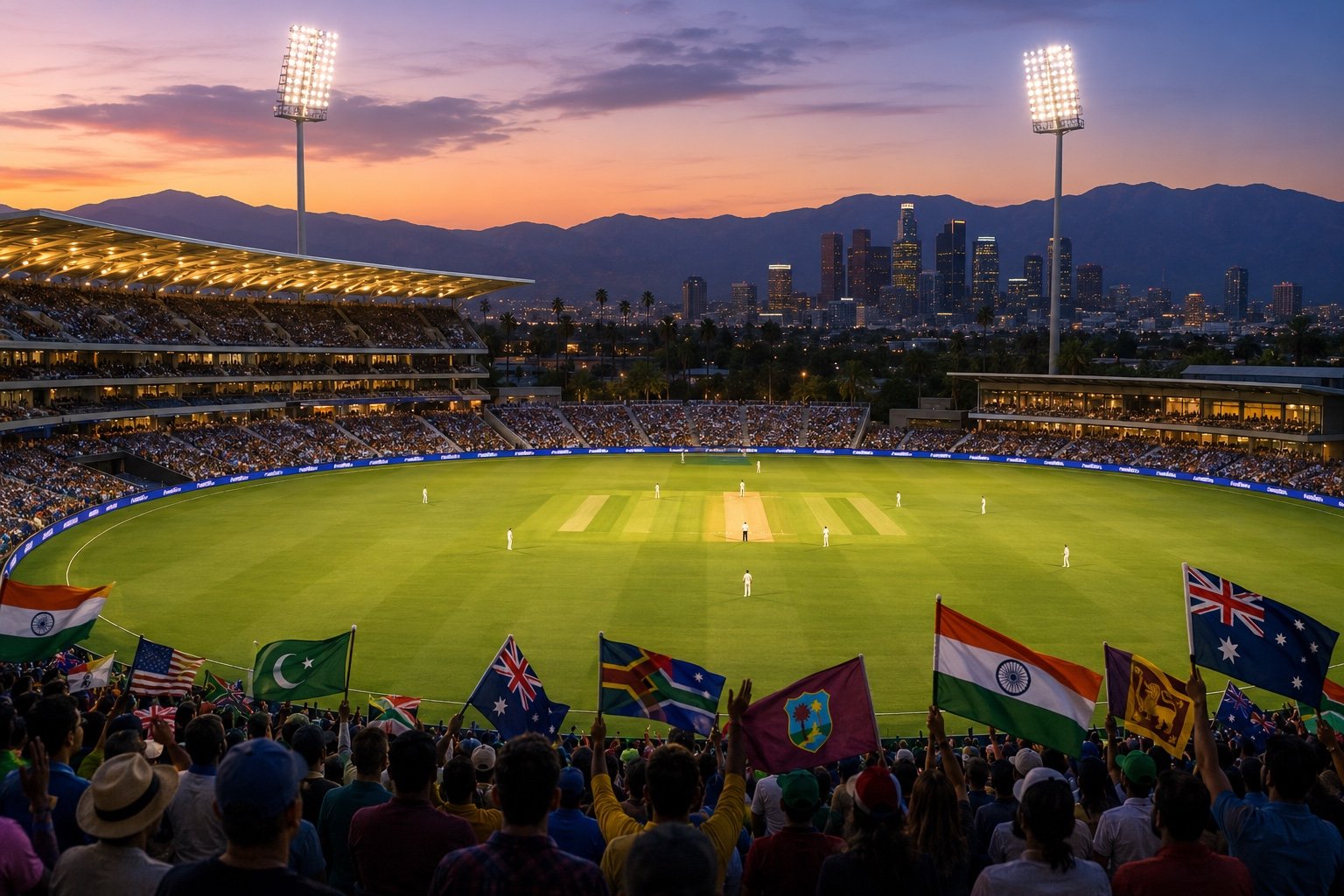
The Los Angeles Knight Riders played their first home game under lights at a new $21 million cricket ground in Pomona, about 30 miles east of downtown Los Angeles, drawing a crowd of roughly 2,000, according to the Associated Press. The facility covers around 200,000 square feet, features six floodlight towers and was built in under 70 days. It holds about 5,000 in temporary seating for the 2026 season, with plans for a permanent capacity above 20,000, plus a professional practice facility and a Knight Riders academy.
On the field, Washington Freedom's Saurabh Netravalkar was named player of the match after taking three wickets for just 16 runs — a reminder that infrastructure stories still need sporting substance underneath them.
Why it matters
Cricket's problem in the United States has never been a lack of affection. Millions of Americans already follow the game through family ties, international fandom and community leagues. The missing pieces have been mainstream visibility and venues that make the sport feel professional rather than borrowed. A purpose-built ground changes that conversation: it tells existing fans they are being served and new fans that the sport is not merely visiting. The Pomona opener's soundtrack — Bollywood, Bhangra, Bad Bunny, Neil Diamond and Queen, with purple-and-gold flags in the stands — was effectively a map of the audience cricket is trying to assemble: diasporic, local, multilingual and intergenerational.
The counter-view
One vivid night proves little. A crowd of 2,000 does not crack the American market, and US sport is littered with emerging leagues that produced a memorable launch and then struggled with weekly rhythm. The real test arrives when novelty fades — when midweek fixtures compete with work and traffic, and casual fans decide whether they understand the stakes well enough to come back.
What happens next
Cricket has something most growth sports lack: a deadline. The sport returns to the Olympics at the 2028 Los Angeles Games after a 126-year absence, giving leagues, academies and youth programmes a once-in-a-generation narrative to build towards. A child who watches Major League Cricket in Pomona in 2026 and Olympic cricket in the same region two years later experiences a continuity that advertising cannot buy. Whether that becomes lasting infrastructure will be measured not by ribbon-cuttings but by seasons, academies and the slow business of making cricket a regular part of the Los Angeles sporting landscape.
Sources: reporting by Associated Press.
The NE Times is an independent news and analysis publisher. Our articles combine factual reporting with clearly-written, impartial analysis. Content is for general information and does not constitute professional advice. Disclaimer.
You may also like to read
Osaka Stuns Sabalenka as Djokovic Passes Federer: Wimbledon's Day Seven Shifts the Draw
Naomi Osaka's straight-sets win over top seed Aryna Sabalenka and Novak Djokovic's record 106th Wimbledon victory made day seven the fortnight's pivot.
The ICC's Calendar Review Is Really a Question About What Cricket Is For
Fixed format windows, a T20 World Club Championship and shorter ODIs are all on the table as the ICC reviews cricket's crowded global calendar.
The Hossam Hassan Dallas incident shows how World Cup security is now part of the story
Egypt's coach says a hotel confrontation with Dallas police is resolved — but the episode shows the fragile line between security and football culture.

Osaka stuns Sabalenka at Wimbledon and reopens the grass-court conversation
Naomi Osaka's 6-2, 7-6 defeat of the top seed sends her into a first Wimbledon quarter-final — and forces a rethink of her relationship with grass.