Britain and EU set 22 July date for second summit as Starmer pushes 'reset' deeper
Sir Keir Starmer has agreed with European Council President Antonio Costa to hold a second UK-EU summit in Brussels on 22 July, with a youth mobility scheme expected to be among the headline outcomes.
Eleanor Whitfield
Writer ·
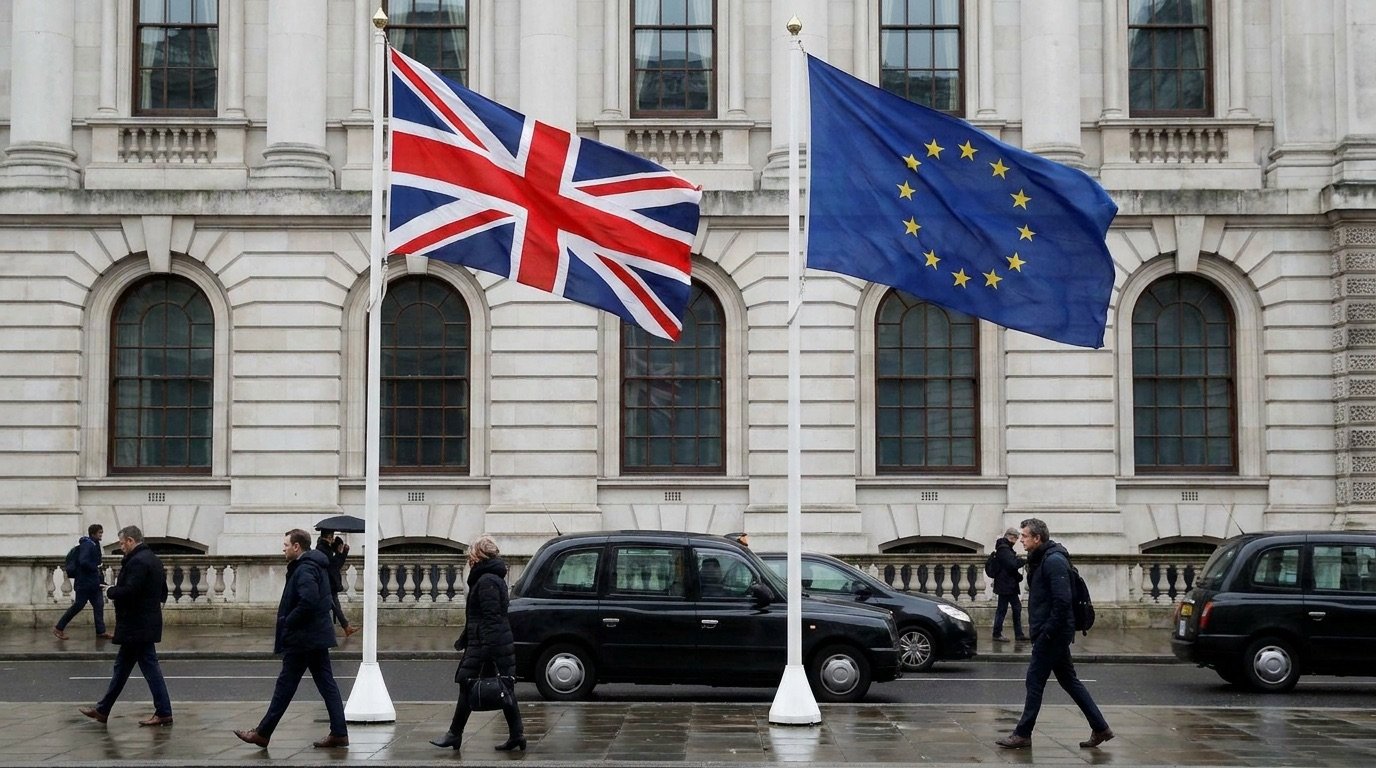
Britain and the European Union will hold their second formal summit on 22 July in Brussels, Downing Street has confirmed, as Sir Keir Starmer presses ahead with a strategy of incremental rapprochement with the bloc a decade on from the Brexit referendum. The Prime Minister said he had agreed the date directly with European Council President Antonio Costa, framing the meeting as proof that his government is 'delivering on our promise to reset our relationship and put Britain at the heart of Europe'.
The summit will be the centrepiece of a diplomatic year in which the Labour administration has sought to convert warmer rhetoric into concrete agreements on trade, security and the economy. It follows the first such gathering, hosted in London in May 2025, which both sides described at the time as a turning point after years of post-Brexit friction. This time the negotiations move to Brussels, on the EU's home turf, where the institutional weight of the bloc will be on full display.
For a Prime Minister facing intense pressure at home, the choreography of a successful European summit carries obvious political appeal. But the substance is contested, and the headline item on the agenda, a youth mobility scheme, has already exposed sensitivities on both sides of the Channel that officials will spend the coming weeks trying to manage.
What is on the table
The most eye-catching prospective outcome is a youth mobility deal that would allow British and EU citizens under the age of 30 to live, work and study in one another's countries for a defined period. Supporters argue such a scheme would restore opportunities lost since freedom of movement ended, helping employers in hospitality, agriculture and the creative industries while giving young Britons access to experiences their predecessors took for granted.
Beyond mobility, the two sides are expected to discuss closer cooperation on defence and security, energy, and measures intended to smooth the flow of goods across the border. The government has been keen to stress that none of this amounts to rejoining the single market or customs union, lines it insists remain firmly in place. Instead, ministers describe the approach as a series of practical, sector-by-sector arrangements that reduce friction without reopening the constitutional arguments of the past.
The areas under negotiation include:
- A capped, time-limited youth mobility scheme for under-30s on both sides
- Deeper defence and security cooperation amid instability in the Middle East
- Measures to ease trade in goods and reduce border checks
- Energy market coordination and shared resilience planning
- Continued discussion of tuition fee arrangements for EU students in England
The youth mobility sticking points
Despite the optimism in Downing Street, the youth mobility scheme remains the subject of hard bargaining. The UK has pushed for a cap on the number of participants and for the arrangement to be explicitly time-limited, wary of any scheme that critics could portray as freedom of movement returning by the back door. Brussels, by contrast, has treated a genuinely open mobility offer as something close to a red line, with several member states reluctant to accept a heavily restricted version.
A further complication is the question of tuition fees for EU students studying in England, who currently pay the higher international rate. Some European negotiators have linked progress on mobility to more favourable treatment for their students, an issue that touches on university finances at a time when many UK institutions are under acute budgetary strain. Uncertainty also persists over whether individual European nations will commit to issuing visas for British young people on reciprocal terms.
“Today I've agreed with the European Council president that we will hold the second UK-EU summit on 22 July. My Labour Government is delivering on our promise to reset our relationship and put Britain at the heart of Europe.”
— Sir Keir Starmer, Prime Minister
Background: a decade after the vote
The summit lands almost ten years after the 2016 referendum in which the UK voted to leave the European Union. The intervening years brought protracted negotiations, the Trade and Cooperation Agreement, and a relationship that, by the time Labour took office in 2024, many on both sides judged to be functional but cool. Starmer campaigned on a promise to improve ties without reversing Brexit, and the summit process is the most visible expression of that pledge.
Costa, for his part, has been careful to present the relationship as mutually beneficial rather than a concession to London. European officials have repeatedly emphasised that closer cooperation serves the continent's collective interests in security and prosperity, language designed to reassure member states that the EU is not simply granting favours to a departed member.
“Close EU-UK cooperation is essential for our shared European security, resilience and prosperity.”
— Antonio Costa, European Council President
What happens next
Officials on both sides now have just over a month to narrow the gaps before leaders meet. Negotiators will attempt to settle the parameters of the youth mobility scheme, including any cap and duration, alongside the trickier questions of tuition fees and reciprocal visas. Defence and energy cooperation are widely seen as more straightforward, and could provide the early wins both leaders will want to showcase.
Politically, the stakes for Starmer extend well beyond Brussels. A summit that delivers tangible benefits, particularly for young people and business, would hand him a rare piece of good news at a fraught moment in his premiership. A meeting that produces only warm words, however, risks reinforcing the charge from critics that the 'reset' is more presentational than substantive. The 22 July gathering will be judged not on its atmospherics but on what, if anything, ordinary citizens and companies can actually do differently as a result.
Sources: reporting by Reuters.
The NE Times is an independent news and analysis publisher. Our articles combine factual reporting with clearly-written, impartial analysis. Content is for general information and does not constitute professional advice. Disclaimer.
You may also like to read
Brexit anniversary revives debate over a faster UK route back to the EU
A decade on from the referendum, a former EU negotiator suggested Britain could rejoin on a short timeline if it chose to, while stressing that core EU rules would apply.

Makerfield by-election: Andy Burnham bids for Commons seat in gamble that could topple Starmer
The Greater Manchester mayor is the clear favourite as voters go to the polls in a contest seen as the launchpad for a Labour leadership challenge.
Starmer fights for survival as Labour leadership crisis deepens
Almost a hundred Labour MPs have called on the prime minister to go, but Sir Keir insists he will stay the course and fight any challenge.

Government unveils sweeping ban on social media for under-16s
Snapchat, TikTok, Instagram and X will be off-limits to children under 16 under plans the prime minister says will give young people their childhood back.