What Does the Tesla China Recall Mean for 2.98 Million Cars and Their Owners?
Chinese regulators say the emergency mechanical door release in almost three million Teslas is too hard to find, triggering a fleet-wide fix from 25 September.
World Affairs Editor ·
Why it's trending
China is forcing a whole industry to rethink hidden door handles at once, with Tesla the largest of several manufacturers recalling cars over the same emergency-escape defect.
China’s biggest Tesla door-safety action is a design lesson disguised as a recall: an emergency control is useless if a frightened passenger cannot find it quickly.
If you drive one of the affected cars in China, the Tesla China recall does not mean a new door mechanism is being fitted. It means clearer warning labels and software that lowers the windows after a crash. The regulator’s concern is human factors as much as hardware.
At a glance
- SAMR — Tesla filed recalls covering 2,975,910 China-built and imported Model 3, Model Y, Model S and Model X vehicles.
- SAMR — the emergency mechanical release can be difficult to identify and operate because it is close in colour to surrounding interior trim.
- SAMR — the door-release recall starts on 25 September 2026 and includes free warning labels plus an over-the-air window-control update.
- TechCrunch — the Tesla action forms part of a wider Chinese crackdown on hard-to-find emergency releases across multiple manufacturers.
- SAMR — its official 24 August roundup names nine automakers specifically for the emergency-handle defect; broader reporting has described an 11-carmaker coordinated action.
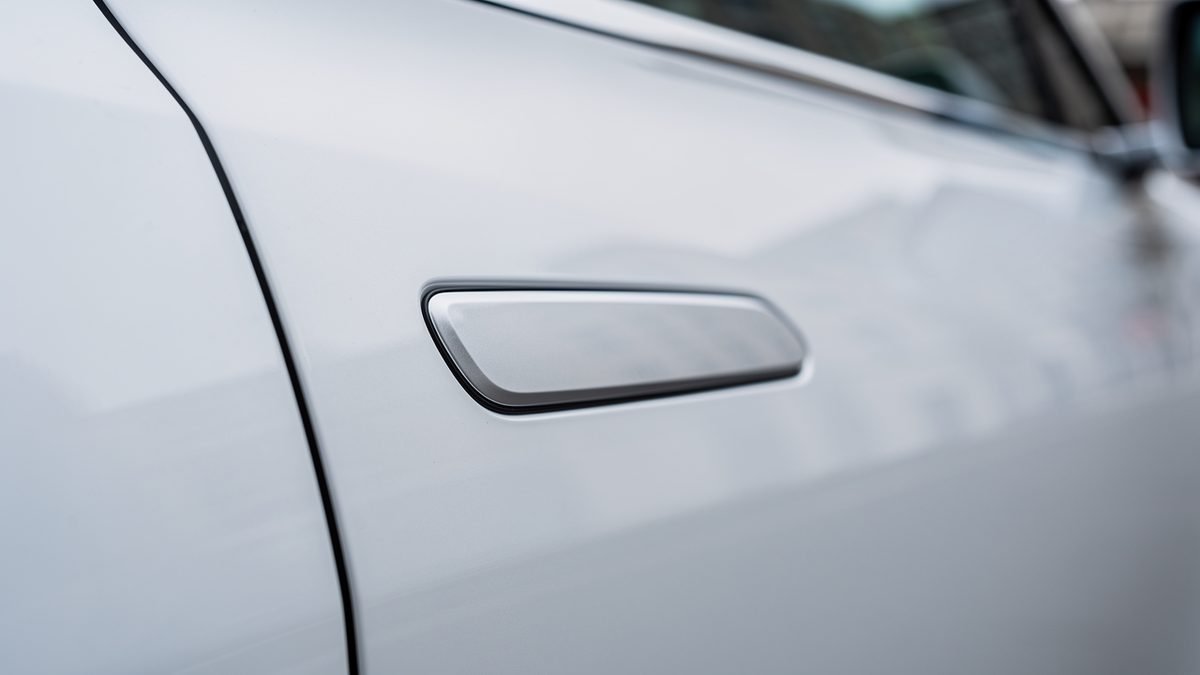
- The problem concerns the interior mechanical backup used when electronic doors lose power, not merely the exterior flush handle.
- Tesla’s fix combines a physical visibility change with software that lowers windows after a collision.
- The recall covers both Shanghai-built vehicles and imported Model 3, S and X cars sold in China.
- China is tightening door-handle rules across the EV industry rather than treating the issue as Tesla-only.
Why has the Tesla China recall been ordered?
China’s State Administration for Market Regulation says the interior emergency mechanical releases on affected cars are close in colour to the surrounding trim, making them difficult to identify and operate. That matters in the unusual but serious circumstance where a heavy collision disables the low-voltage electrical system and the normal electronic door control no longer works. The mechanical release is supposed to be the fallback. If occupants cannot locate it quickly, escape can be delayed and rescue from outside may also become harder.
Which Tesla models are affected?
The recall covers 2,975,910 vehicles. SAMR lists 973,156 China-built Model 3s and 1,956,713 China-built Model Ys, plus 35,590 imported Model 3s, 8,328 Model Xs and 2,123 Model Ss. The production windows vary by model and stretch back to 2018 for some imported cars. The scale makes this a mass fleet intervention rather than a niche repair campaign, although the remedy is relatively light compared with replacing doors or latches.
Why can a hidden emergency release become dangerous?
Good emergency design assumes people will be stressed, disoriented and possibly injured. A control that looks elegant in normal driving can fail that test if it blends into the cabin or sits somewhere a passenger would not instinctively search. Electronic latches add another layer because many drivers rarely use the mechanical backup and may not remember its location. The regulatory argument is therefore about discoverability: a safety feature must be obvious enough to work when memory, visibility and time are all impaired.
Why is software part of the fix?
Tesla will add warning labels and push an over-the-air update that changes the window-control strategy after a collision. Lowering a window does not repair a door release, but it can create another route for escape or access. The combination is revealing: the physical label helps people find the manual control, while software changes the vehicle’s post-crash state. Because much of the remedy can be delivered remotely, the financial and logistical burden may be smaller than the headline vehicle count suggests.
Is this only a Tesla problem?
No. Chinese regulators announced a wider wave of recalls involving Xiaomi, Xpeng, Geely brands and other manufacturers over similar emergency-release concerns. There is a reporting nuance worth preserving: SAMR’s official roundup on 24 August identifies nine automakers specifically in the door-handle defect action, while TechCrunch, citing Reuters, described an 11-carmaker coordinated recall programme around the problem. The uncontested point is broader than the count: regulators are treating hard-to-find emergency releases as an industry-wide safety issue.
What happens next
Tesla’s door-release campaign begins on 25 September. Owners will be notified through the company’s service channels, while eligible cars receive the software change and warning labels without charge. China is also moving towards tougher national standards for vehicle door handles from 2027, so future models will face design requirements before they reach showrooms. For Tesla and its rivals, the lesson is likely to outlast this recall: emergency controls cannot be judged only by whether they exist; they must be easy to recognise under pressure. For readers weighing what recall records mean when choosing a car, the motoring specialists at our sister site True Motion Auto publish independent reviews and EV buying advice.
Sources & verification
- China State Administration for Market Regulation — primary reporting and official updates
- Reporting reviewed on 24 August 2026; figures as published at that time
Filed under World · Written by Marcus Reeve