Covid Inquiry Finds Billions Wasted on PPE: The Procurement Failures Explained
The Covid Inquiry says systemic procurement failures left workers exposed and wasted almost £10 billion on PPE. Here are the findings and recommendations.
UK News & Politics Editor ·
Why it's trending
The inquiry's finding that almost £10 billion of PPE spending was wasted is leading UK political and accountability coverage and has renewed public interest in pandemic contracting.
The inquiry's central finding
The UK Covid-19 Inquiry has delivered one of its strongest judgments so far, concluding that serious and systemic failures in personal protective equipment procurement left frontline workers without adequate protection and caused vast sums of public money to be wasted. Module 5 examined how the four UK nations prepared for and bought PPE, how emergency contracts were awarded, and whether systems were capable of balancing speed with value and fairness.
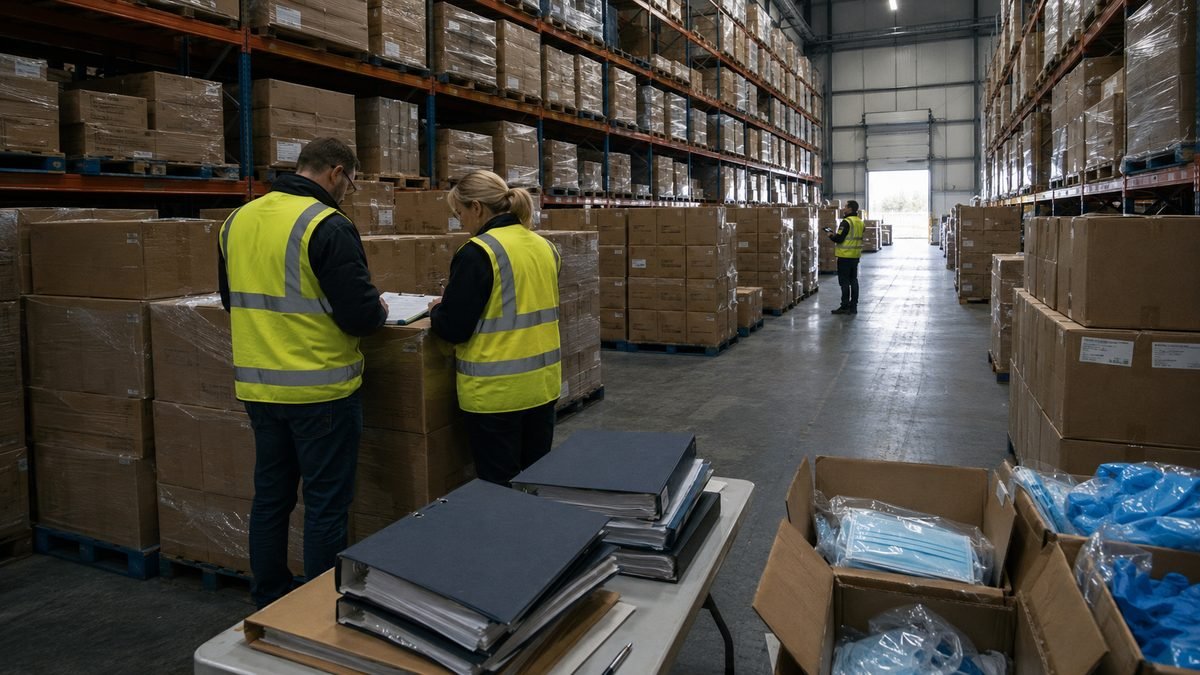
The report says the UK spent approximately £14.9 billion on PPE during the pandemic and that nearly two-thirds of that expenditure - close to £10 billion - was wasted. Waste included products that were unsuitable, defective, surplus to need or purchased at inflated prices, as well as storage and disposal costs. The inquiry's conclusion is not that emergency spending should have proceeded slowly. It is that urgency was used within systems that had not been prepared for a predictable national emergency.
A perilous starting position
Britain entered the pandemic with an inadequate stockpile and an emergency planning model that did not match the scale or nature of Covid-19. Existing reserves had gaps, some items were expired or unsuitable, and assumptions focused too narrowly on an influenza-type outbreak. When global demand surged, the country competed with every other government for masks, gowns, gloves and respirators while domestic production was limited.
Frontline workers experienced the consequences directly. Health and care staff reported shortages, reuse of equipment intended to be disposable, rapidly changing guidance and variations between workplaces. Social-care providers often had less purchasing power and weaker access to central distribution than the NHS. The inquiry describes a system in which workers' confidence was damaged because official assurances did not always match the equipment available on the ground.
Preparedness is cheaper than improvisation. Maintaining an appropriate rotating stockpile, mapping critical supply chains and testing distribution arrangements can look expensive during normal years, but those costs are small compared with emergency purchasing at the peak of a global shortage.
The high-priority or VIP lane
One of the most controversial features of pandemic procurement was the high-priority lane for offers referred by ministers, MPs, officials and other well-connected people. The inquiry finds that the process was inherently biased and unfair because suppliers with a political or official introduction received different treatment from businesses using ordinary channels. A referral did not automatically mean a contract was corrupt or the product was unusable, but it created unequal access and undermined trust.
The report does not make a finding that ministers personally accepted bribes or directly engaged in corruption. That distinction matters. The criticism is about design, governance, due diligence and the opportunity for influence, not a blanket criminal accusation against everyone involved. Individual contracts have been subject to separate litigation, investigations and recovery action, and allegations must be assessed case by case.
A fair emergency system can still triage credible leads. It should use transparent criteria based on production capacity, certification, delivery timetable and price rather than the identity of the person making an introduction. Decisions and conflicts of interest must be recorded in real time, not reconstructed years later.
Why so much money was lost
Officials faced an extraordinary market in which prices were rising rapidly and suppliers demanded commitments before goods existed. Some loss was therefore unavoidable. The inquiry's concern is that weak data, fragmented responsibilities and inadequate quality controls magnified the loss. Departments did not always have a reliable picture of demand, stock in warehouses, products in transit or the rate at which different settings were using equipment.
Contracts were sometimes awarded to newly formed or inexperienced intermediaries because they claimed access to overseas factories. Quality assurance occurred too late, specifications changed, and the government accepted commercial risks that would normally have been rejected. Large orders then arrived after the most acute shortage had passed, creating oversupply and long-term storage bills.
The waste figure should not be interpreted as a single pile of cash that can now be recovered. It includes accounting impairments, products bought for more than their later value and goods that could not be used. Some legal recovery may be possible, but much of the public loss reflects decisions whose financial effect is permanent.
The inquiry's recommendations
The Module 5 report makes 11 recommendations designed to improve readiness and emergency contracting. They include building resilient domestic manufacturing capacity, maintaining appropriate reserves, creating clearer command structures and ensuring procurement teams have tested plans before a crisis. The inquiry also calls for stronger transparency, conflict-of-interest controls and systems that can track stock, demand and quality across the UK.
Domestic capacity does not mean producing every glove or mask in Britain regardless of cost. It means identifying critical categories for which a complete dependence on distant suppliers creates unacceptable risk, then arranging scalable contracts or reserve manufacturing that can expand quickly. Diversified international supply remains important, but resilience requires alternatives when borders close or global demand spikes.
Training and institutional memory are also essential. By the time the next emergency occurs, many people who worked through Covid-19 will have moved roles. Plans must be documented, exercised and audited so capability does not depend on personal recollection.
Accountability after the report
The government must now respond to the recommendations and set out which bodies will own implementation. Parliamentary committees, auditors and the inquiry itself will be able to test progress. A recommendation accepted in principle can still fail if it lacks funding, deadlines or measurable standards. The public will want to know whether warehouses, manufacturing arrangements and procurement systems have actually changed rather than whether new guidance has been written.
The report also has a human dimension. PPE was the barrier between workers and a virus that was not fully understood. Debates about contracts and accounting should not obscure the fear experienced by nurses, doctors, carers, cleaners, ambulance staff and others who believed they were being asked to work without reliable protection.
The lasting lesson is not that government should avoid rapid action. Delay can cost lives. The lesson is that speed and integrity are not opposites when systems have been prepared. Transparent criteria, tested suppliers, accurate data and clear accountability allow faster decisions with less waste. The almost £10 billion estimate is therefore more than a historical headline: it is a measure of what inadequate preparation can cost during the next national emergency.
Sources & verification
- UK Covid-19 Inquiry - Module 5 report
- UK Covid-19 Inquiry - Findings and recommendations announcement
- UK Covid-19 Inquiry - Module 5 in brief
- The Guardian - PPE procurement report coverage
Filed under Politics · Written by Eleanor Whitfield