UK Heatwave and 'Firewave': Extreme Temperatures, Wildfire Risk and the New Climate Reality
Britain's prolonged heatwave is driving hundreds of wildfire callouts as the Met Office's new climate report says extreme temperatures are becoming more frequent and intense.
UK News & Politics Editor ·
Why it's trending
Heat, wildfires and climate change are leading UK science and public-safety coverage. The story combines immediate risk - hundreds of wildfire responses - with the Met Office's annual evidence that Britain's climate has shifted.
A heatwave has become a fire emergency
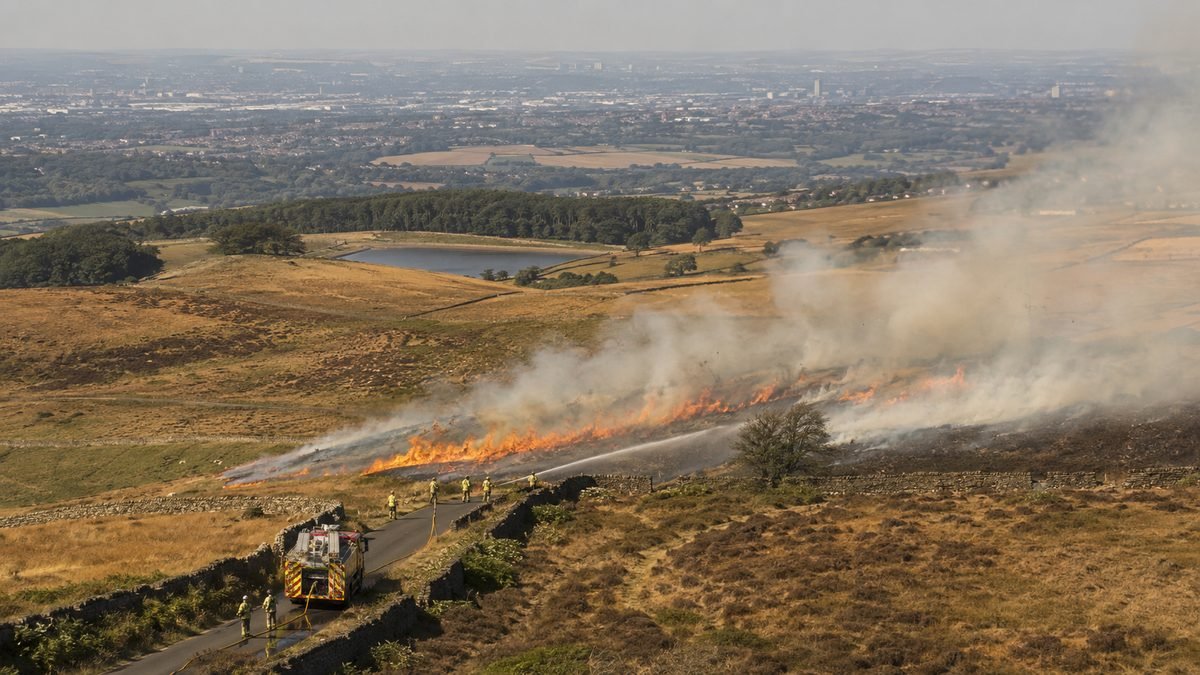
Britain's third heatwave in three months is creating conditions in which grass, heathland, moorland and urban open spaces can ignite and spread with unusual speed. Fire and rescue services in England and Wales responded to 342 wildfires between 6 July and Monday, according to figures reported from the National Fire Chiefs Council. At least 19 fires were active at the start of the week, with major incidents declared in parts of North Wales and mutual-aid arrangements activated by services facing heavy demand.
The phrase 'firewave' is being used to describe a cluster of wildfires occurring during the same prolonged spell of hot, dry weather. It is not an official Met Office warning category, but it captures the way multiple incidents can stretch emergency resources at once. High temperatures alone do not cause fires; most ignitions involve human activity, accidents or deliberate acts. Heat, low humidity, dry vegetation and wind determine how easily a small ignition becomes a fast-moving emergency.
Where the risk is highest
Much of England and Wales is assessed at very high fire severity because vegetation has lost moisture after weeks with little significant rain. Natural England's index has shown broad areas at elevated risk, while fire services have dealt with incidents in North Wales, London, the Peak District and other rural and urban locations. The north-east and parts of the north-west have generally shown lower relative risk than southern and central areas, but 'lower' does not mean safe when ground conditions are dry.
Fire behaviour can change quickly. A breeze that feels welcome during hot weather can carry flames across grass, throw embers beyond firebreaks and make smoke movement unpredictable. Moorland fires can burn below the surface in peat and reappear after seeming to be extinguished. Urban-edge fires threaten homes, roads, railways and electricity infrastructure, while rural incidents can require large numbers of crews over several days.
What the Met Office climate report says
The immediate heat comes as the Met Office publishes its State of the UK Climate 2025 report. The assessment says 2025 was the warmest year in the national series dating back to 1884 and that the most recent decade, 2016 to 2025, was 0.51C warmer than 1991 to 2020 and 1.33C warmer than 1961 to 1990. The last four years all sit within the five warmest recorded in the UK.
The report's central message is not simply that one year was hot. It is that the distribution of British weather is changing. Temperature extremes are becoming more frequent and more intense, the hottest days in parts of the South East are significantly warmer than they were several decades ago, and regions farther north are experiencing annual temperatures once associated with southern England. The Met Office describes the climate as still 'on the move', meaning adaptation plans based on twentieth-century averages are increasingly unreliable.
Rainfall adds to the problem. England and Wales received less than half their average spring rainfall in 2025, with some places receiving less than a third. Dry springs reduce soil moisture and leave vegetation vulnerable before the hottest part of summer. When a blocking weather pattern prevents Atlantic systems from bringing widespread rain, drought pressure, wildfire risk and water demand reinforce one another.
Why 2026 feels exceptional
The UK has recorded temperatures above 30C on 25 days in 2026, and temperatures at or above 34C have occurred in May, June and July for the first time. Earlier Met Office updates noted that 35C or higher had been recorded in all three months in the same year. These figures make the current season feel historically unusual, but they also fit the broader warming trend described in the annual report.
Climate change does not make every hot day inevitable, nor can it be blamed for every individual fire. It increases the probability and intensity of conditions that allow heatwaves and wildfires to become severe. Warmer air raises evaporation, dries vegetation and can increase the vapour pressure deficit - a measure linked by research to fire activity. Land management, housing patterns, emergency capacity and individual behaviour then determine the human impact.
Health and safety advice
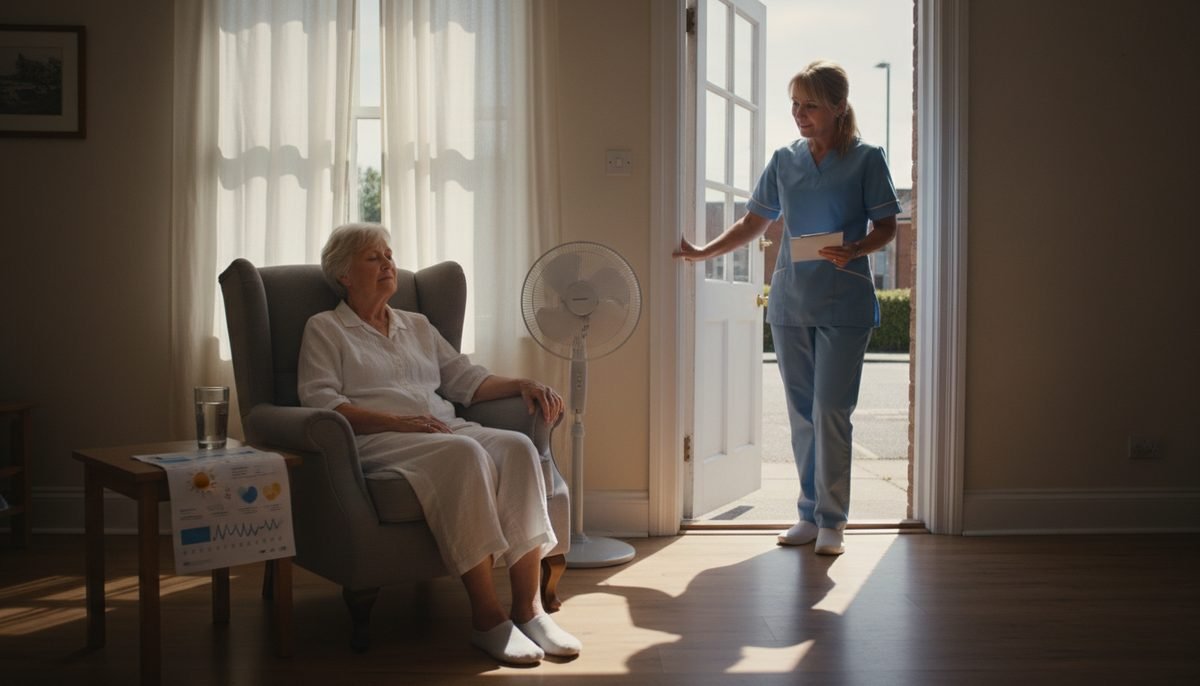
During prolonged heat, the greatest health risks fall on older people, babies, people with heart or lung conditions, those taking certain medicines and anyone unable to keep their home cool. Heat illness can begin with headache, dizziness, nausea, weakness or heavy sweating and can progress to confusion, collapse or dangerously high body temperature. People should follow NHS and UK Health Security Agency advice, check on vulnerable relatives and neighbours, drink regularly and avoid strenuous activity during the hottest part of the day.
Wildfire prevention is equally important. Disposable barbecues and campfires should not be used on dry grass, heath or moorland. Cigarettes must be extinguished completely, glass should not be left where it can concentrate sunlight, and vehicles should not be parked over long dry vegetation because hot exhaust systems can ignite it. Anyone seeing a fire should move to safety and call 999 rather than trying to tackle a spreading blaze.
Smoke can travel far from flames and aggravate asthma and other respiratory conditions. Closing windows may help when smoke passes through an area, but indoor heat can also become dangerous. Local fire, council, NHS and weather updates should guide decisions.
When conditions may ease
Forecasters expected parts of England and Wales to remain in heatwave conditions through at least the weekend, with limited opportunities for showers or thunderstorms in the south-west. Temperatures may ease slightly but remain above average. Significant reduction in wildfire risk usually requires more than a brief shower because vegetation and soils can take sustained rainfall to recover moisture.
The policy question extends beyond this week. Fire services, land managers, councils, rail operators and health systems need plans for heat that lasts longer and arrives earlier in the year. Building standards, urban shade, water resilience, peatland restoration and public-warning systems are now climate-adaptation issues, not distant environmental ambitions. The 2026 firewave is an emergency in the present; the Met Office report explains why similar emergencies are likely to become a regular test of UK resilience.
Sources & verification
- Met Office - State of the UK Climate
- Met Office - Climate extremes becoming the new normal
- Met Office - Unprecedented run of 35C days
- Sky News firewave explainer
- Sky News climate report coverage
Filed under UK News · Written by Eleanor Whitfield
You may also like to read