Drone strike near St Petersburg shows the war's reach keeps expanding
A reported Ukrainian drone attack on an oil terminal near St Petersburg underlines how energy infrastructure far from the front has become a strategic target.
Marcus Reeve
Writer ·
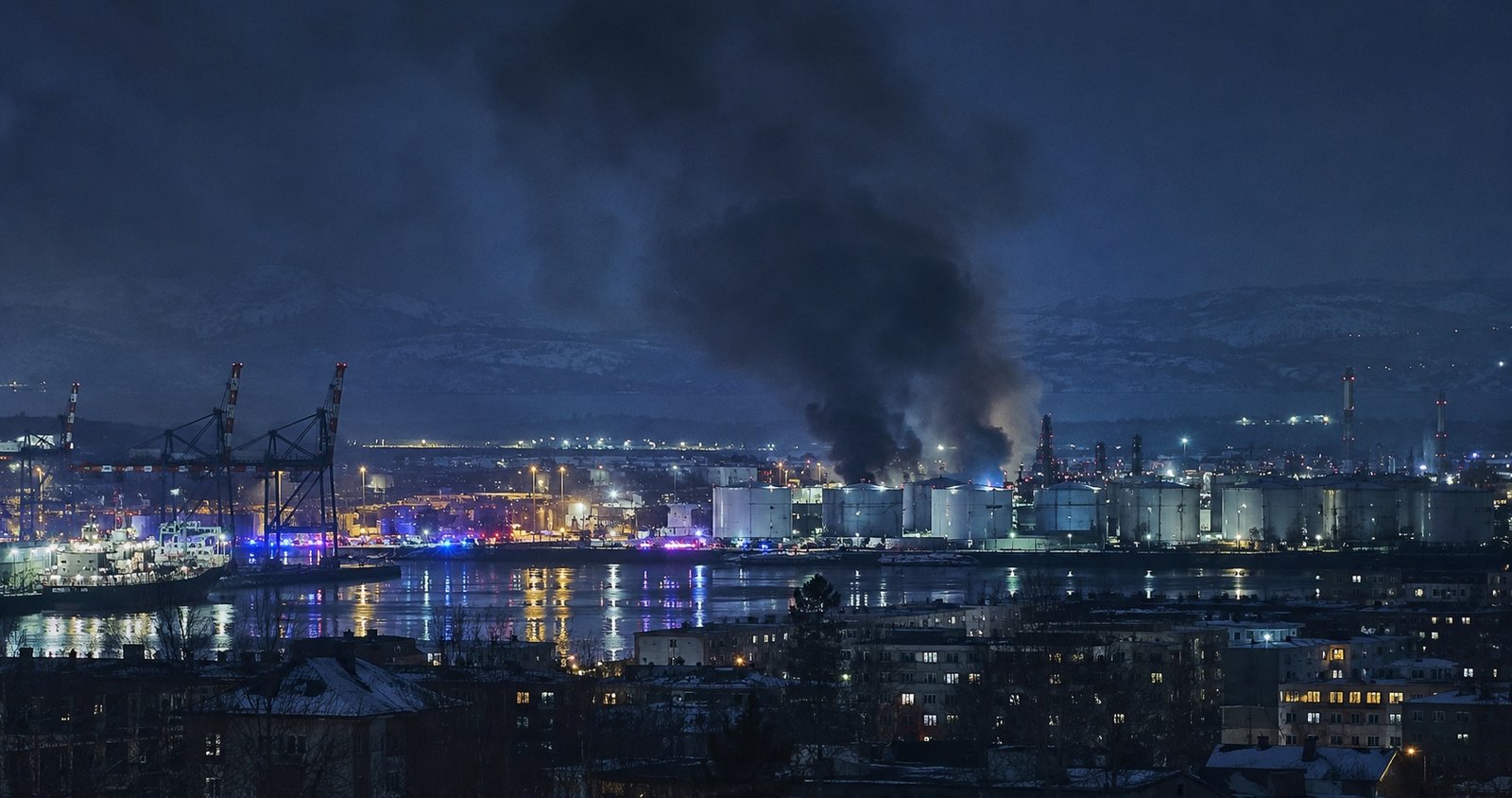
Reports of a Ukrainian drone strike on an oil terminal in the St Petersburg area carry a significance beyond any single damaged facility. They confirm a trend that has been building for months: in this war, distance no longer confers the protection it once did. The heaviest fighting remains along the front in eastern and southern Ukraine, but the campaign around it increasingly runs through fuel depots, ports, airfields and refineries hundreds of miles from the trenches.
What happened
As is typical with long-range operations inside Russia, the public record is deliberately incomplete. Kyiv rarely claims individual strikes in detail; Russian regional authorities tend to frame incidents through the language of air defence and emergency response. What coverage by major news organisations makes clear is the pattern: infrastructure tied to the storage and movement of fuel has become a recurring target, and a reported strike near a major northern city inevitably raises questions about air-defence coverage, economic resilience and the cost of guarding a vast country against small, cheap unmanned aircraft.
Why it matters
The strategic logic is straightforward. Oil terminals sit in the chain that converts crude output into export revenue and military mobility, and a strike need not level a complex to impose costs — fires, halted loading, inspections, insurance premiums and rerouted logistics all accumulate in a war of attrition. For Ukraine, whose own grid, ports and cities have absorbed repeated Russian bombardment, long-range drone operations also carry a message: infrastructure pressure is not a one-way instrument. The St Petersburg region is symbolically potent precisely because it is so far from the border, complicating any narrative that the war can be kept away from Russia's major population centres.
The counter-view
These operations are not cost-free, and the picture should not be reduced to a scoreboard. Civilian workers are present at energy sites; nearby communities face fire, smoke and environmental risk; and both sides have strong incentives to shape perceptions before independent details emerge — Ukraine by demonstrating reach and innovation, Russia by presenting its defences as effective. Moscow describes strikes on its territory as escalation even as it continues long-range attacks on Ukrainian cities, and each side cites the other's operations as justification for the next round. Careful sourcing matters more here than almost anywhere else in the war's coverage.
What happens next
No single strike will change the war's direction, but the pattern is reshaping how endurance is measured. Traders, insurers and policymakers watch cumulative risk to Russian energy flows, not isolated headlines; Russian planners face an unforgiving allocation problem over which of thousands of sites to defend densely; and Ukraine will keep arguing that its partners should equip it both to defend its own infrastructure and to constrain Russia's war economy. The conflict is becoming more technologically distributed and more economically targeted — a contest over the systems that keep states, armies and economies running.
Sources: reporting by Reuters.
The NE Times is an independent news and analysis publisher. Our articles combine factual reporting with clearly-written, impartial analysis. Content is for general information and does not constitute professional advice. Disclaimer.
You may also like to read

In El Obeid, Sudan's drone war is measured in cancelled deliveries and closed roads
Reporting from the besieged Sudanese city shows how drone strikes are compounding displacement and shortages — and testing the limits of humanitarian work.
Record Russian drone barrage hits Ukraine as direct talks stall
A large-scale overnight assault struck Kyiv, Dnipro and Kharkiv as the Kremlin rejected Ukrainian offers for direct negotiations and European leaders pressed for a just and lasting peace.

When Confidentiality Feels Like a Gag: Australia's Parliamentary Watchdog Under Scrutiny
A staffer's account of jail-threat confidentiality warnings puts Australia's parliamentary complaints body — and workplace reform everywhere — to the test.
The Brooklyn Bridge Fire Shows What Civic Spectacle Really Depends On
A fireworks malfunction set the Brooklyn Bridge alight during America's 250th Independence Day show — a test of the invisible systems behind celebration.