Wildfire Emergencies Spread Across England and Wales During Extreme Heat
Major wildfire incidents in North Wales and Derbyshire, alongside fires across England, have prompted evacuations and warnings of exceptional fire risk during hot, windy conditions.
UK News & Politics Editor ·
A national pattern of fires
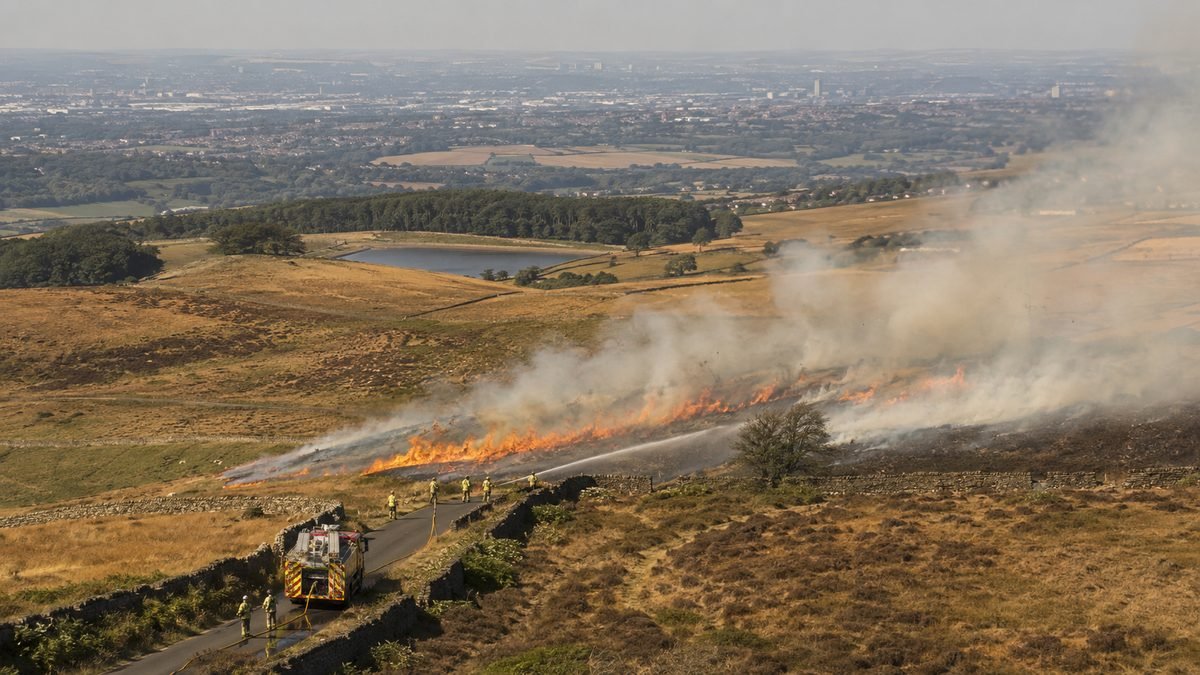
Wildfires across England and Wales became a major emergency on 13 July 2026 as hot weather, dry vegetation and strong winds created dangerous conditions. Major incidents were declared around Conwy Mountain in North Wales and Tintwistle Moor in Derbyshire, while significant fires were reported in Greater Manchester, County Durham, Sussex, Devon, Somerset and London. The geographic spread showed that the problem was not confined to one moor or forest. Fire services were dealing with a national pattern of rapidly igniting grassland, heath and urban-edge vegetation.
Evacuations near Conwy Mountain
The Conwy Mountain fire forced residents to leave homes as smoke, ash and flames moved across steep terrain. North Wales Fire and Rescue Service said hundreds of acres were affected and that the fire front had at one stage stretched close to a mile. Residents described the sound of flames approaching and skies darkened by smoke. Emergency teams contacted people who needed to evacuate and advised nearby households to close windows and doors. The combination of slope, wind and dry ground made containment difficult and increased the risk of sudden changes in direction.
A major incident at Tintwistle Moor
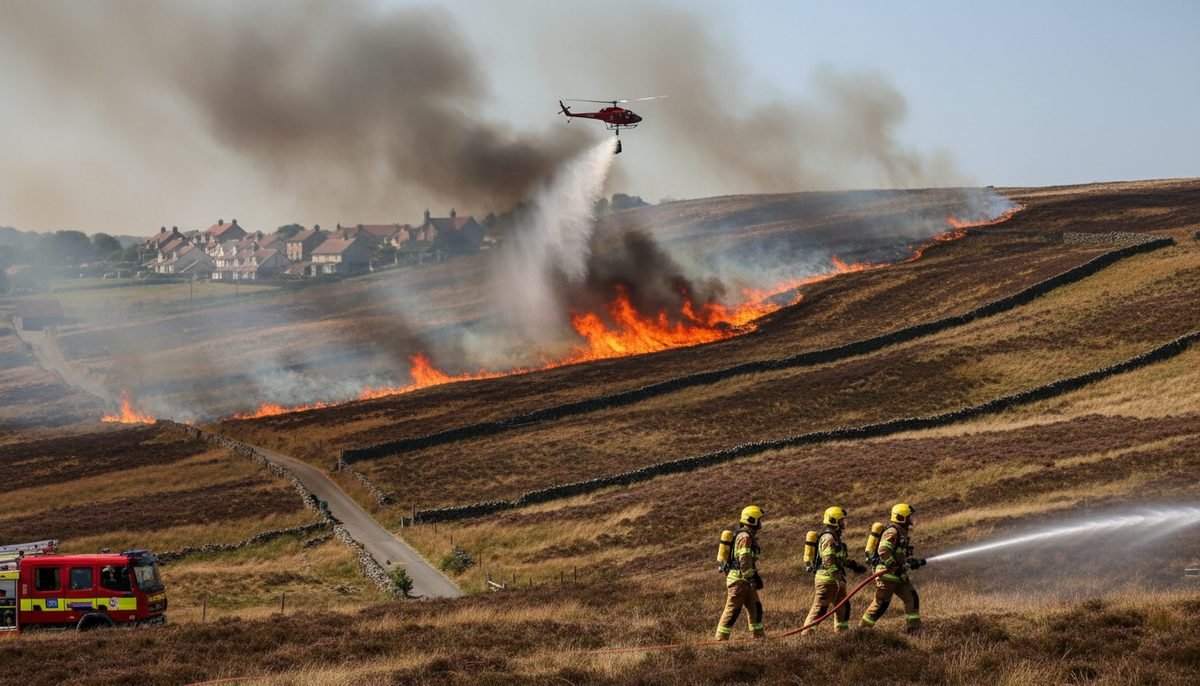
In Derbyshire, fire chiefs declared a major incident at Tintwistle Moor, describing the ground as tinder dry. Crews used specialist wildfire equipment and helicopters to drop water. The operation aimed to protect homes, infrastructure, wildlife and large areas of moorland. Moor fires can be especially difficult because flames may move through heather and grass while heat remains in peat below the surface. Even when visible flames have been reduced, crews may need to monitor hotspots for days to prevent reignition.
London and other urban-edge fires
Wildfire risk is often associated with remote countryside, but fires also affected the edges of towns and cities. In Walthamstow, around 125 firefighters responded to a blaze involving a house, gardens, sheds and a railway embankment. Residents were evacuated and rest centres were opened. Firefighters also tackled burning grassland in Orpington. These incidents demonstrate how dry vegetation can carry flames towards homes, transport routes and utilities. Urban density can complicate access while smoke affects a much larger population.
Why the conditions are so dangerous
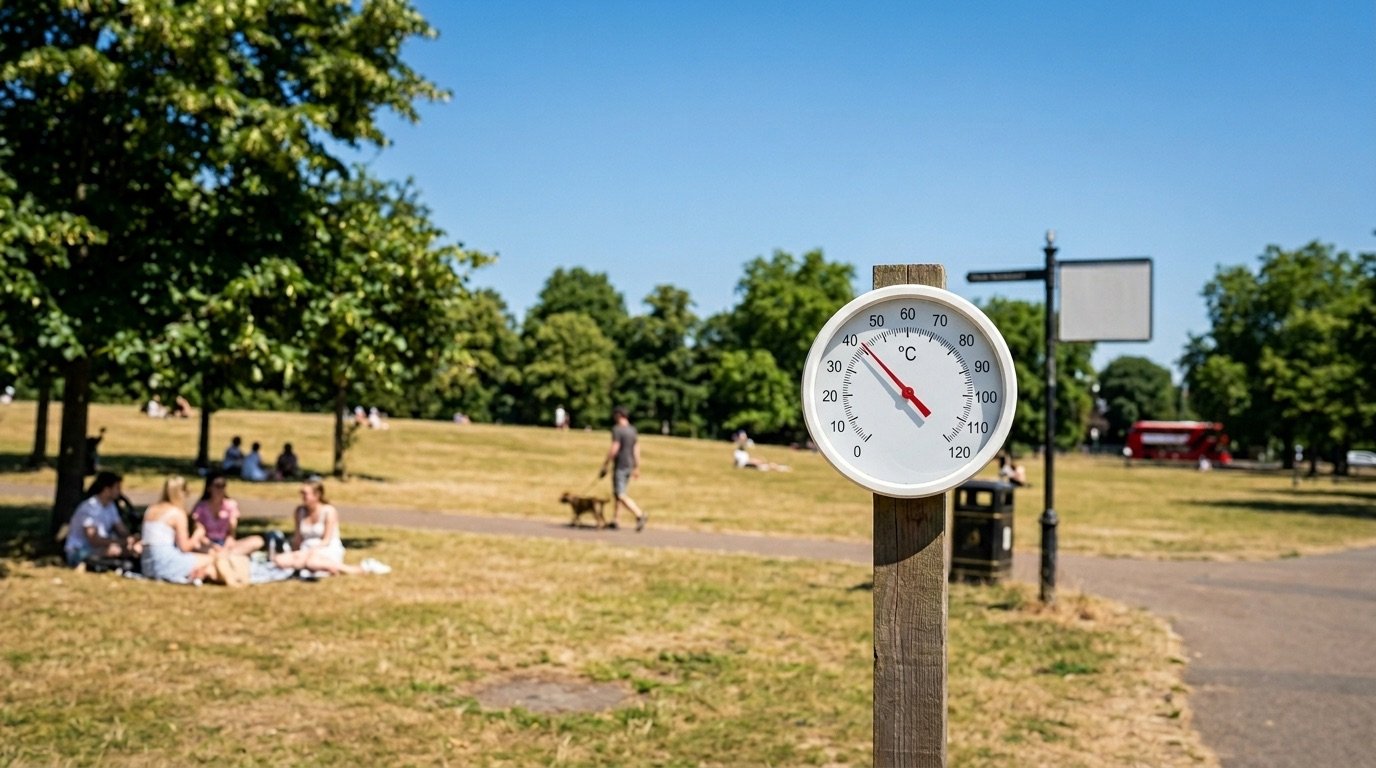
Natural England warned of an exceptional fire risk in parts of southern Britain and a very high risk across much of England and Wales. Three factors are working together: prolonged heat dries vegetation, low rainfall reduces moisture in soils and plants, and wind supplies oxygen while carrying embers. A discarded cigarette, barbecue, machinery spark or deliberately set fire can become a large incident within minutes. Once multiple fires are burning, services must divide crews and equipment, increasing pressure on emergency response systems.
Climate change and the shifting baseline
Scientists have consistently explained that human-caused climate change makes heatwaves more frequent and more intense. Higher temperatures increase evaporation and dry landscapes more quickly. That does not mean climate change directly ignites every fire; ignition may still come from human behaviour, accidents or lightning. It does mean that the environment in which a spark lands is increasingly favourable to rapid spread. The phrase extreme heat Britain is no longer an occasional anomaly but part of a changing risk profile that affects health, farming, water supplies, transport and emergency planning.
Health risks from smoke
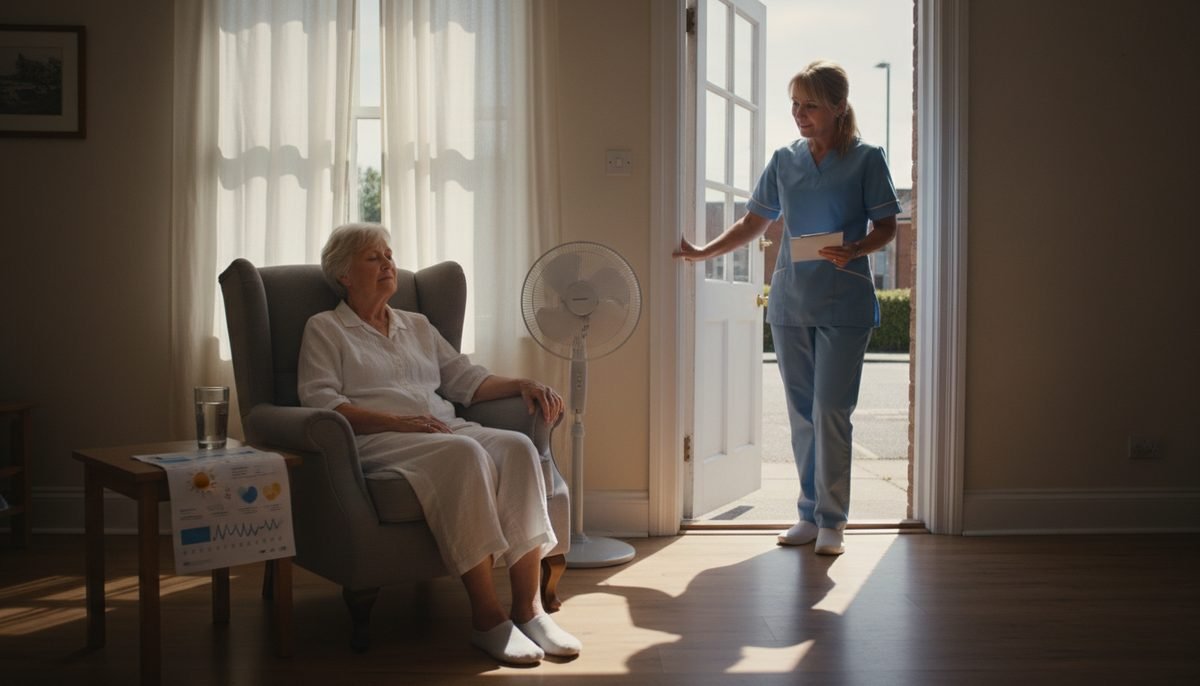
Wildfire smoke contains fine particles that can travel long distances. People with asthma, heart disease or other respiratory conditions may experience symptoms even when they are far from the flames. Greater Manchester residents reported haze and the smell of smoke as far as the city centre from a moorland fire near Dovestone Reservoir. Public-health advice typically includes limiting strenuous outdoor activity, keeping windows closed when smoke is heavy and following instructions from local authorities. Anyone with severe breathing difficulty should seek urgent medical help.
Damage beyond burned land
The immediate images of flames can obscure the wider costs. Fires can destroy habitats, kill wildlife, damage fencing and paths, close roads and railways, disrupt tourism and require expensive restoration. Peatland fires may release carbon stored over long periods and damage ecosystems that help manage water and reduce flooding. Agricultural land can lose grazing and soil quality. Communities may face insurance claims and temporary displacement. The economic consequences continue after the last fire engine leaves.
What the public can do
During very high fire risk, prevention is critical. People should avoid disposable barbecues and open flames on dry grass or moorland, extinguish cigarettes completely, take litter home and keep vehicles away from vegetation that could touch hot exhaust systems. Anyone who sees smoke or fire should call emergency services rather than assuming somebody else has reported it. Walkers should not approach active incidents to take photographs, because blocked access roads and sudden wind shifts can put both visitors and firefighters at risk.
Preparing for a longer wildfire season
UK wildfire 2026 events may influence national planning. Fire services need specialist vehicles, protective equipment, trained crews and agreements for mutual aid. Land managers can reduce fuel through controlled cutting, grazing and carefully managed burns in suitable seasons. Local authorities need evacuation plans and public-warning systems. Building standards and landscaping may also need review in communities close to heath and moorland. The challenge is to reduce risk without damaging the natural environments people are trying to protect.
The immediate outlook
The priority remains containing active fires and preventing new ignitions. Conditions can improve quickly if wind drops or rain arrives, but dry ground may remain dangerous. Residents should rely on local fire services, councils, police and weather agencies for current instructions. The Conwy Mountain fire and Tintwistle Moor wildfire have become symbols of a broader emergency: Britain is experiencing conditions in which vegetation across multiple regions can burn with unusual speed. The response must combine immediate caution with long-term adaptation to hotter, drier summers.
Source notes
- The Guardian, 13 July 2026
Filed under UK News · Written by Eleanor Whitfield
You may also like to read