Keir Starmer's Expected Final Week and the Possible Rise of Andy Burnham
Keir Starmer has entered what is expected to be his final week as prime minister, with Andy Burnham widely expected to win the Labour leadership and begin a rapid Downing Street transition.
UK News & Politics Editor ·
A government prepares for transition
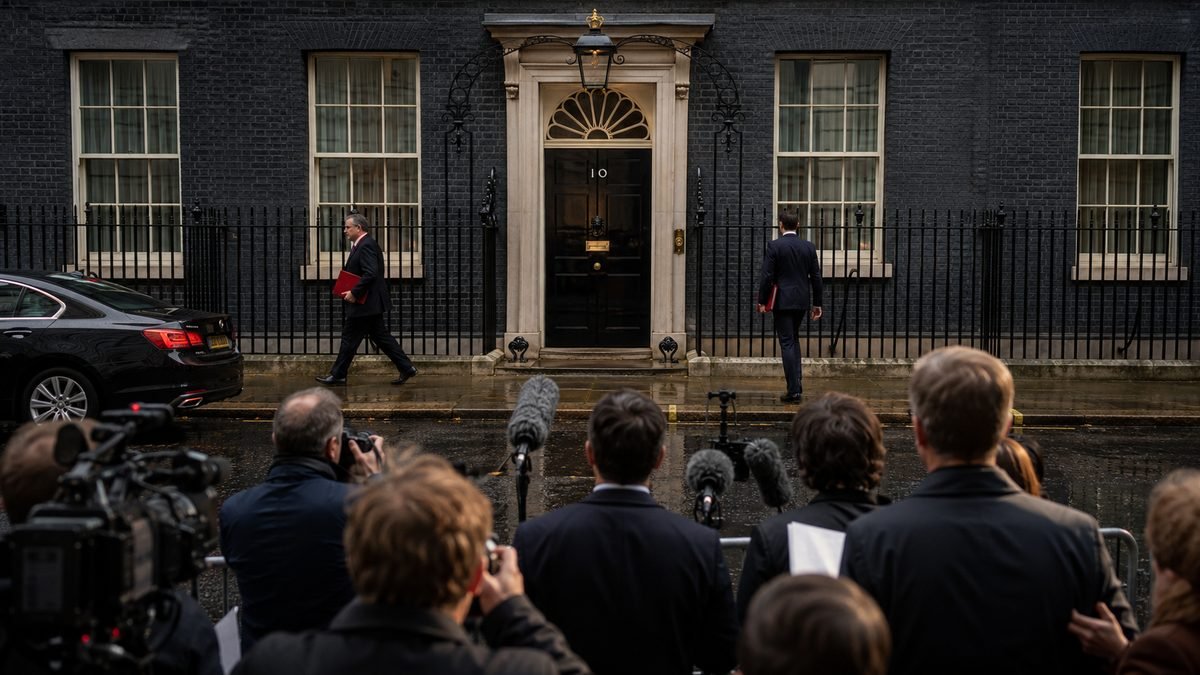
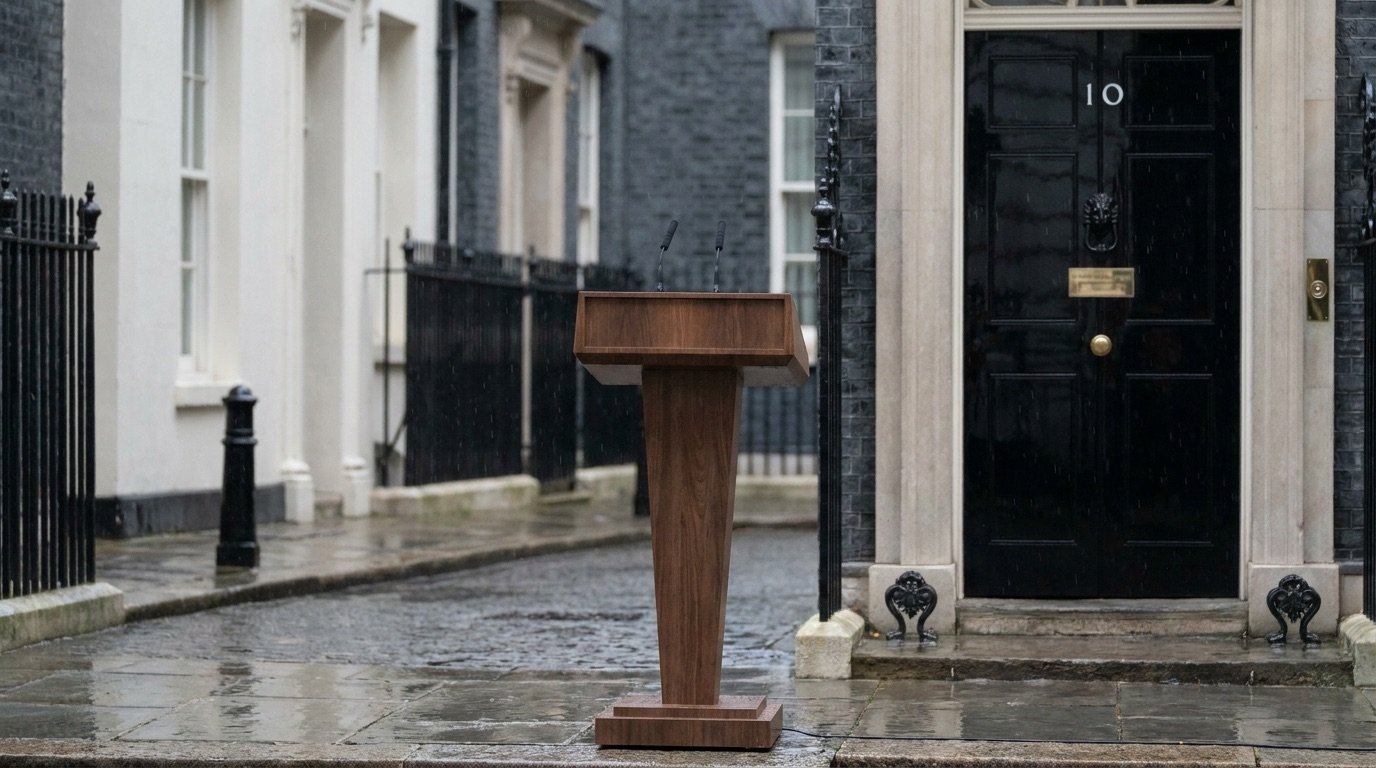
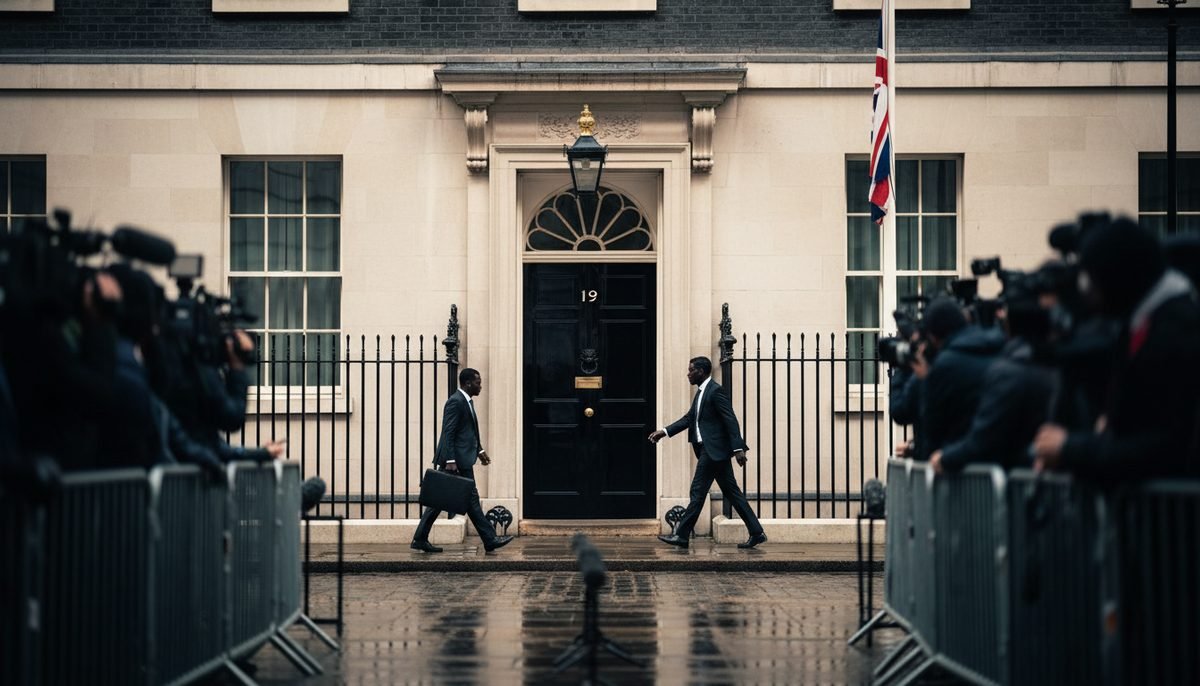
Sir Keir Starmer began Monday, 13 July 2026, in what political reporters described as his expected final week in Downing Street. Andy Burnham, the Greater Manchester political heavyweight who returned to Westminster through the Makerfield by-election, was widely expected to become Labour leader and then prime minister. The anticipated timetable placed the leadership result on Friday, 17 July, with a potential transfer of power on Monday, 20 July. Those dates remained expectations rather than constitutional guarantees, but government departments, Labour MPs and international partners were already preparing for a rapid change at the top.
How a governing-party leadership change works
Britain does not automatically hold a general election when a prime minister resigns between elections. The governing party selects a new leader under its own rules. If that person can command the confidence of the House of Commons, the monarch invites them to form a government. Because Labour holds a Commons majority, its leader is normally able to meet that test. The process can feel unusual to voters because the person entering Number 10 may not have led the party at the previous general election. Constitutionally, however, the office of prime minister depends on parliamentary confidence rather than a direct national presidential vote.
Why Burnham is the central figure
Burnham has spent much of his recent career outside Westminster as mayor of Greater Manchester, building a profile around transport reform, regional devolution, public service integration and a distinctive northern political identity. Before becoming mayor, he held senior Cabinet and shadow Cabinet positions and served as culture secretary and health secretary. His supporters present him as an experienced national politician who gained executive credibility in local government. Critics will test whether policies developed for a city-region can be scaled to the whole country and whether his broad popularity survives difficult decisions on tax, spending, immigration and defence.
The meaning of Starmer's departure
Starmer's expected exit would close a dramatic chapter that began with Labour's return to power in 2024. His government entered office promising stability, public-service repair and stronger economic management, but later faced political pressure, internal dissent and disputes over the pace and direction of reform. A change of leader does not erase the record of the administration. Burnham would inherit its legislation, fiscal limits, international commitments and unresolved controversies. He would also inherit ministers and officials who may be uncertain about their roles in a reshuffle.
A crowded policy agenda
The next prime minister's immediate in-tray is unusually demanding. Immigration reform is returning to Parliament, including proposals on asylum appeals, deportation and the qualifying period for indefinite leave to remain. The government is also advancing the Public Office (Accountability) Bill, known as the Hillsborough Law, and implementing new national-security powers for state-linked threats. Alongside these political issues are persistent pressures on the NHS, local government, housing, social care and household finances. Burnham will have limited time to establish priorities before public expectations harden.
Economic choices will define the handover
A Downing Street handover changes personalities but not the arithmetic of government. The incoming administration must work within borrowing costs, tax receipts and spending commitments. Burnham has spoken about reforming business rates to shift more of the burden towards large out-of-town warehouses and away from smaller high-street firms. Allies have also discussed wider tax options, but any move that appears to break Labour's previous promises would be politically risky. Markets will watch appointments to the Treasury and the tone of early statements for evidence of continuity or a change in fiscal strategy.
Devolution as a national governing idea
One of Burnham's clearest political themes is that England is too centralised. His mayoral record gives him a platform to argue for greater powers over transport, skills, housing and economic development. A Burnham government may try to make devolution a central part of its identity, potentially strengthening mayors and combined authorities. Supporters say decisions are better when made closer to communities. Sceptics warn that devolved structures can create uneven capacity and accountability. The test will be whether regional empowerment produces measurable improvements rather than additional layers of administration.
Party management and public legitimacy
The Labour leadership 2026 process is also a test of party unity. Burnham may enter office with substantial support, but governing requires more than winning an internal contest. He must manage MPs who disagree on immigration, welfare, taxation, foreign policy and constitutional reform. He must also address the democratic question raised whenever a new prime minister takes office without a general election. There is no legal requirement for an immediate election, but political pressure may grow if the new government makes major policy changes beyond the previous manifesto.
International partners will seek clarity
A new prime minister must quickly reassure allies that Britain's foreign and security policies remain coherent. The UK faces tensions involving Iran, Russia, European security and the global economy. Defence spending commitments, relations with the United States and negotiations with the European Union cannot be paused for a lengthy domestic transition. Burnham's first calls, meetings and ministerial appointments will signal whether he intends continuity or a strategic reset. The Foreign Office and national-security machinery will provide institutional stability, but political leadership still shapes priorities.
What to watch in the final days
The most important indicators are the confirmed leadership timetable, Burnham's policy commitments, Starmer's final parliamentary business and speculation about the Cabinet. Attention will focus on whether Shabana Mahmood remains home secretary, who controls the Treasury and whether Burnham promotes figures associated with local government and devolution. Starmer's final week may also include international travel and efforts to secure progress on legislation that he regards as part of his legacy. Until the leadership result and royal appointment occur, reports should continue to use words such as expected and likely rather than treating the transition as complete.
A change of style, but not an escape from reality
The prospect of Andy Burnham as next prime minister has generated excitement among supporters who believe he can reconnect Labour with voters beyond Westminster. Yet the core difficulty of modern British government remains unchanged: expectations are high, public finances are constrained and trust is fragile. A successful transition would require honesty about trade-offs, disciplined appointments and early delivery on a small number of visible priorities. The coming week is therefore more than a political drama. It is the opening stage of a test of whether a new leader can convert personal popularity into durable national government.
Source notes
- Sky News Politics Hub, 13 July 2026
- CBS News profile of Andy Burnham, June 2026
Filed under Politics · Written by Eleanor Whitfield