Health officials urge MMR catch-up as measles cases climb
The UK Health Security Agency has warned that falling childhood vaccination rates are leaving communities exposed, after a rise in measles cases across several regions.
Sophie Bennett
Writer ·
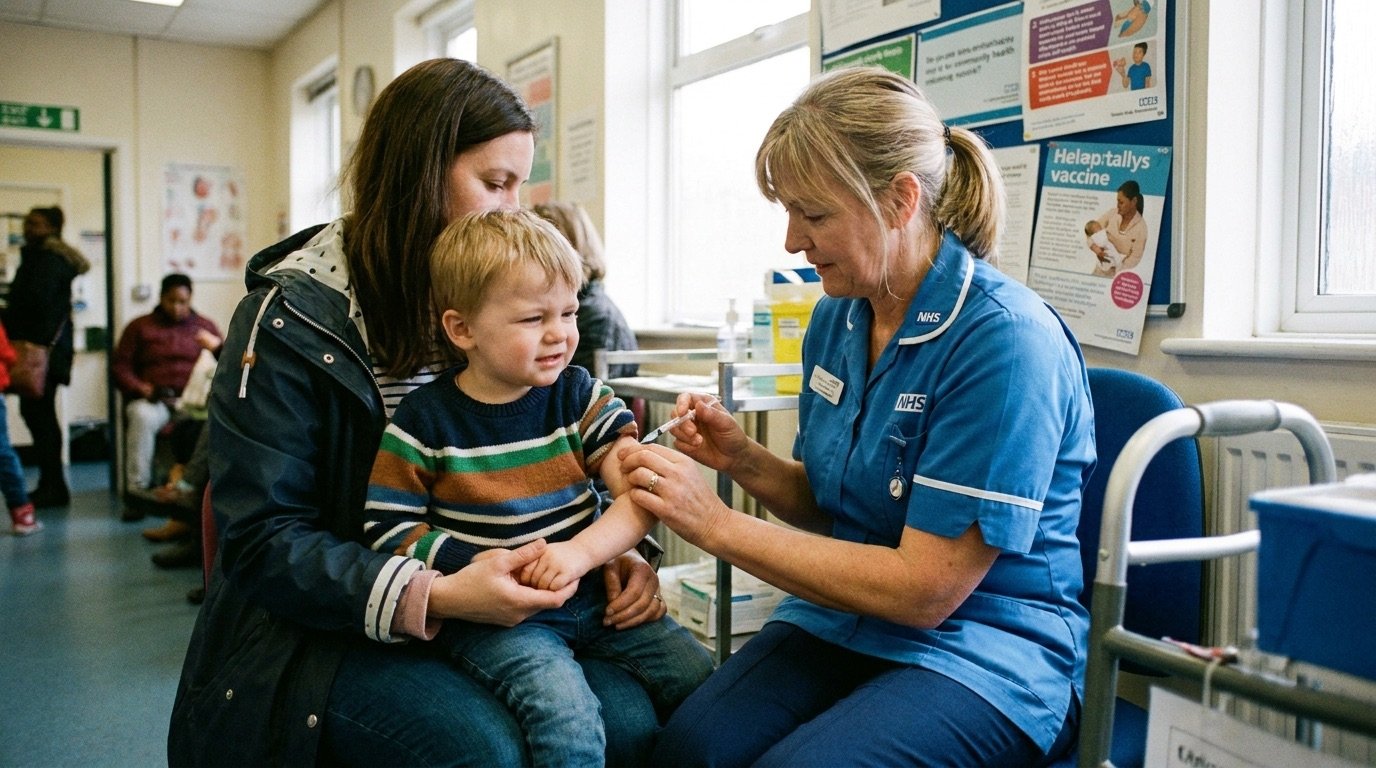
Health officials have renewed calls for parents to ensure their children are fully vaccinated against measles, mumps and rubella, after a rise in measles cases across several parts of the country reignited concern about waning protection. The appeal is aimed not only at parents of young children but also at older children and young adults who may have missed doses earlier in life.
The UK Health Security Agency has warned that uptake of the MMR vaccine has slipped below the level needed to maintain herd immunity in many areas, leaving pockets of the population vulnerable to a disease that spreads with extreme ease. Officials say the recent rise in cases is a reminder that infections once considered rare can re-establish themselves quickly when protection falls.
This article provides general information and is not a substitute for advice from a healthcare professional. Parents and individuals with questions about their own or their child's vaccination status should contact their GP surgery.
Why coverage matters
Measles is one of the most contagious infections known, and protecting a community requires very high vaccination coverage. Public health bodies generally aim for around 95 per cent of the population to be immunised with two doses, the threshold widely regarded as necessary to stop the virus circulating freely. When coverage dips below that level, the virus can spread even among those who are vaccinated but whose protection is incomplete.
Two doses of the MMR vaccine offer strong, lasting protection, but in some areas first and second-dose rates have fallen well short of the recommended threshold. The result is uneven protection across the country, with some communities far more exposed than others. Measles is not a trivial illness: while many children recover fully, it can lead to serious complications.
- Ear infections, which can cause lasting hearing loss
- Pneumonia, one of the most common serious complications
- Diarrhoea and dehydration, particularly dangerous in young children
- Inflammation of the brain, known as encephalitis, in rare cases
- A very rare but fatal degenerative brain condition that can appear years after infection
Those at greatest risk include babies too young to be vaccinated, pregnant women and people with weakened immune systems, all of whom rely on high vaccination rates in the wider population to keep the virus at bay.
Checking and catching up
Officials stressed that the vaccine is safe, effective and free on the NHS, and urged parents who are unsure of their child's status to check their red book or contact their GP surgery to arrange any missed doses. The MMR vaccine has been used for decades and has a well-established safety record, having been given to many millions of children worldwide.
Crucially, there is no upper age limit for catching up. Teenagers and adults who never completed the two-dose course can still be vaccinated, and health leaders are keen to reach older age groups who may have fallen through the gaps. The first dose is normally offered to children at around one year of age, with the second before they start school, but missed doses can be given at any point afterwards.
“Measles can be a serious illness, but it is entirely preventable. It is never too late to catch up on missed MMR doses.”
— A UK Health Security Agency spokesperson
Background: how protection slipped
Childhood vaccination rates in the UK have been gradually declining for several years, a trend mirrored in many other high-income countries. The reasons are varied and rarely come down to outright opposition to vaccines. Practical barriers, such as difficulty booking appointments, busy family lives and disruption to routine services, play a significant role, alongside lingering misinformation and complacency about diseases that many parents have never seen.
Decades of successful immunisation meant that for a long period measles was rarely encountered in the UK, and the country had at one point been on track to eliminate it. That very success may have bred a false sense of security, with some families underestimating a disease that previous generations regarded as a serious threat. As coverage has slipped, that protection has begun to erode.
“Every child who misses their jabs is not only at risk themselves but can pass the virus on to others who are too young or too unwell to be protected.”
— A consultant in public health medicine
What happens next
The warning forms part of a wider push to drive up childhood immunisation rates, with health leaders cautioning that complacency about diseases once thought largely eliminated can allow them to return. Local health teams are expected to step up catch-up campaigns, including outreach in areas with the lowest uptake, school-based sessions and reminders through GP surgeries.
For families, the message from officials is straightforward: check whether everyone in the household has had two doses of MMR, and arrange any that are missing. With protection restored across communities, public health bodies say the recent rise in cases can be contained before it grows further. Anyone unsure of their status should contact their GP practice, which can check records and arrange vaccination free of charge.
Sources: reporting by UK Health Security Agency.
The NE Times is an independent news and analysis publisher. Our articles combine factual reporting with clearly-written, impartial analysis. Content is for general information and does not constitute professional advice. Disclaimer.
You may also like to read

NHS launches MMR catch-up drive as new MMRV vaccine rolls out
A national catch-up campaign running from June targets young children who have missed measles vaccinations, as a new combined MMRV jab protecting against chickenpox is introduced into the routine schedule.

France's heatwave death surge turns climate adaptation into a public health test
Deaths rose 29.1% — 2,025 excess deaths — in France's record June heatwave week, exposing how homes, health systems and cities fail in extreme heat.
Rising child drownings turn summer water safety into a public health priority
Child drowning deaths have climbed since the pandemic, and doctors say the lesson travels: prevention depends on layers of protection, not one glance.

Hospitals Keep Improvising Through Heatwaves — the Plan Has to Come First
Europe's latest extreme heat shows health systems built for an older climate cannot keep writing heatwave plans after the wards are already hot.