First non-Labour First Minister settles in as Plaid governs Wales alone
Rhun ap Iorwerth's minority administration faces the challenge of passing its programme in a transformed and crowded Senedd.
Eleanor Whitfield
Writer ·

Wales is being governed for the first time by a First Minister from outside the Labour ranks, as Plaid Cymru's Rhun ap Iorwerth beds in his minority administration following a historic election that upended decades of political tradition in Cardiff Bay.
Plaid emerged as the largest party at the election but fell short of a majority in a Senedd freshly expanded to 96 members. Reform UK surged into second place, while Labour, which had led every Welsh government since devolution began, slumped to a handful of seats in a dramatic collapse.
The result represents a watershed in the politics of devolved Wales. For a quarter of a century, the central question of Welsh governance was which parties Labour would govern with; now, for the first time, that party finds itself on the margins while a Plaid Cymru First Minister sets the direction of the administration. The transition marks both a personal triumph for ap Iorwerth and a profound test of his party's readiness for office.
Governing without a majority
Ap Iorwerth has made clear he prefers to run a minority government rather than strike a formal coalition, betting that he can build issue-by-issue support across a fragmented chamber. That approach offers flexibility but leaves his programme vulnerable to defeat whenever opposition parties choose to combine against him.
Minority government is a high-wire act. Every Budget and every contested Bill must be negotiated, and the First Minister will need to assemble different combinations of support depending on the issue at hand. The expanded Senedd, with more members and a more varied political make-up, both complicates that arithmetic and creates more potential partners for individual votes.
The administration faces a number of immediate challenges as it seeks to establish itself:
- Passing a Budget through a chamber in which the government lacks a majority.
- Building issue-by-issue coalitions among a wider and more fragmented field of parties.
- Managing relations with a Reform UK group that has become the official opposition.
- Setting out a distinctive programme on public services, the economy and the Welsh language.
- Defining the constitutional relationship between Cardiff and a Westminster government of a different political colour.
“I want to lead a government for the whole of Wales, answerable to no one but the Welsh people.”
— Rhun ap Iorwerth, First Minister of Wales
A transformed Senedd
The election was the first to be held under a substantially reformed system, with the Senedd enlarged from 60 to 96 members and elected under new arrangements designed to be more proportional. That reform was intended to strengthen scrutiny of the Welsh government, but it has also produced a more crowded and plural chamber in which several parties now hold meaningful blocs of seats.
The surge of Reform UK into second place is one of the most striking features of the new landscape. Its arrival as a major force in Welsh politics adds an unpredictable element to debates and means the government must contend with a vocal opposition drawing on a different base of support. Labour's collapse, meanwhile, leaves a party that once dominated Welsh public life searching for a way back.
Background
Devolution arrived in Wales in 1999 following a narrow referendum, and the institution in Cardiff Bay has steadily accumulated powers over areas including health, education, transport and the environment. Throughout that period Labour was the dominant party of Welsh government, governing alone or in partnership with others. Plaid Cymru, the party of Welsh nationalism, had at times supported or shared power but had never before led an administration.
The enlargement of the Senedd and the shift to a more proportional system were among the most significant constitutional changes in the institution's history, and this election was the first real test of how they would reshape Welsh politics. The outcome, with no party close to a majority, suggests an era of more negotiated and coalition-style governance may lie ahead.
What happens next
The new political map raises fresh questions about the relationship between Cardiff and Westminster, where Labour remains in office at UK level. Budgets, public services and the constitutional direction of Wales are all likely flashpoints as the minority government tests how much it can achieve without a reliable majority behind it. The early months will be decisive: if ap Iorwerth can demonstrate that he can pass a Budget and deliver on key pledges, his minority model may prove durable, but a series of defeats could quickly raise questions about the government's stability.
Sources: reporting by Institute for Government.
The NE Times is an independent news and analysis publisher. Our articles combine factual reporting with clearly-written, impartial analysis. Content is for general information and does not constitute professional advice. Disclaimer.
You may also like to read

Plaid ascendant: how Labour's Welsh heartland slipped away
With Plaid Cymru now the largest party in the Senedd and Westminster Labour in turmoil, Wales has joined Scotland and Northern Ireland in nationalist hands.
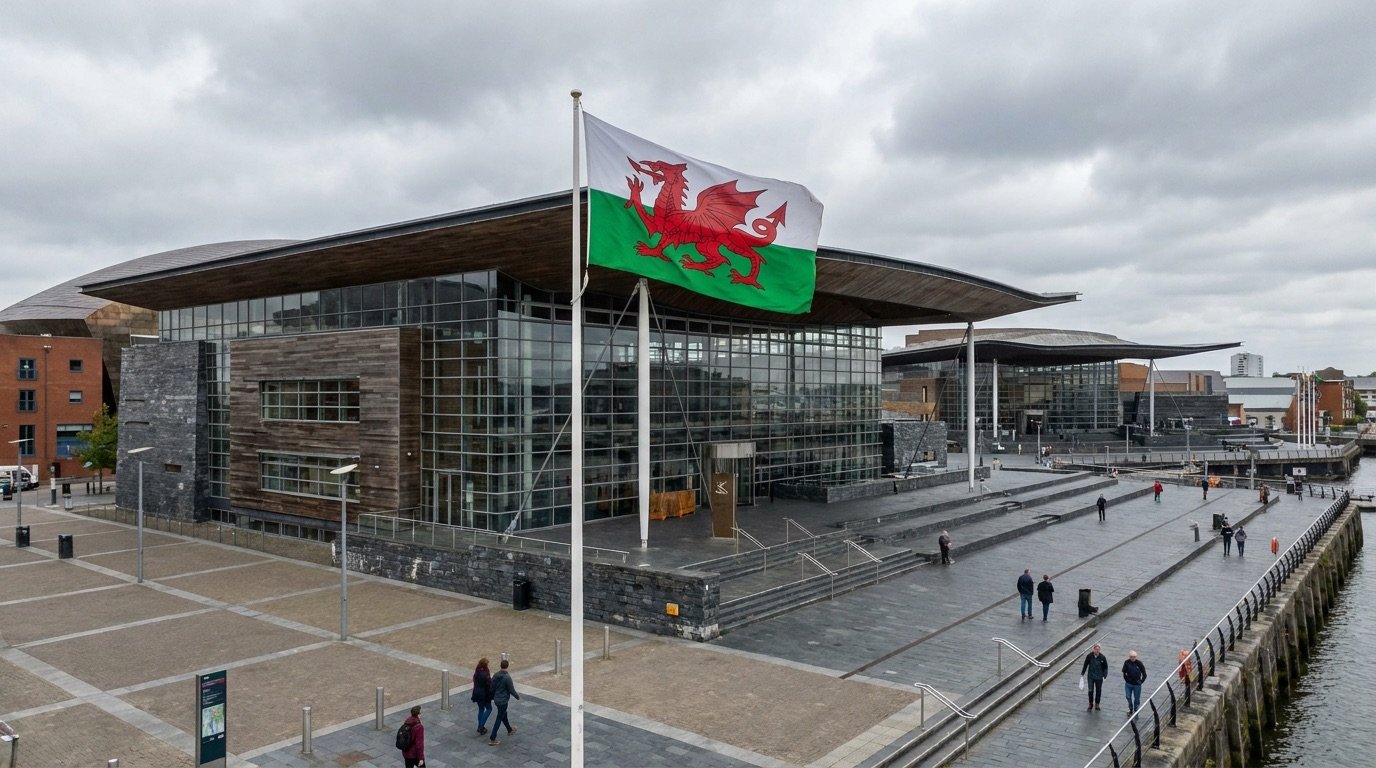
Rhun ap Iorwerth's minority Wales: Plaid Cymru governs after ending Labour's century of dominance
For the first time since devolution began, Wales is governed by a party other than Labour. Rhun ap Iorwerth leads a Plaid Cymru minority administration that must now turn campaign promises on speed limits, the M4 and the NHS into deliverable policy without a majority.
Welsh Labour's reckoning: interim leader Skates steers a shrunken party towards a winter contest
After Eluned Morgan became the first sitting head of a UK government to lose her own seat, Welsh Labour is regrouping with Ken Skates as interim leader and a full leadership election pencilled in for the autumn, with the winner inheriting opposition rather than office.
Green Man's refugee training scheme shows what a festival can do beyond the stage
The Welsh festival's decade-old programme has trained 191 refugees from 52 countries, turning a music event into practical civic infrastructure.